On November 19, 2025, at the press conference for Architect’26, ASEAN’s largest exhibition of architectural technology and building materials, the event officially announced its return under the theme “SATI : WISDOM : PROMPT – Mindfulness, Wisdom, and Readiness.” One of the key messages reflecting the future direction of the architectural profession was the call to view “space” not merely as a physical structure, but as a factor that plays a vital role in shaping human experience and quality of life.
Architect’26 seeks to encourage professionals in the design industry to remain mindful of the present, understand the future, and reconsider the role of architecture through a deeper and more meaningful perspective—embracing social dimensions, technological advancement, and the evolving ways humans think and live.
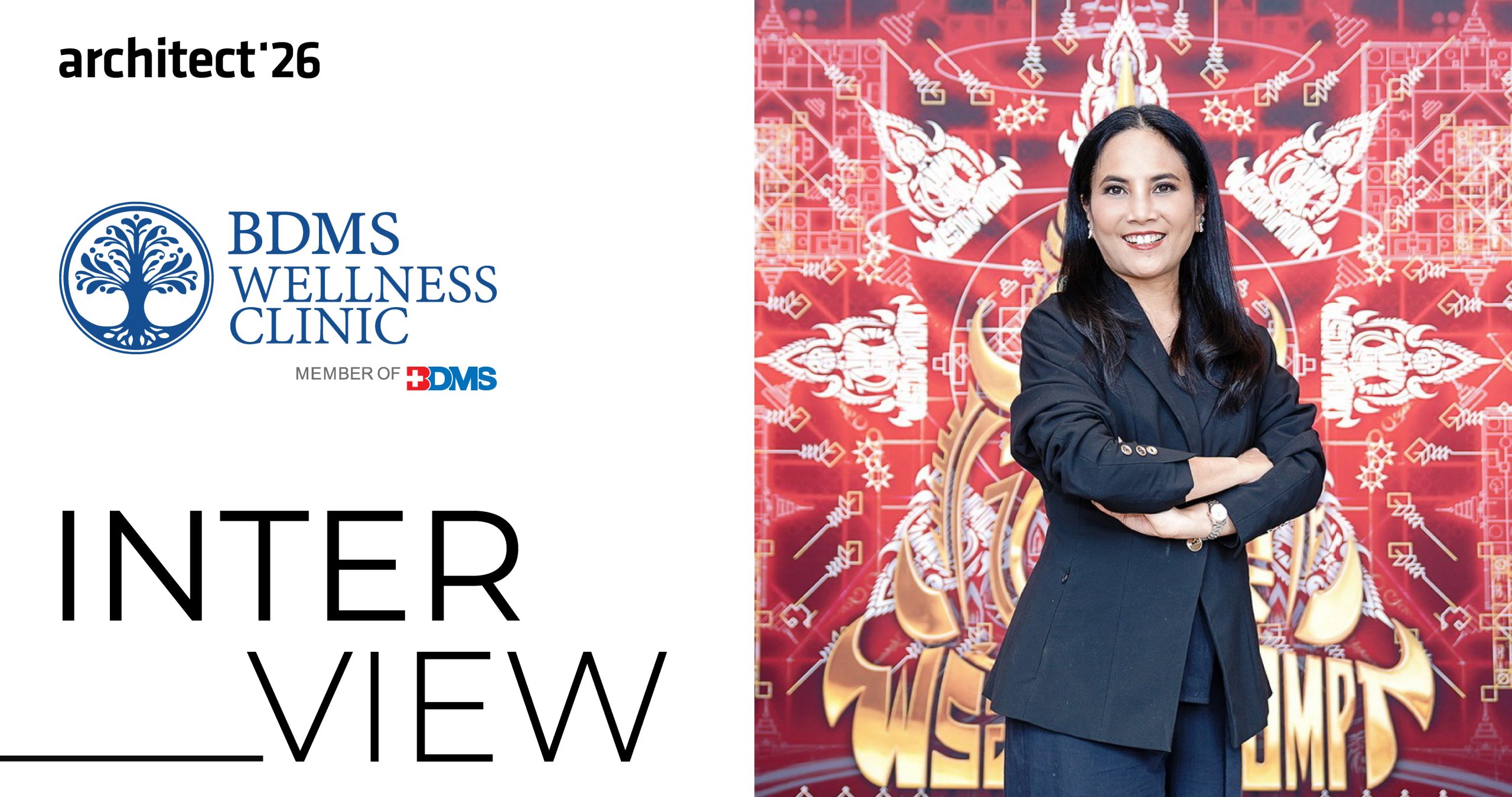
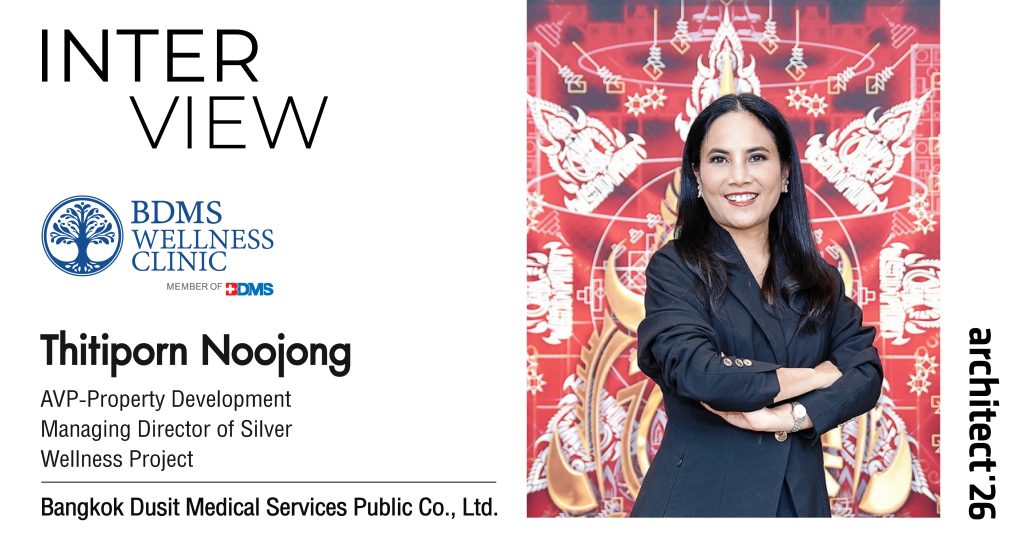
At the same press conference, BDMS Wellness Clinic, Thailand’s leading holistic healthcare organization under Bangkok Dusit Medical Services Public Company Limited, shared insights that reflected the profound role of architecture and design in shaping the country’s wellness direction. These perspectives were presented by Thitiporn Nookong, AVP – Property Development and Managing Director of the Silver Wellness Project, one of BDMS Wellness Clinic’s flagship mega-projects. With her extensive experience and in-depth understanding of design, she stands at the forefront of Thailand’s wellness industry.
This interview goes beyond introducing BDMS Wellness projects. It highlights that good spatial design is not solely about aesthetics or function, but a powerful tool for enhancing well-being and quality of life. Thoughtfully designed spaces can influence physical health, mental well-being, and longevity—enabling people to live healthier, happier lives.
Starting with the creation of well-being spaces for individuals, good design can extend its impact to surrounding communities. It supports equal access to environments that encourage rest, movement, and physical and mental recovery. For this reason, Wellness Architecture should not be overlooked and must become a shared priority among architects, designers, and construction professionals.
From Treatment to Preventive Care: A New Perspective from BDMS Wellness
Today’s health paradigm is shifting away from a reactive, treatment-based approach toward creating environments and lifestyles that prevent health issues from the very beginning. BDMS has expanded its vision toward a comprehensive wellness approach that prioritizes preventive care. Thitiporn Nookong emphasized that this shift is not intended to create a new business model, but rather to respond to people’s evolving needs.
People now place greater value on long-term quality of life rather than short-term treatment. Long-term well-being includes living in environments that support health—at home, within communities, and in public spaces. These environments encourage adherence to the six pillars of a healthy lifestyle. Positive behaviors and supportive spaces together help create well-being spaces that extend from individuals to communities. The ultimate goal is disease prevention without reliance on medication, starting instead with lifestyle choices and environments that promote health.
Well-designed spaces therefore become essential tools for fostering physical and mental well-being and longevity. Thailand’s strong natural resources, service excellence, and medical expertise give the country significant potential to become a regional health hub. The Silver Wellness Project by BDMS Wellness represents an effort to bring wellness closer to everyday life and local communities.
Changing Consumer Behavior Calls for Architectural Adaptation
Lifestyle patterns have changed significantly in recent years. Today, people no longer seek beautiful spaces solely for personal satisfaction, but increasingly invest in long-term health and quality of life. This includes participation in wellness programs, health-oriented retreats, and choosing living environments that promote better sleep, relaxation, and connection with nature.
Thitiporn Nookong noted that this shift is not merely a trend, but a fundamental change in societal values. As a result, architecture, interior design, and spatial planning must integrate health and well-being considerations from the earliest stages of development. Contemporary residential projects and hotels now focus not only on size or external aesthetics, but on creating environments that support healthy living—addressing nutrition, sleep, physical activity, and balanced lifestyles.
Architecture, interior design, and spatial organization have become critical factors influencing daily quality of life and happiness. Concepts such as Wellness Architecture, Wellness Environments, and Wellness Real Estate serve as essential tools for creating spaces that truly support well-being.
These perspectives reinforce that designing beautiful spaces is not merely about aesthetics, but an integral part of health and quality of life. Thitiporn Nookong emphasized that “architecture is becoming an inseparable part of healthcare,” making health-focused design a responsibility that architects, designers, and developers must genuinely embrace.
Thailand’s Strong Potential as a Regional Health Leader
Thailand is internationally recognized for its medical excellence, hospital quality, professional expertise, and distinctive service culture. The integration of modern medical technology with traditional Thai medicine and herbal practices further strengthens the country’s potential for holistic health restoration. Its rich natural landscapes—coastlines, mountains, and forests—create ideal conditions for physical and mental rejuvenation.
According to Thitiporn Nookong, these strengths are not only current advantages but valuable assets that can be further developed, particularly in Wellness Real Estate and international health recovery projects. The development of urban public parks that encourage physical activity and provide wellness-oriented spaces also plays a crucial role in enhancing quality of life in cities.
From an architectural perspective, Wellness Architecture plays an important role in shaping environments that support healthy living and meet the needs of younger generations. Health-oriented design and appropriate spatial development are therefore critical investments in the future, enabling Thailand to keep pace with global change and growing demand in the international wellness market.
All of these factors position Thailand with strong potential to become a leading Wellness Hub in Asia, through the integration of technology and nature across all dimensions. Designing for quality of life must always begin with a user-centered approach.
Designing for Health Starts with People
“Good spaces can genuinely improve health,” Thitiporn Nookong often emphasizes. Effective design begins with understanding human behavior, needs, and daily activities. It requires thoughtful integration of environmental elements such as light, air, sound, safety, and emotional comfort.
Wellness Architecture focuses on creating environments that support quality living—from individuals and families to communities and the nation as a whole. Well-designed spaces enable people to live at their full potential physically, mentally, and emotionally. Thitiporn Nookong views Holistic Wellness Design as the direction that architecture must take—moving beyond aesthetics and functionality toward sustainable, long-term well-being.
Health-oriented design should not be limited to specific groups. Spaces must be accessible to everyone—children, adults, and the elderly—because health should not be exclusive, but achievable for all members of society.
The integration of AI and data-driven insights into wellness design enhances accuracy and adaptability. By analyzing how spaces are used—such as adjusting lighting or temperature—design decisions can better support users’ health. AI does not merely modernize design, but grounds it in real data that enables continuous improvement and long-term positive impact.
Today, health is the true asset of life. As Mahatma Gandhi once emphasized, health is not simply the absence of illness, but the foundation of a meaningful quality of life. Wellness Architecture is therefore not a passing trend, but a long-term investment—one that enhances lives and elevates quality of life for individuals, families, communities, and society as a whole.
Good design has the power to create profound impact. By starting with health-supportive spaces today, we can build a better future and a better world for generations to come. Health is true wealth. It begins with caring for ourselves, creating healthy environments, and extending that care to society—at the individual, family, and global levels. The time to begin is now, to create a healthier future.
About BDMS Wellness Clinic
BDMS Wellness Clinic is a preventive healthcare center under Bangkok Dusit Medical Services Public Company Limited, one of Thailand’s leading private hospital networks. The clinic focuses on early disease prevention and holistic healthcare, including dental care, sports medicine, and fertility treatment.
BDMS Wellness Clinic integrates medical science and advanced healthcare technology to support lifestyle transformation for better health and quality of life. Its long-term goal is to enable people to live longer, healthier lives with sustainable physical and mental well-being.
#BDMSWellnessClinic #PreventiveHealthcare #LiveLongerHealthierHappier #PreventiveMedicine #LifestyleMedicine #ScientificWellness #WellnessHubThailand #WellnessHubAsia
For more information:
Facebook: Facebook.com/BDMSWellnessClinic
Instagram: @BDMSWellness
Media Contact:
Marketing and Public Relations Department
BDMS Wellness Clinic Co., Ltd.
Chanokphat Bhavankhanan
Tel: +66 98 369 5963
Email: [email protected]
Sasiwimol Techawanto
Tel: +66 92 807 5893
Email: [email protected]