The Association of Siamese Architects (ASA), in collaboration with TTF International Co., Ltd., hosted a press conference to officially launch Architect’26 under the theme “Mindful Intelligence for Sustainable Living.” The event brought together leading experts in the built environment to reflect on key industry trends and help prepare Thai architects for rapid changes in technology and environmental challenges.
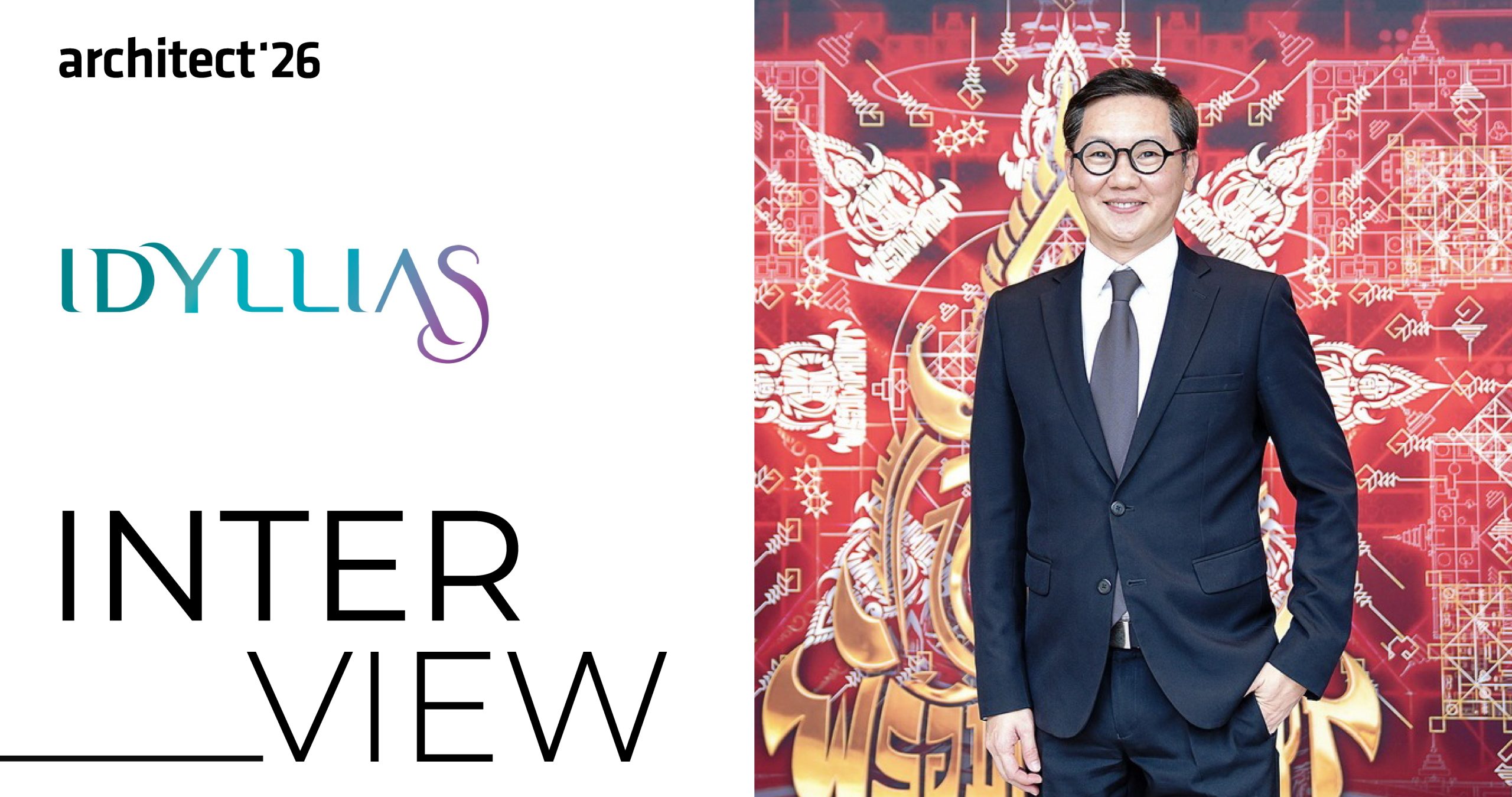
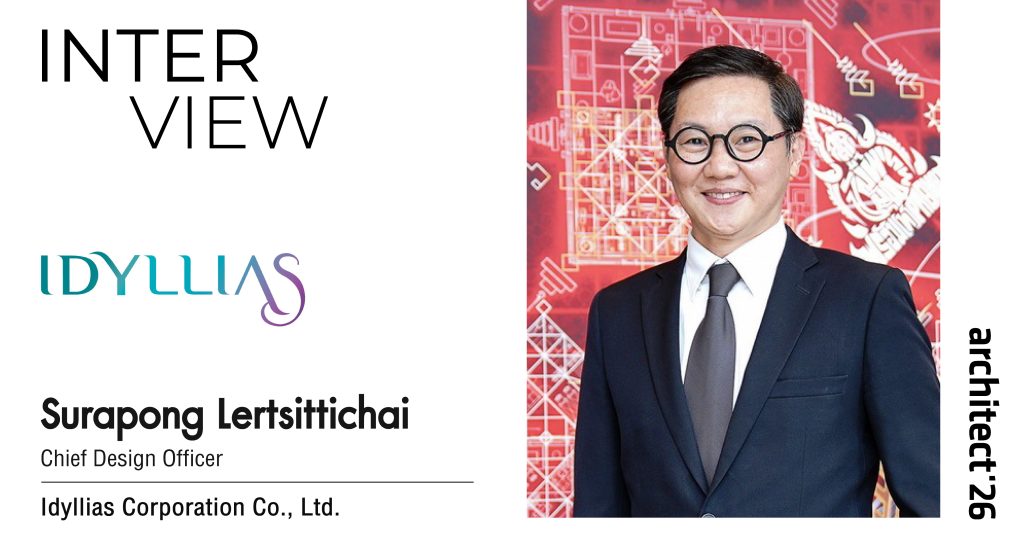
One of the keynote speakers was Assoc. Prof. Dr. Surapong Lertsitichai, Chief Design Officer of MQDC Idyllias (Metta-Verse), who shared his vision on AI, Digital Twin technology, and ecological design—emerging foundations that are reshaping both Thai and global architectural practice.
Idyllias and the Mission to Bridge the Physical and Digital Worlds
During the session, Dr. Surapong explained the role of Idyllias, which works closely with the construction and real estate industries. Its core mission is twofold: to connect the physical world with the digital world, and to make data about cities, buildings, and living environments more accessible and understandable.
By integrating digital intelligence, Idyllias enables humans, trees, animals, and the environment to be seen as interconnected elements of a shared ecosystem. One notable example is the Digital Twin of The Forestias, which simulates the project across all stages—from construction to full operation—while providing in-depth data on each sub-project. This allows users to clearly visualize spaces, understand environmental contexts, and see how ecosystems function as a whole.
“In the future, daily life, real estate development, and urban decision-making will increasingly rely on digital data. Design must seamlessly integrate the physical and virtual worlds,” Dr. Surapong noted.
Well-being Beyond Humans: Designing for the Entire Ecosystem
Dr. Surapong emphasized that well-being should not be defined solely in human terms. Humans are just one part of a broader ecosystem that includes trees, animals, and natural systems. When development ignores environmental context, it can lead to flooding, landslides, urban heat, and ecological degradation.
While humans can adapt quickly, nature and wildlife cannot. Therefore, contemporary architecture must prioritize balance with nature, rather than focusing only on human convenience.
Mindfulness: The Core Skill for Architects in the AI and Data-Driven Era
Reflecting the main theme of Architect’26, Dr. Surapong explained that intelligence exists in many forms—human intelligence, environmental intelligence, and biological intelligence. All require mindfulness to guide responsible evaluation and decision-making.
Architects today must combine data, AI, and traditional wisdom to create designs that are accountable not only to users, but also to communities and the environment over the long term.
AI as the Architect’s “Second Eye”
Rather than replacing architects, AI acts as a second set of eyes, revealing insights beyond human perception. These include watershed boundaries, seasonal water flows, wildlife habitats, conservation zones, wind patterns, solar exposure, and future climate risks.
By integrating these layers of information, AI enables architects to make design decisions that are more precise, comprehensive, and environmentally informed.
Adaptive Cities and Responsive Architecture
Looking ahead, Dr. Surapong predicted that architecture will become increasingly adaptive and responsive. Buildings may adjust in real time to sunlight, wind, and climate conditions. Urban systems will analyze risk through big data, while public spaces will be designed through inclusive participation across all social groups.
AI will play a critical role in shaping environments at every scale—from buildings and neighborhoods to cities and national planning.
Designing the Future with Mindfulness and Responsibility
In closing, Dr. Surapong shared a key message for professionals in architecture and construction: AI will become an essential tool, but it is mindfulness and responsibility that give design its true meaning.
Good architecture must serve people, communities, cities, and nature together. Future designers must combine technological expertise with ethical awareness—forming the foundation of sustainable architecture in an era where humans and technology grow alongside the natural world.
Architect’26, ASEAN’s largest architectural technology and building materials exhibition, returns for its 38th edition across more than 75,000 square meters. The event will feature over 1,000 international brands and more than 100,000 products, and will take place from 28 April to 3 May 2026 at Challenger Halls 1–3, IMPACT Muang Thong Thani.