ASA Megä Hill
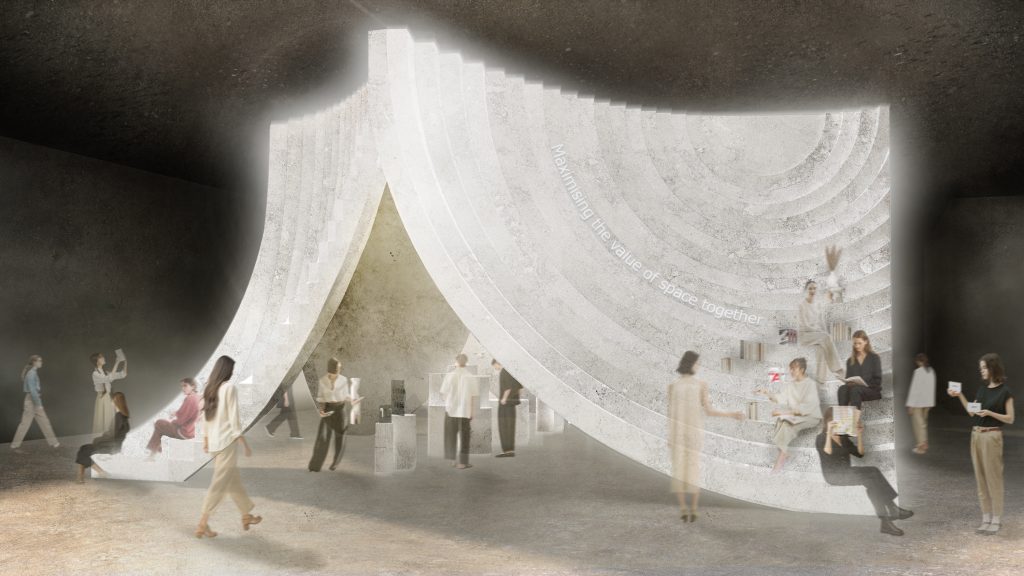
ASA Megä Hill is a pavilion designed to create a gradual transition for visitors—from walking through rows of exhibition booths to ascending a steep hill-like form. The space draws inspiration from the distinctive character of natural forest environments, where individual trees grow freely yet collectively form a forest that becomes the heart of the surrounding environment.
The experience evokes the sensation of slowly crossing the boundary between exhibition booths and entering a new landmark within the exhibition. This transition is seamlessly connected through architecture that embraces the journey of movement, while offering visitors the freedom to choose their own path of exploration. There is no single prescribed route—no clearly defined left or right, front or back, or even a fixed entrance or exit.
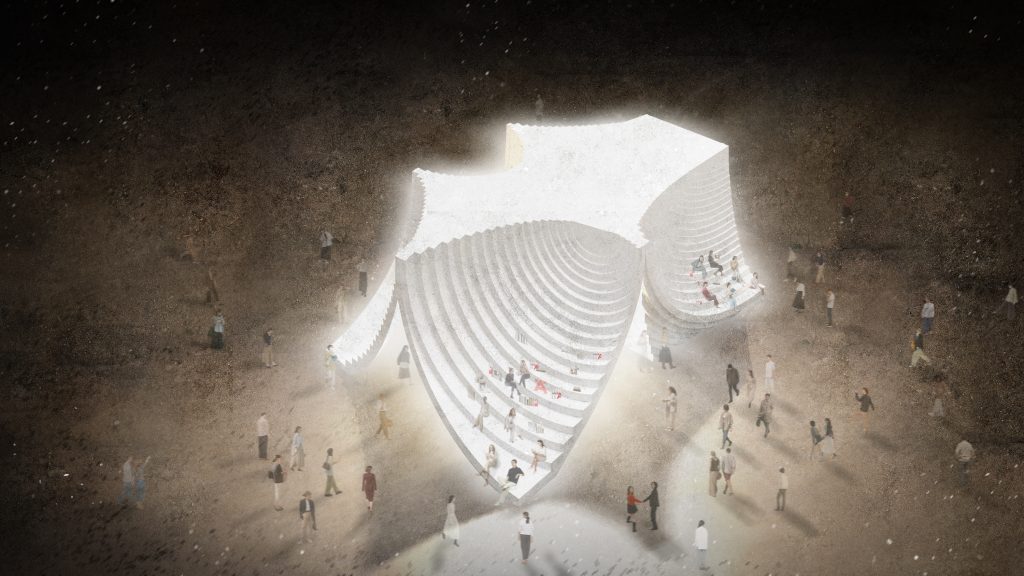
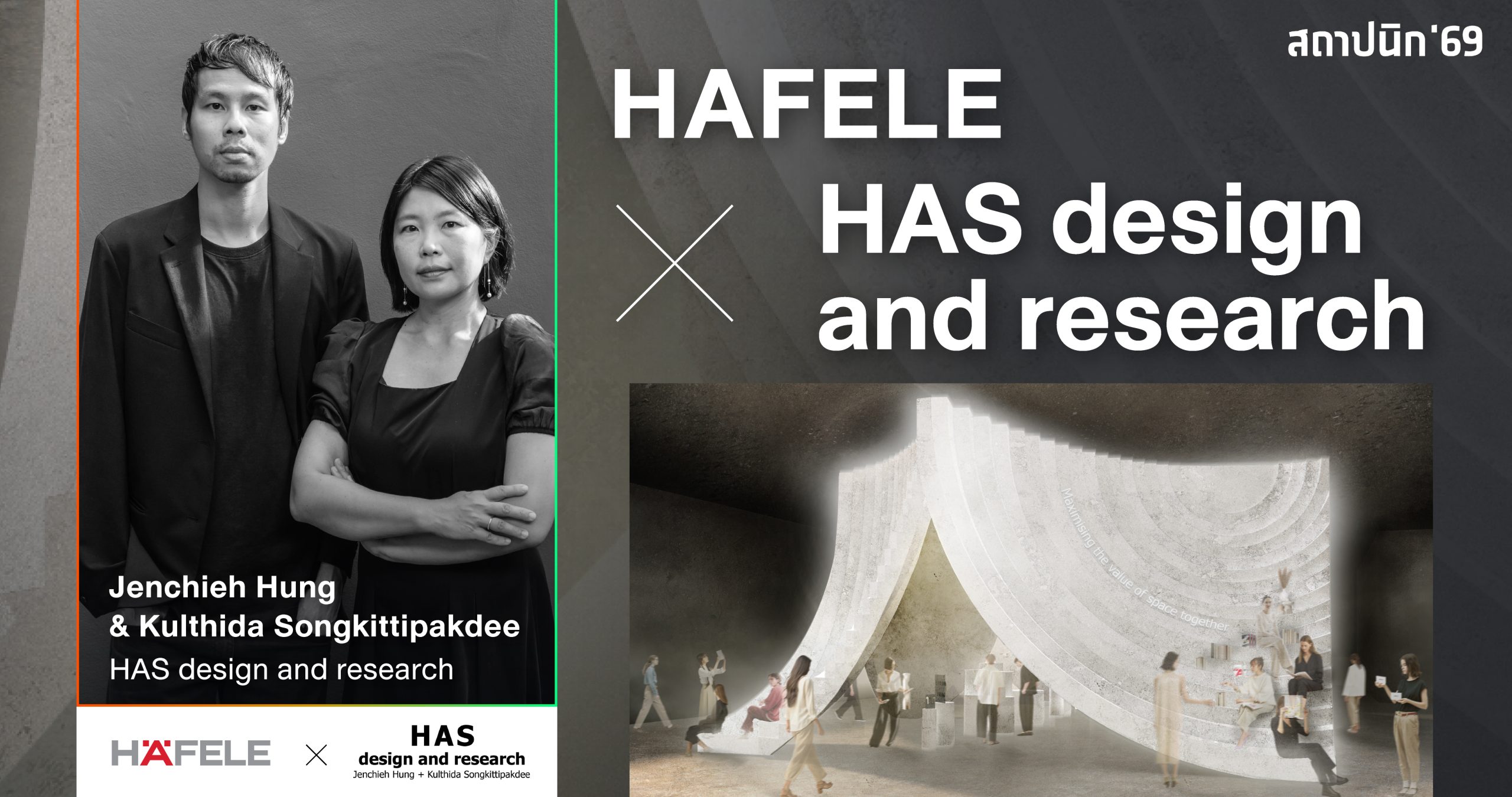
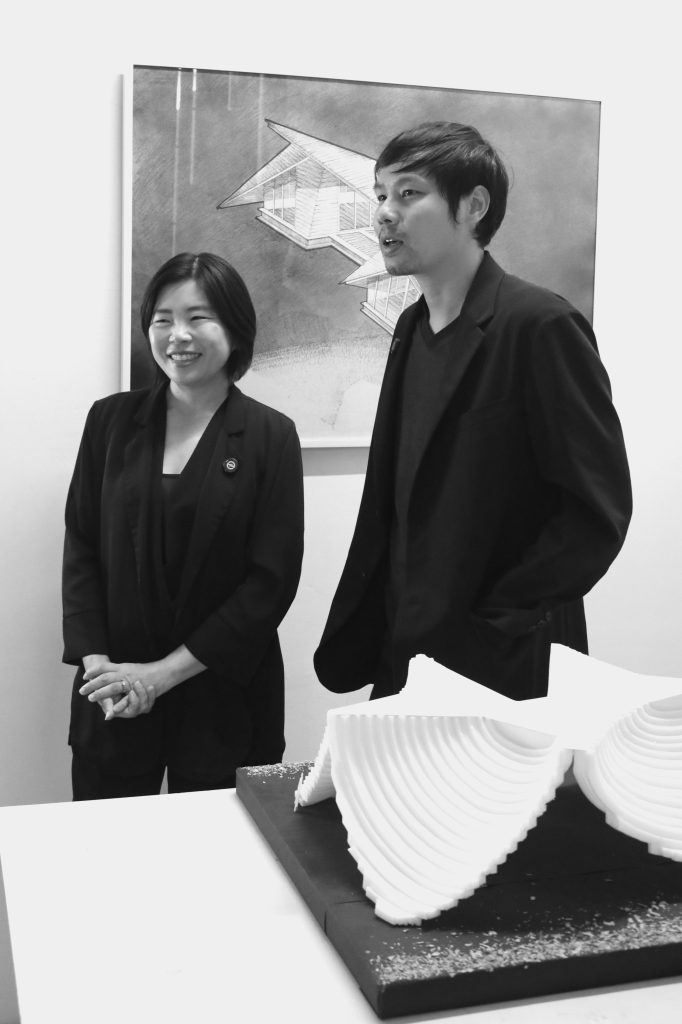
Join the conversation with architects Jenchieh Hung and Kulthida Songkittipakdee of the award-winning firm, Jenchieh Hung + Kulthida Songkittipakdee / HAS design and research (abbreviated as HAS design and research), the architects behind one of the Thematic Pavilions at Architect’26 titled “ASA Megä Hill,” developed in collaboration with the brand Häfele.
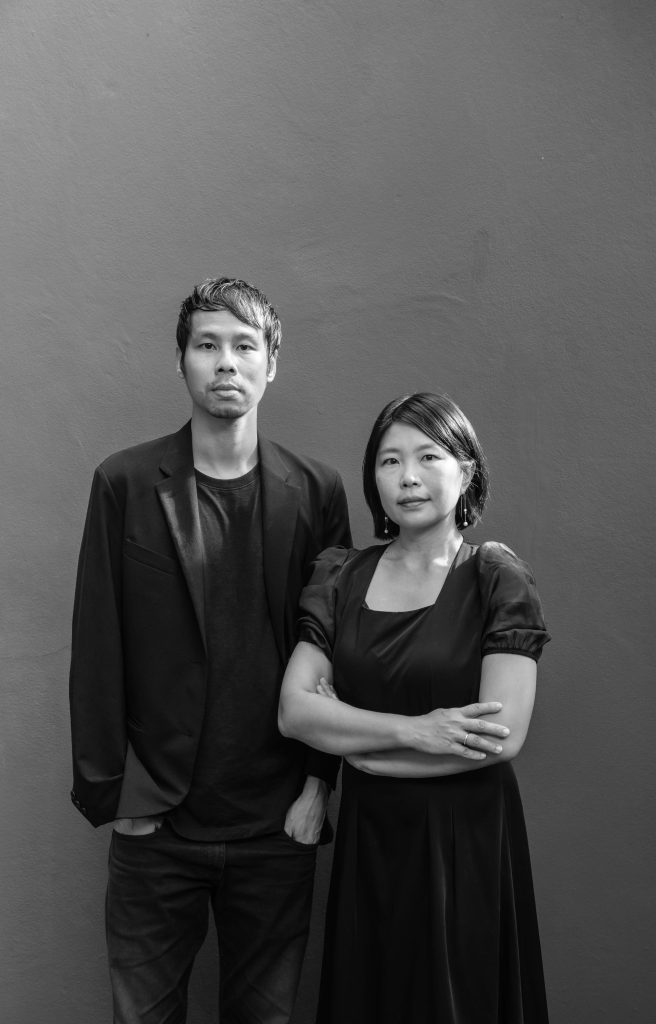
เจอร์รี หง และ กุลธิดา ทรงกิตติภักดี
(Jenchieh Hung + Kulthida Songkittipakdee / HAS design and research)
“From the very beginning, we envisioned this pavilion as a gathering place within Architect’26—a place where people would want to pause, step in, explore, and interact with the space.
We interpreted the brief as more than simply designing a product display booth. Instead, we saw it as an opportunity to present Häfele through a landscape-like spatial experience, focusing on the design of an experiential ecosystem. The journey begins when visitors first step into ASA Megä Hill, continues as they explore the interior spaces, and concludes as they exit the pavilion,” said architects Jenchieh Hung and Kulthida Songkittipakdee.
The two architects from the Thai firm, Jenchieh Hung + Kulthida Songkittipakdee / HAS design and research, also shared a design vision developed in collaboration with The Association of Siamese Architects (ASA). They observe that exhibition design today is evolving—shifting from conventional product displays toward creating meaningful spatial experiences.
At the same time, Häfele recognized an opportunity to reinterpret and reposition its brand identity in a way it had never done before. This idea became a key concept driving the design.
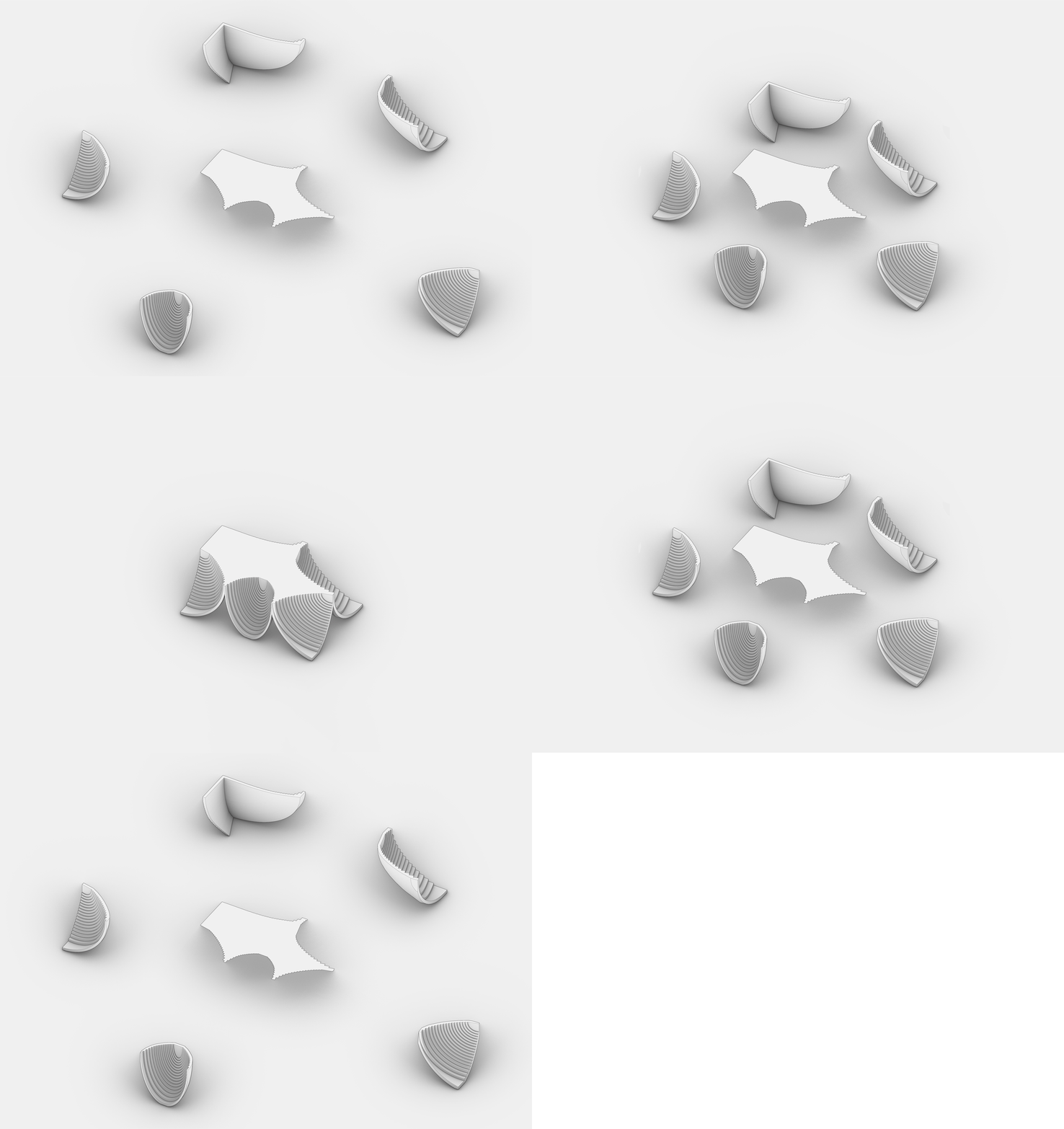
The result emerged from weaving together these ideas through a wide range of research studies and explorations. Ultimately, they were translated into a clear and accessible design language characteristic of HAS design and research, resulting in a new form of innovation pavilion that successfully brings together all of these concepts.
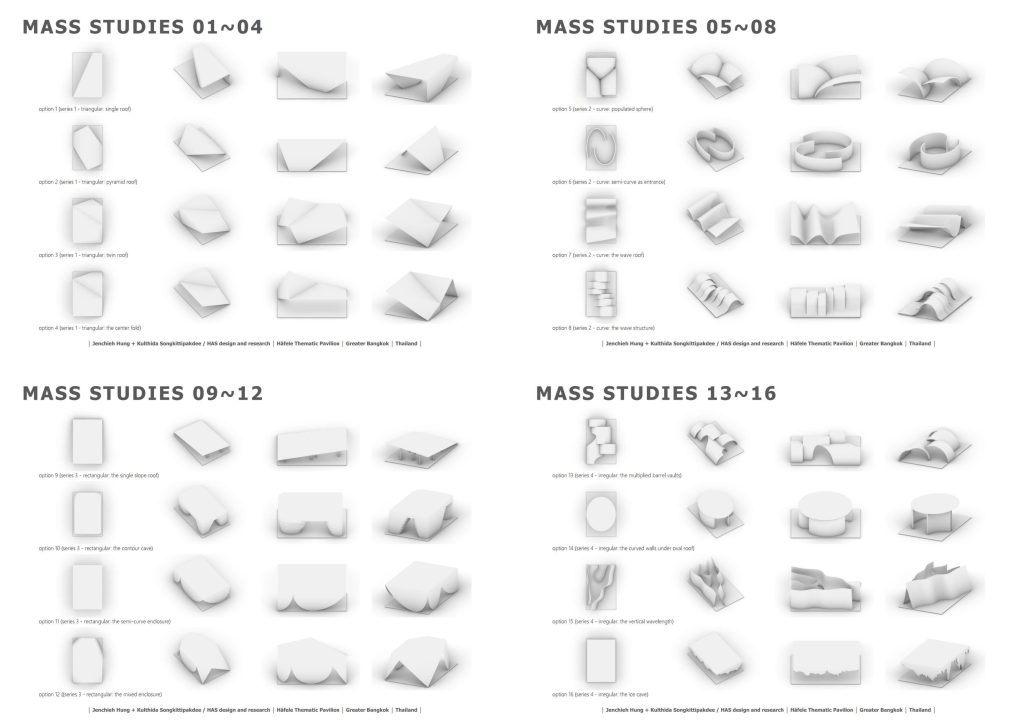
(Research Study Diagram)
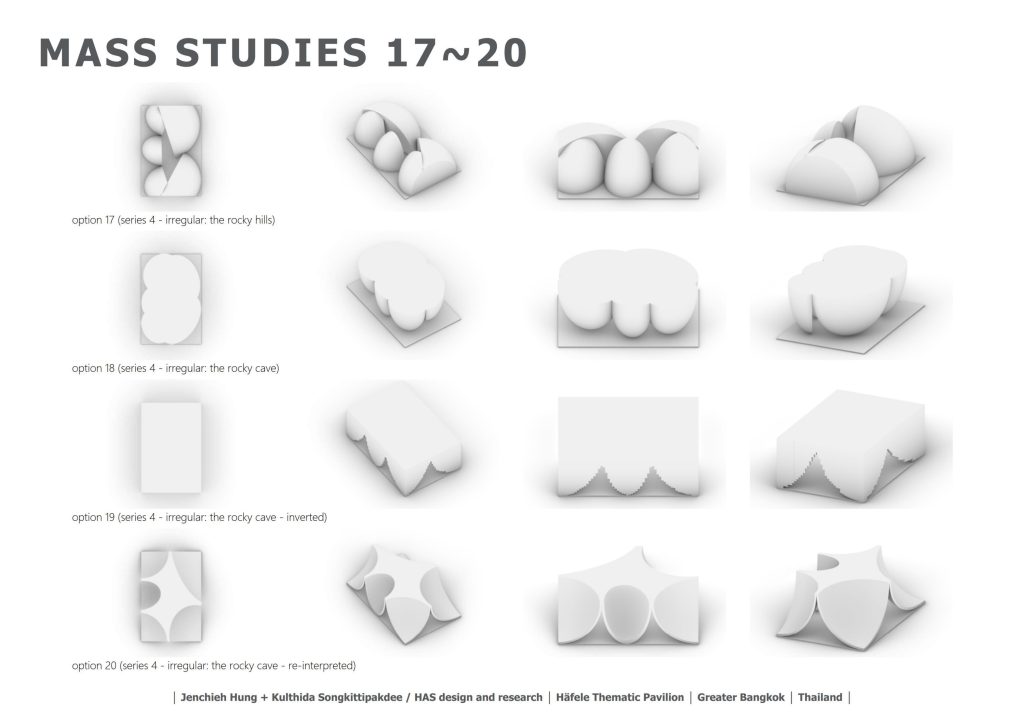
(Research Study Diagram – Final Form)
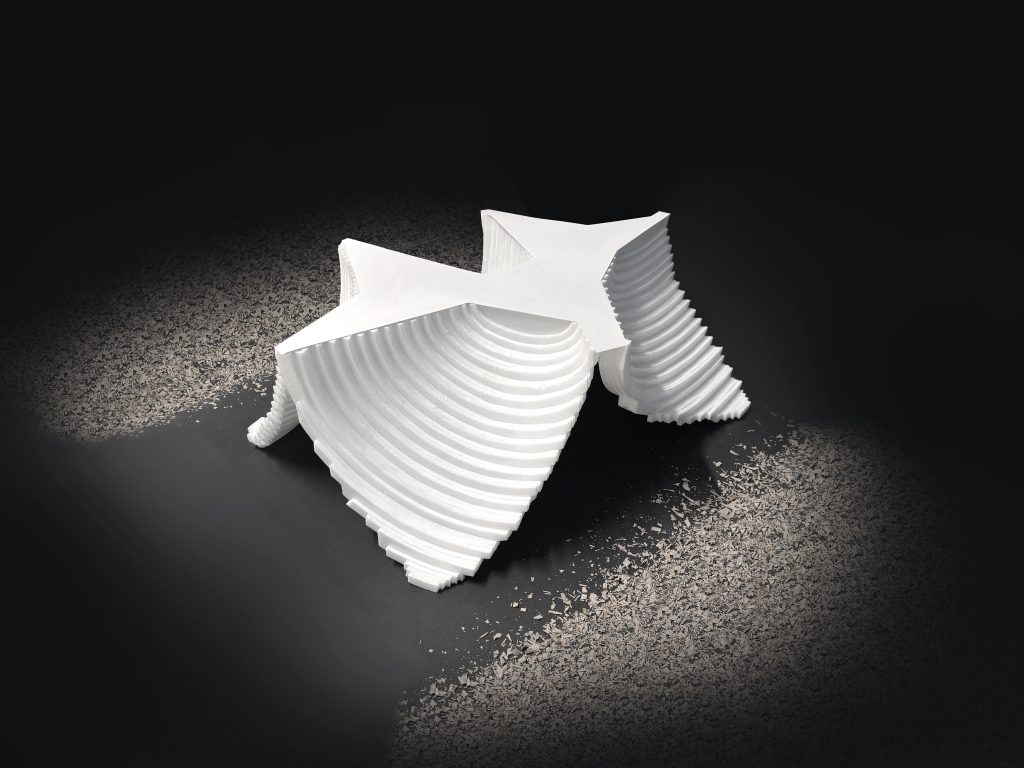
(“ASA Megä Hill” Model Photograph- Top View)
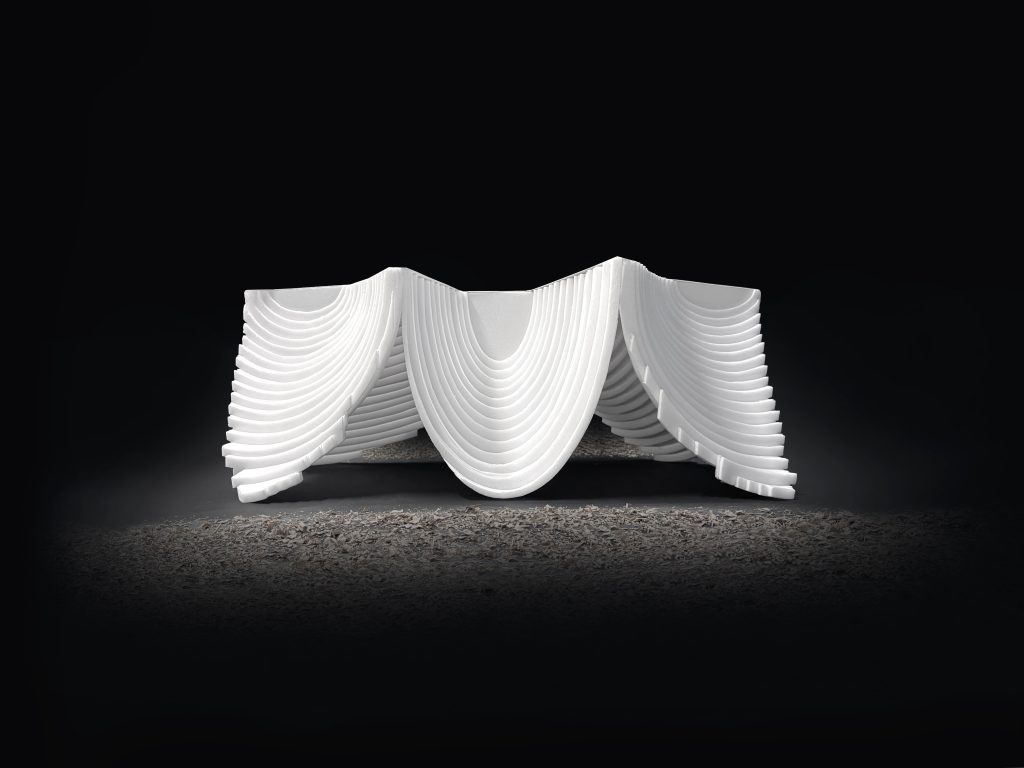
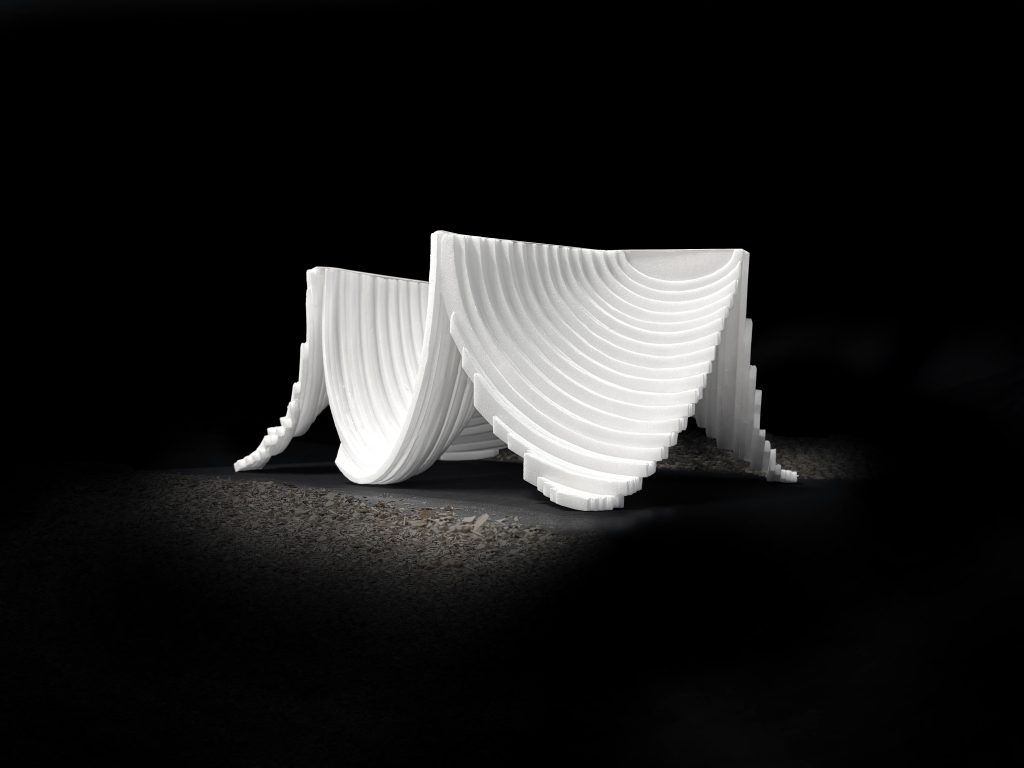
(“ASA Megä Hill” Model Photograph)
The term “Megä Hill” at Architect’26 is presented under the concept Future of Completion by Connecting with Nature, which establishes a connection between technology and nature.
The pavilion reinterprets the familiar image of a product exhibition booth and transforms it into an “inhabitable topography.” It invites people to step in, pause, relax, and explore Häfele’s space and innovations.
The design creates a spatial experience that goes beyond the idea of a booth, responding to the context of exhibition visits that emphasize interaction and visitor engagement.
Multi-Functional Space at Architect’26
From the exterior, the pavilion appears as a hill gradually rising through a series of stepped terraces that converge at the top. Visitors can access the pavilion from every direction, approaching it from all sides.
These steps also serve as seating areas where visitors can sit, relax, and take a break from walking around the exhibition.
Once inside the pavilion, visitors will experience Häfele’s innovations through curated displays of hardware products.
The selection of products and the determination of display positions were carried out systematically through close collaboration between the brand and the design team. The highlighted innovations include Architectural Hardware, Kitchen Solutions, Sanitary Solutions, Motion Control systems, and Lighting
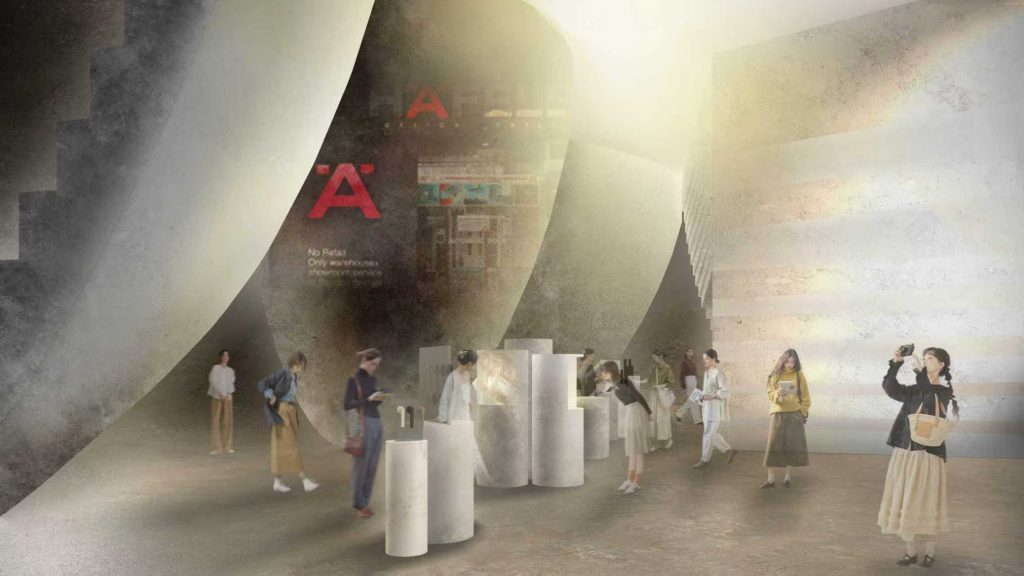
(Interior space)
Product placements are carefully marked to allow visitors to move freely throughout the pavilion without a fixed route. Visitors may begin their exploration anywhere, end anywhere, and pause wherever they wish. This freedom of movement was a carefully considered strategy by architects Jenchieh Hung and Kulthida Songkittipakdee.
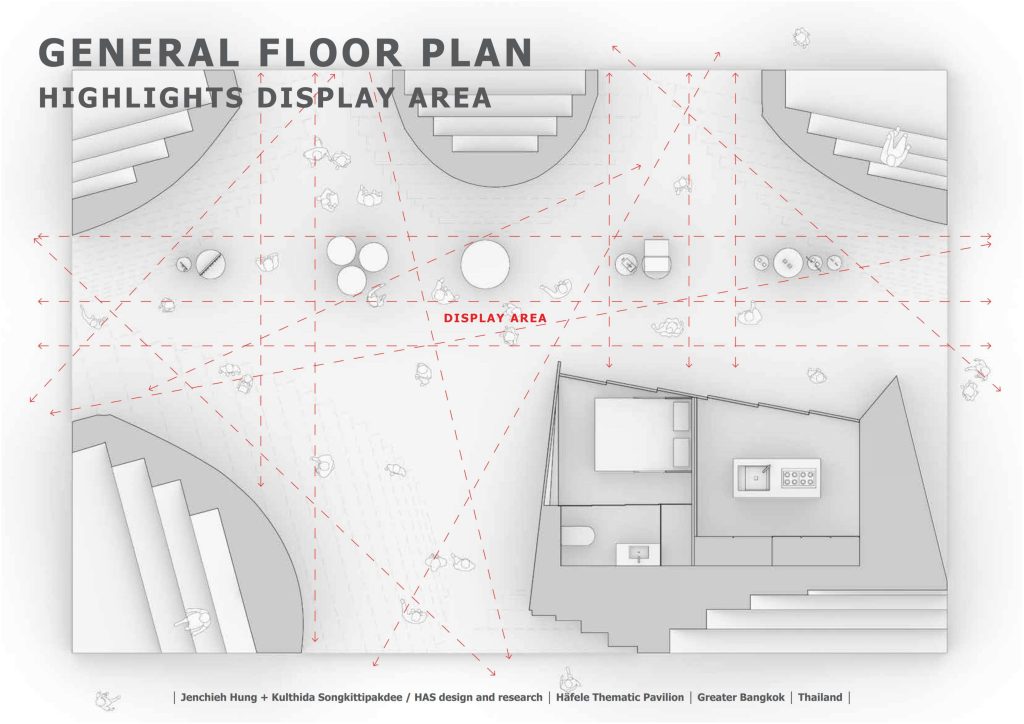
(Floor plan)
Construction That Reflects Brand Innovation and Environmental Responsibility
“We collaborated with Häfele, a comprehensive hardware solutions brand, so our construction approach differs from other pavilions that primarily express the brand through materials. Instead, we selected materials based on their ability to be shaped and formed, while placing greater emphasis on systematically planning the pavilion’s installation as a holistic process. This approach reflects Häfele’s leadership in construction innovation while also taking sustainability into consideration.”
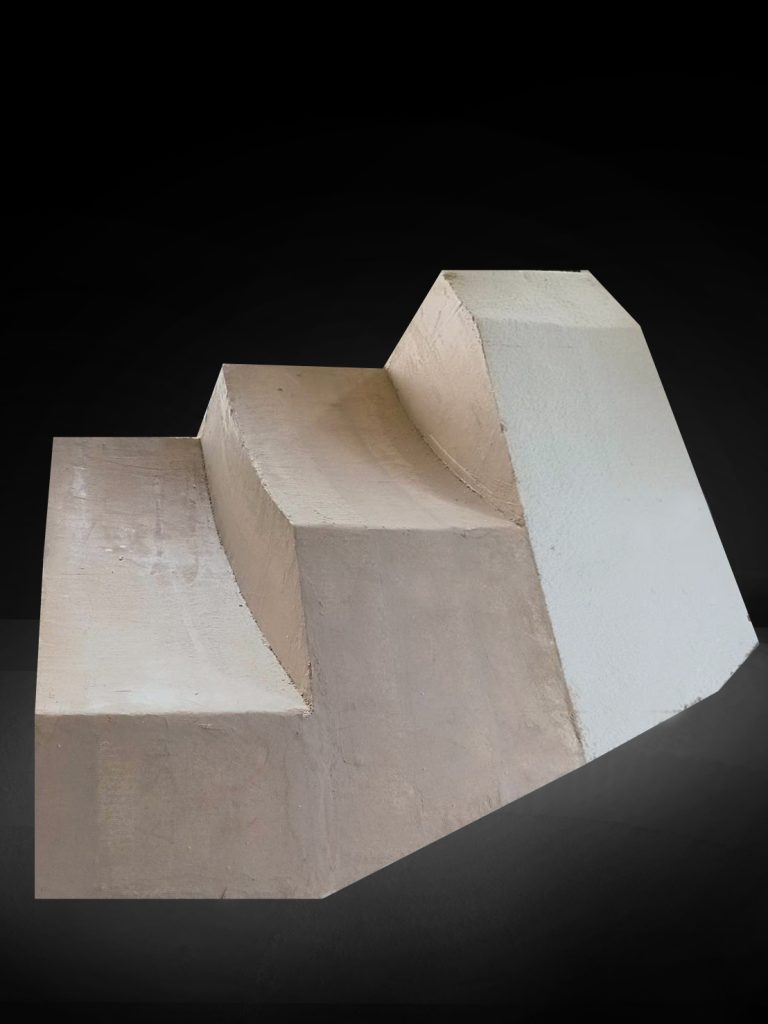
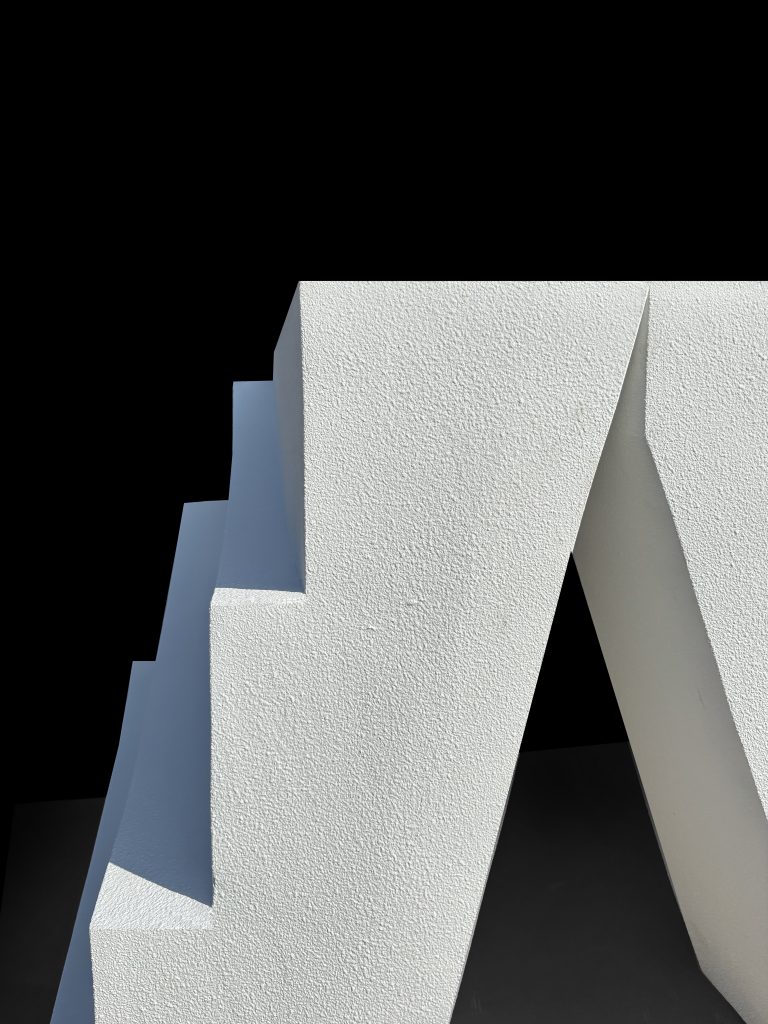
(Material Samples by Has design and research)
“The pavilion is constructed using a modular system, which allows each component to be disassembled and reassembled. This method ensures that the pavilion will not become exhibition waste once the event ends. Instead, it can be reconstructed and displayed again in other locations in the future. It is an effective way to reduce resource consumption and minimize post-exhibition waste, while authentically reflecting the brand’s identity.”
ASA Megä Hill therefore represents not only experiential architecture, but also a design approach that incorporates environmental responsibility and aligns with the future direction of sustainable building solutions.
ASA Megä Hill, The new destination of Architect’26, waiting to be discovered
“We would like to invite everyone—architects, designers, or anyone interested in design or involved in the construction industry—to visit ASA Megä Hill at Architect’26,” the architects conclude.
“For this Thematic Pavilion by HAS design and research, created together with Häfele, our intention was to offer an experience that goes beyond walking through a product display area. It is both a space and an experience that introduces a new way of engaging with exhibitions, while presenting a new interpretation of the Häfele brand in a way that has never been done before.”
“At the same time, we aim to push the future of exhibition design forward—where every element can become part of a design system focused on experiential design, integrating the presentation of innovation with environmentally responsible construction methods.”
“We invite everyone to come and explore this space together. Whether you are a professional in the field or a student, or even a student, we believe this pavilion will offer inspiration and meaningful experiences for all visitors.”
Mark your calendar and come experience it for yourself at Architect’26: Sati – Wisdom – Prompt, taking place from April 28 to May 3, 2026, at Challenger Hall 1–3, IMPACT Muang Thong Thani.