The greatest challenge in designing a Thematic Pavilion is not simply presenting the familiar functions of materials, but capturing attention and time from hundreds of thousands of visitors flowing into IMPACT Challenger over the 6 days of Architect Expo, an event held only once a year.
The goal is to communicate a brand’s message through materials transformed into spatial experiences, allowing visitors to engage with design in a memorable and multi-dimensional way.
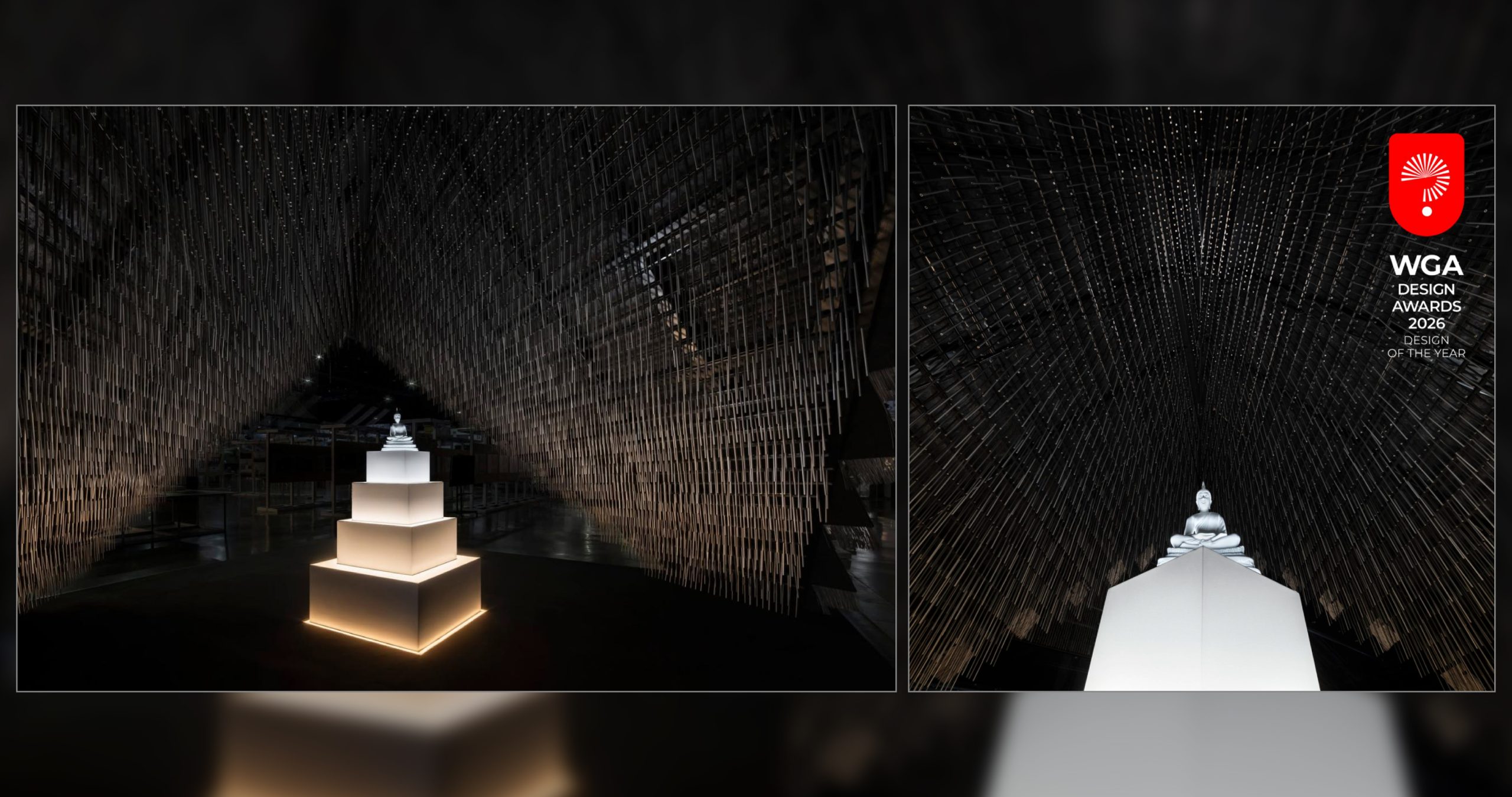
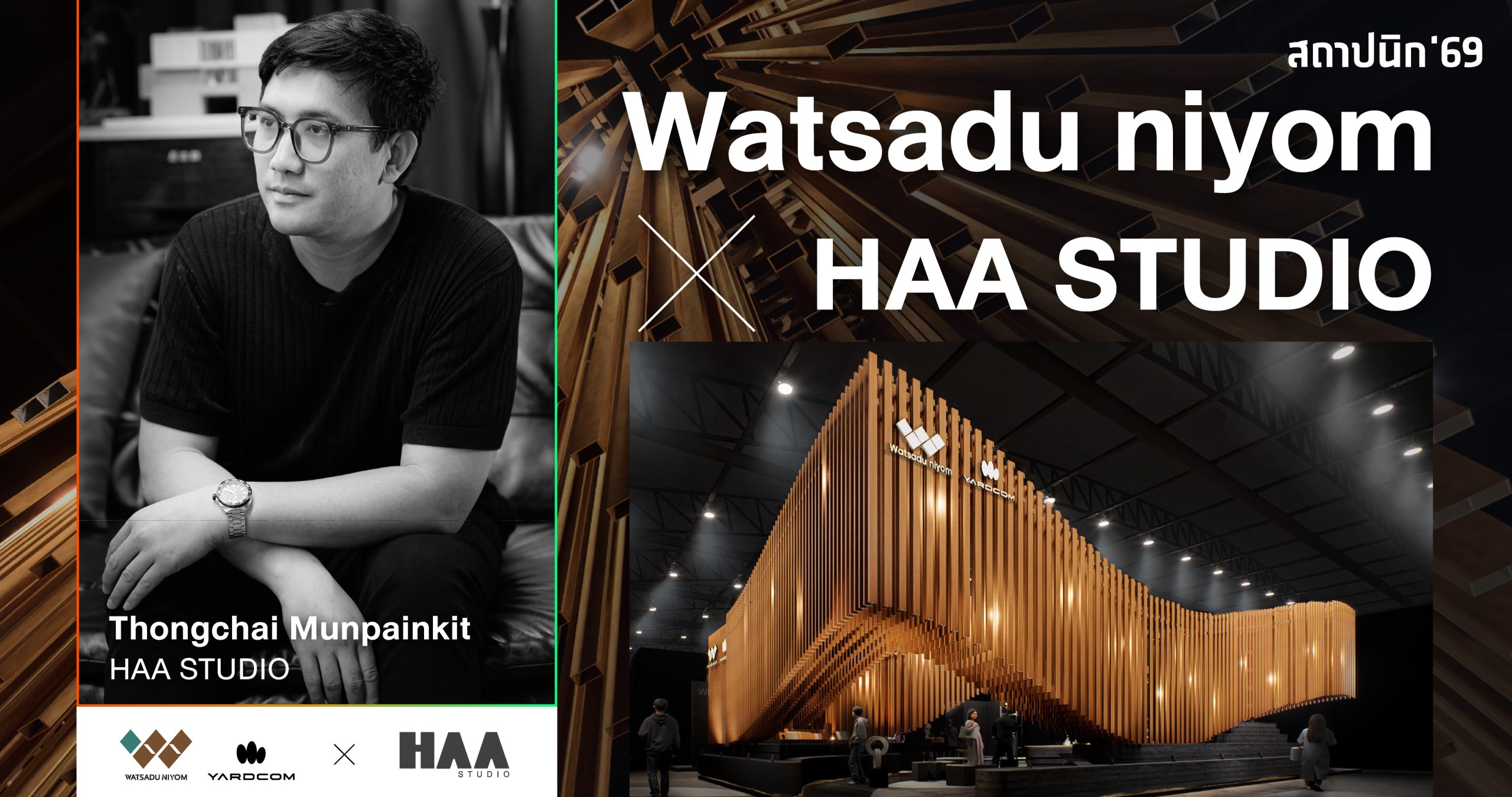
“Watsadu Niyom Pavilion,” a collaboration between Watsadu Niyom — a leader in innovative artificial wood and premium architectural materials — and HAA STUDIO, immediately stands out. Over 2,750 straight-line artificial wood components are arranged rhythmically to form an organic architectural expression, resembling flowing light waves that soften the perception of rigid wooden slats and bring the material to life.

Behind this fluid form lies the inspiration of the Aurora, developed through a deeper design narrative that goes beyond visual beauty. Before experiencing the pavilion at Architect ’26, we speak with Bass – Thongchai Manneepiyaek, architect from HAA STUDIO, to decode the concept behind it.
‘AURORA’
Magic Moment, Magic Time
When asked about the origin of the concept, Bass explained that the main challenge was creating a strong visual identity and awareness among a diverse audience, while also communicating the brand’s commitment to sustainability by transforming materials beyond their limitations into a distinctive pavilion.
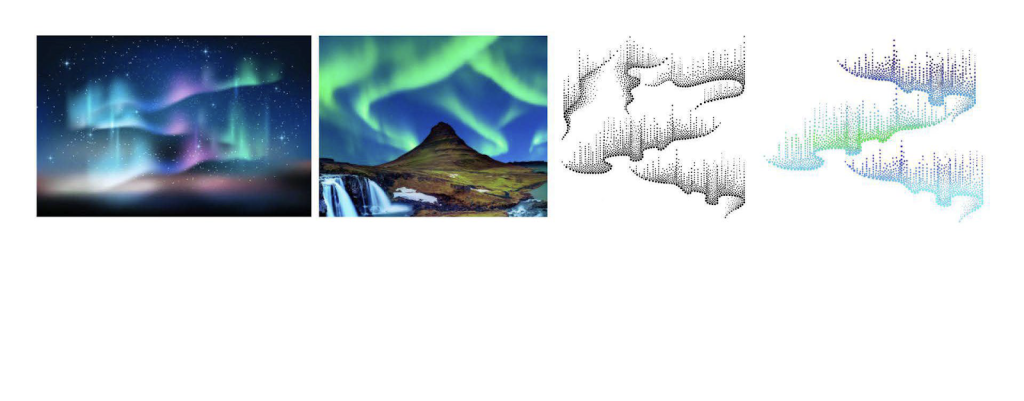
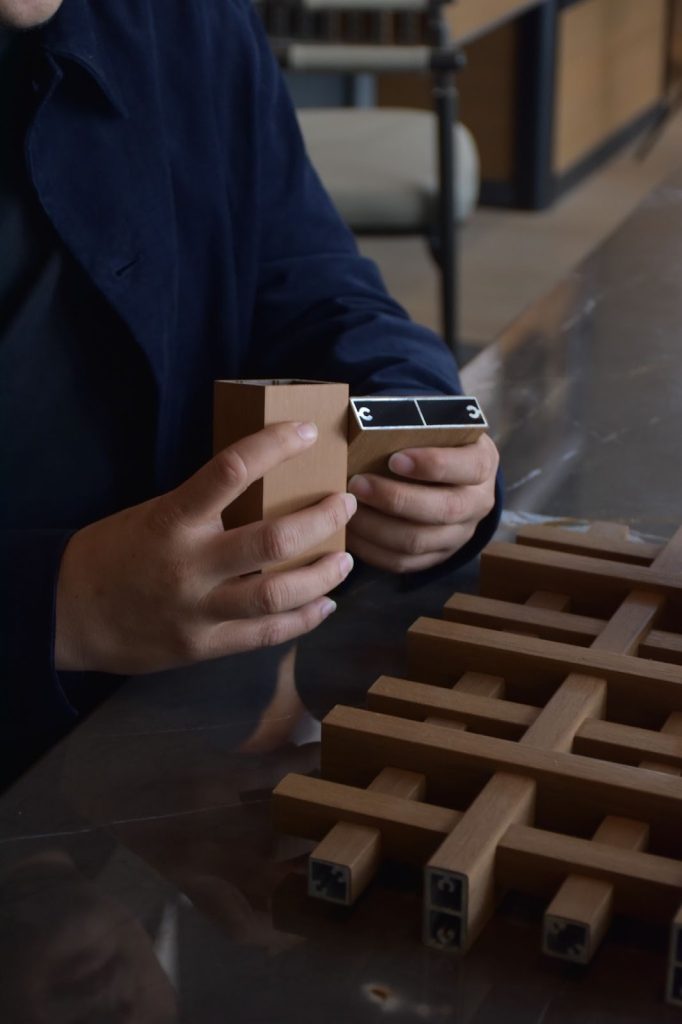
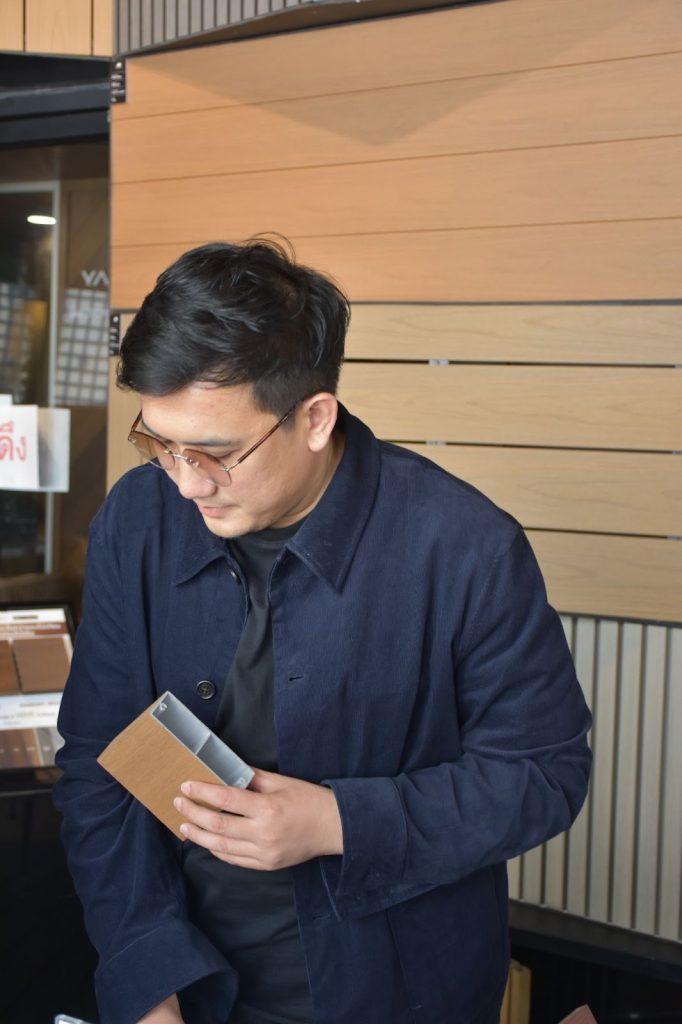
HAA STUDIO developed the concept “Inspire in Space,” reinterpreting spatial design beyond conventional usage. The pavilion utilizes over 2,750 pieces of APC (Aluminium Plastic Composite) and ASA (Acrylonitrile Styrene Acrylate), forming an architectural installation inspired by the natural phenomenon of the Aurora — the Northern Lights — connecting the story of the brand’s growth with Watsadu Niyom and the studio’s 10-year journey.
“Aurora is said to be most vivid every 10 years, when energy cycles align. That timing reflects both Watsadu Niyom and HAA STUDIO, which are celebrating their 10th anniversaries this year. That became our starting point.”
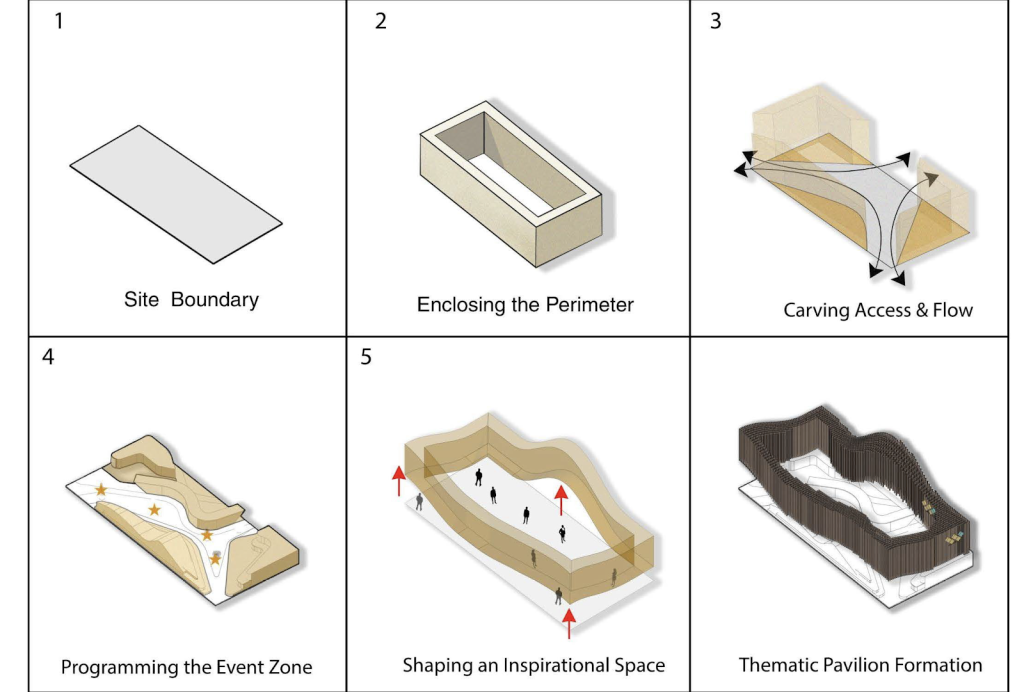
The lower base of the pavilion is designed as a dark-toned contour landscape, resembling mountain shadows at night. This enhances the visual contrast of the wooden teak slats above while also serving as structural support.
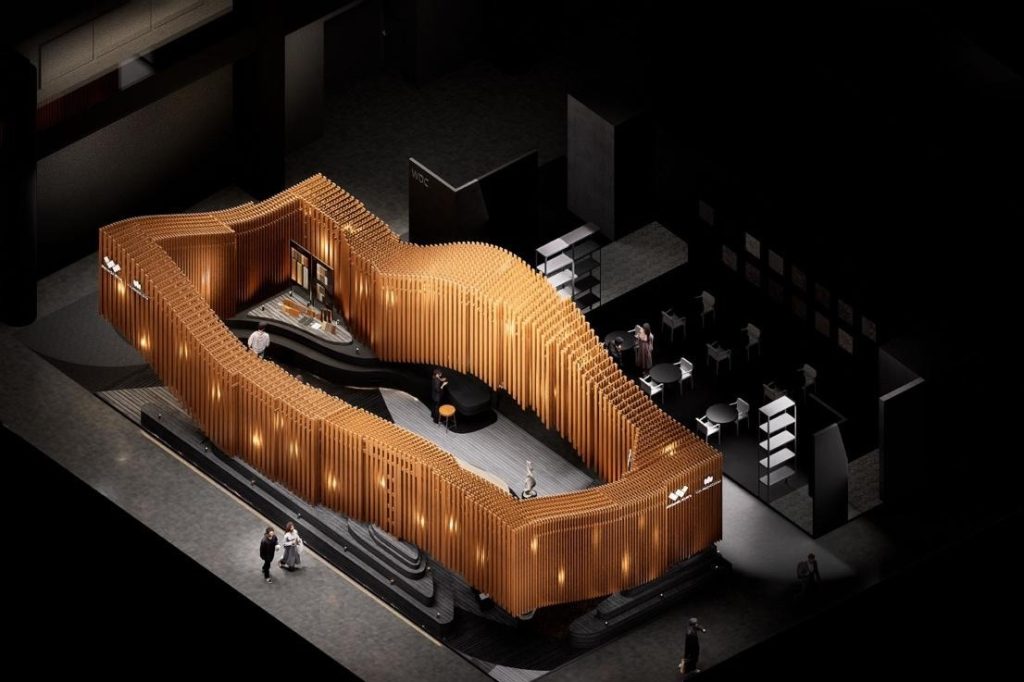
Lighting is randomly embedded within the slat structure, creating natural sparkling effects similar to starlight across a night landscape, giving the pavilion a dynamic and atmospheric presence.
Inspire in Space
Inside the pavilion, the “Inspire in Space” concept continues through curated spatial experiences that encourage visitors to explore ideas freely. The layout, circulation paths, and key highlights are designed to stimulate creativity and inspiration.
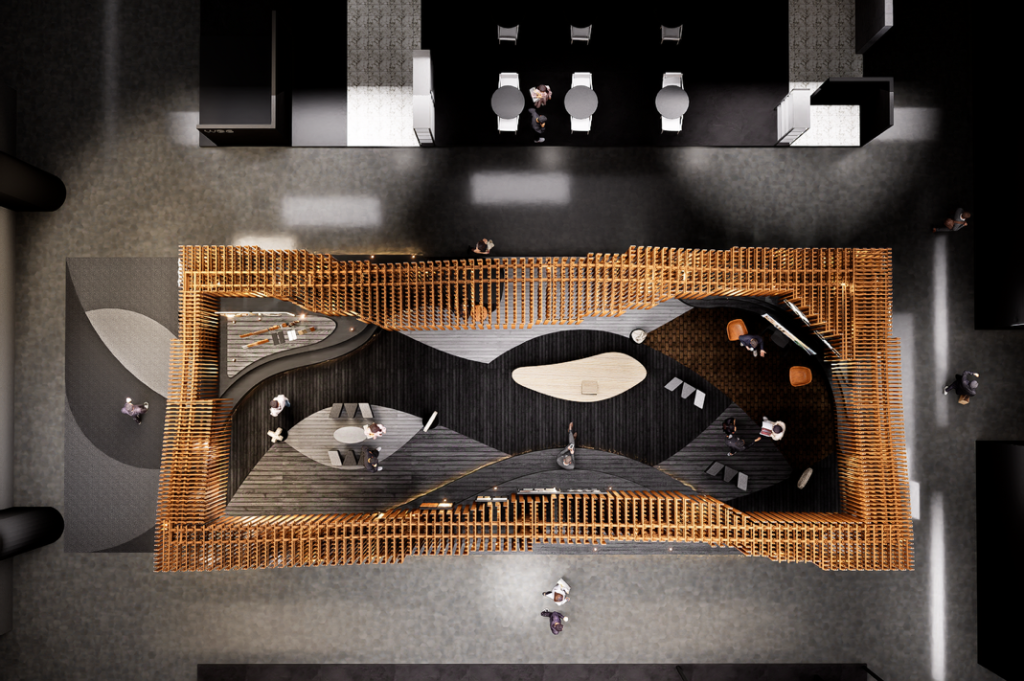
“The pavilion is designed as a courtyard with three entrances. Exhibition zones are placed along the perimeter rather than the center, allowing visitors to freely navigate and choose their own experience.”
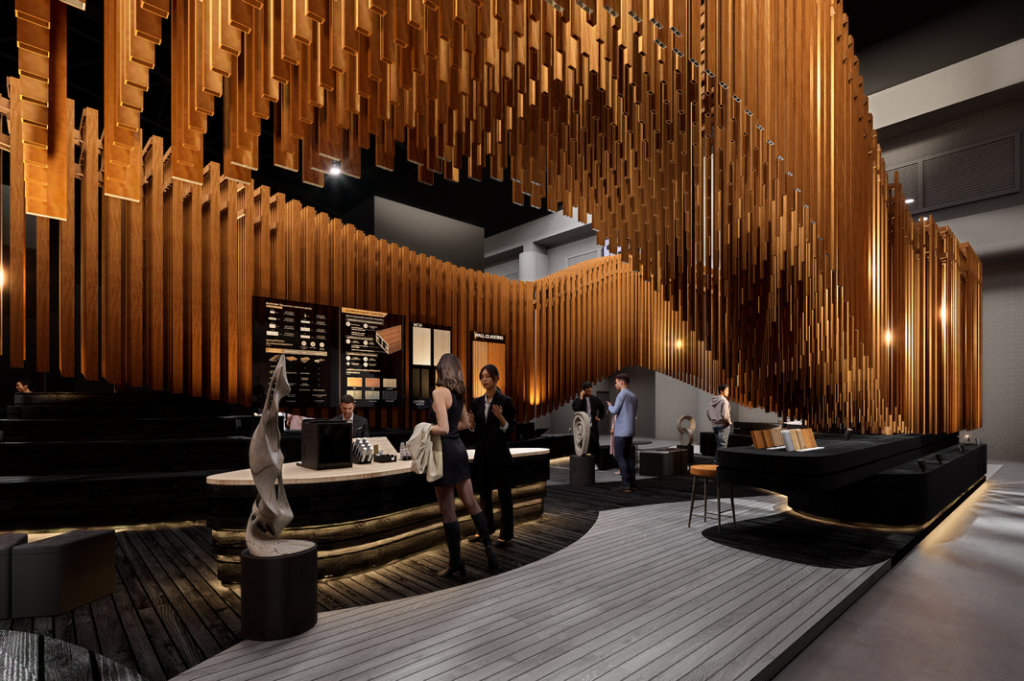
Importantly, in addition to the exhibition space showcasing our products, we also aim to inspire visitors. Therefore, we have dedicated space to display art pieces from three idol architects and one leading artist in the industry. We determined the concept and selected the initial materials. I believe everyone who visits the exhibition will take something away with them. The final and largest art piece is the pavilion itself.”
The Eternal Light
The ‘light cycle’ that never ends, along with the ‘display cycle’.
A key design philosophy is to challenge the idea of a temporary architecture limited to only 6 days of exhibition. The pavilion is designed for long-term value, sustainability, and reuse.
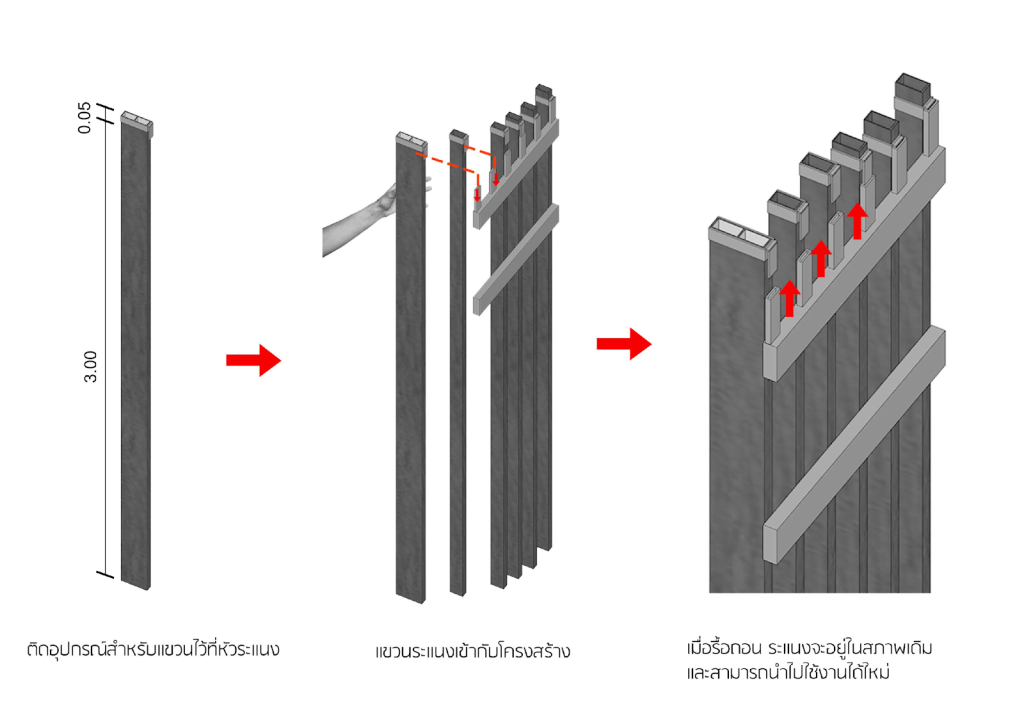
- The entire structure is prefabricated and assembled using a Nut & Bolt system instead of welding, allowing easy installation and dismantling. Modular components use dry interlocking systems for precision and efficiency.
- The entire structure is prefabricated and assembled using a Nut & Bolt system instead of welding, allowing easy installation and dismantling. Modular components use dry interlocking systems for precision and efficiency.
- Material optimization is also prioritized — standard 3-meter slats are intentionally extended to 3.05 meters, with the extra 5 cm repurposed for structural hanging points, ensuring zero waste and enabling material reuse after the exhibition.
Logistics are also optimized to reduce carbon emissions by designing modular dimensions that maximize transport efficiency.
After the event, 100% of the pavilion will be relocated and reused in a new showroom, extending its lifecycle beyond the exhibition.
ARCHITECTS & AI
When asked about AI in architecture:
“I don’t think AI can fully replace architects, but it cannot be ignored either. It helps filter ideas and accelerate processes. Even with the same tools and prompts, different designers will get different outcomes because of their unique thinking styles.”
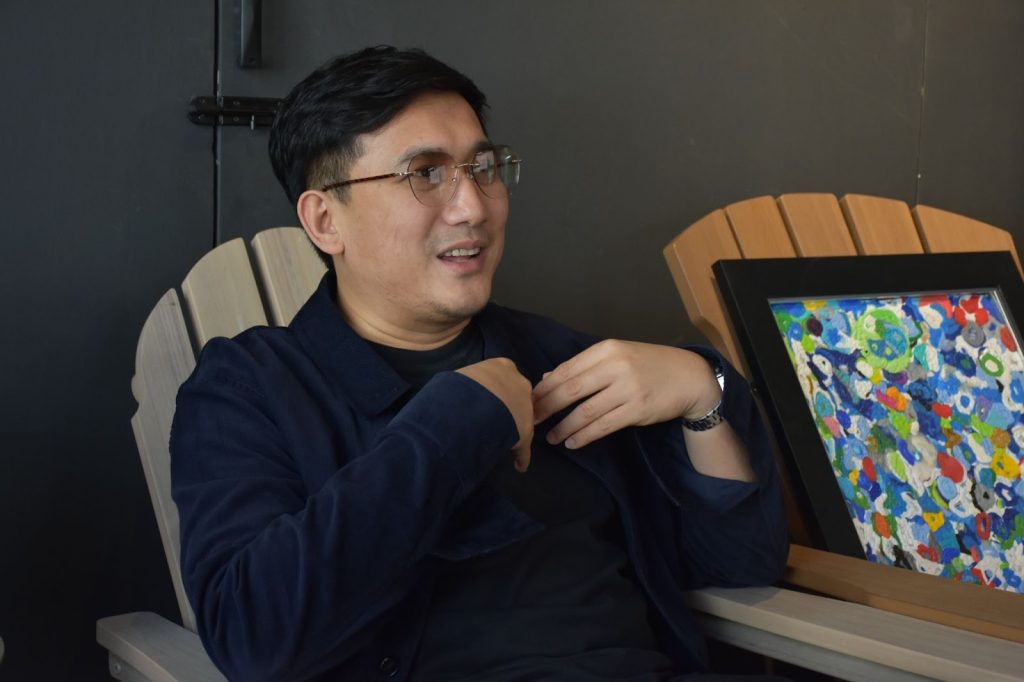
“For this pavilion, we use AI mainly for early-stage exploration and presentation mood boards, but not for core design or 3D generation. We still want the final spatial experience to be designed and controlled by human intention.”
Chase the Lights, Ignite Your Inspiration
“This year’s Architect Expo is worth setting time aside for. If you come with 100 expectations, you will likely leave with 300 or even 500.”
“I invite everyone to visit the Watsadu Niyom Pavilion during its 10th anniversary showcase. You will see how artificial wood is not limited to slats or façades, but can be transformed into art, design, and spatial inspiration.”
Come experience the Northern Lights in a different form — BoothTP01 at Architect ’26: SATI WISDOM PROMPT
28 April – 3 May 2026
IMPACT Challenger Hall, Muang Thong Thani