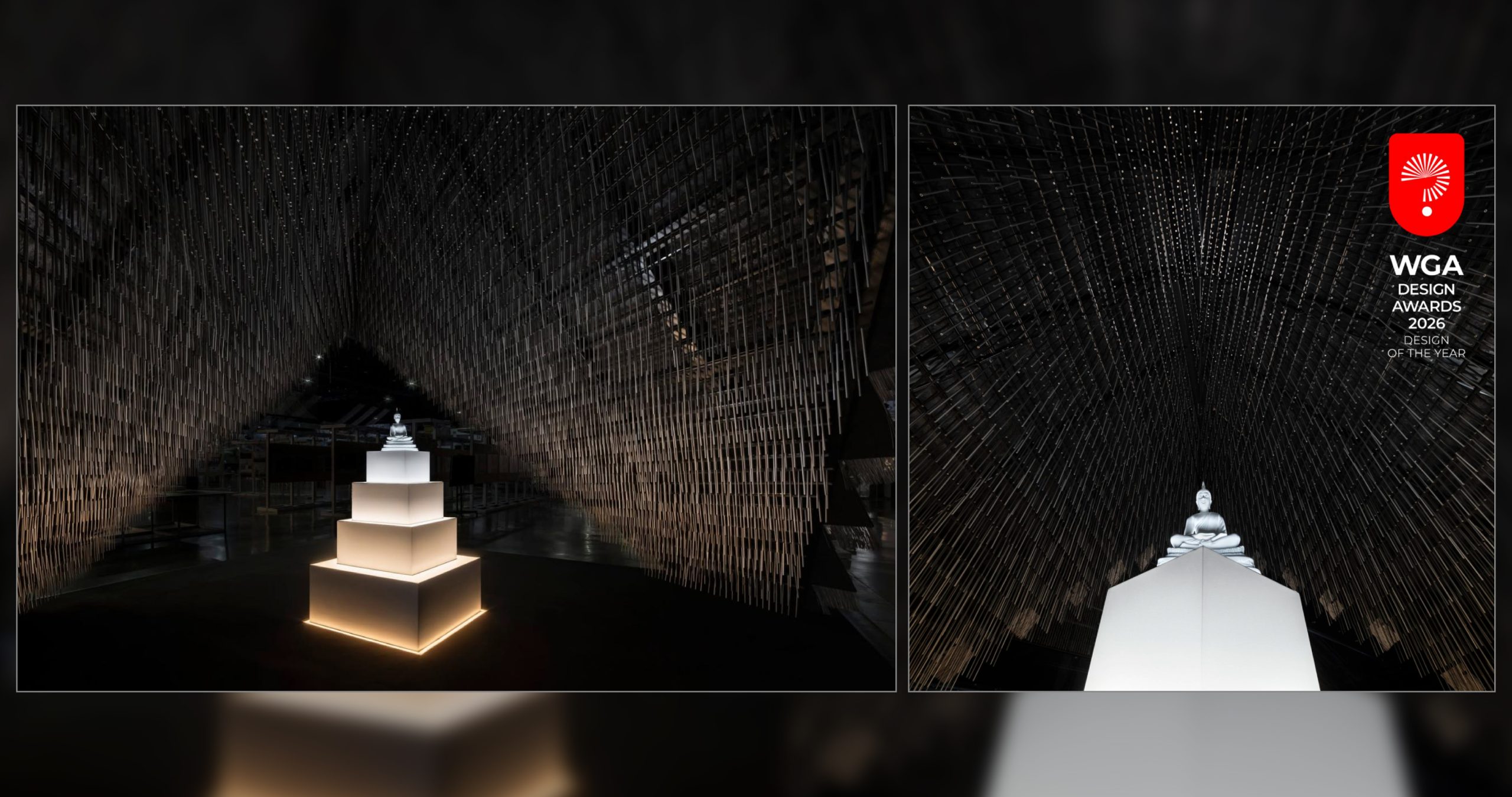
When people in the architecture field hear the term “wood-based board panels,” they often think of interior finishing materials or furniture rather than building-scale applications. But what if this familiar material could have its potential unlocked—reimagined into an architectural work that both creates memorable spatial experience and reveals the origin of the material itself?
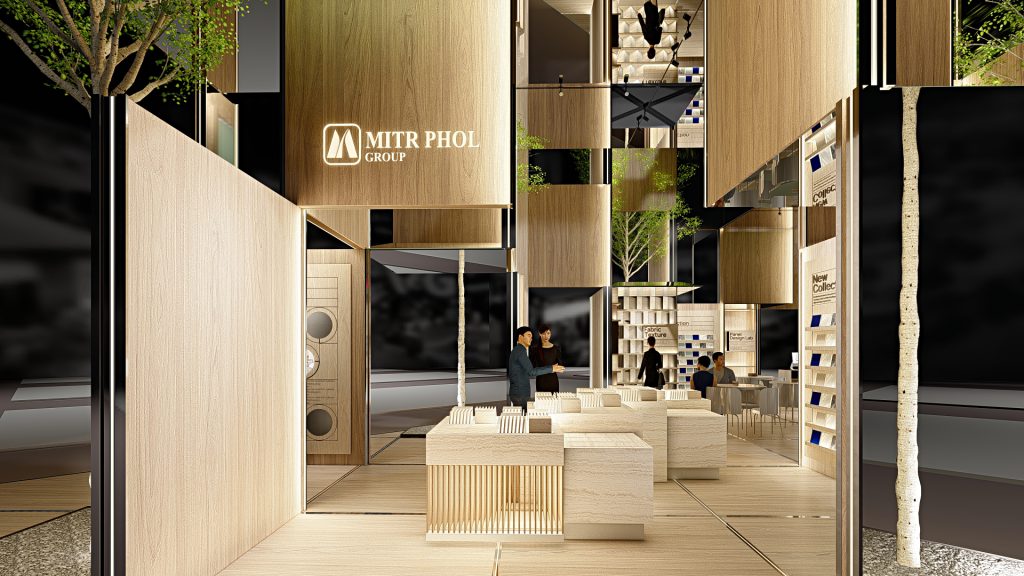
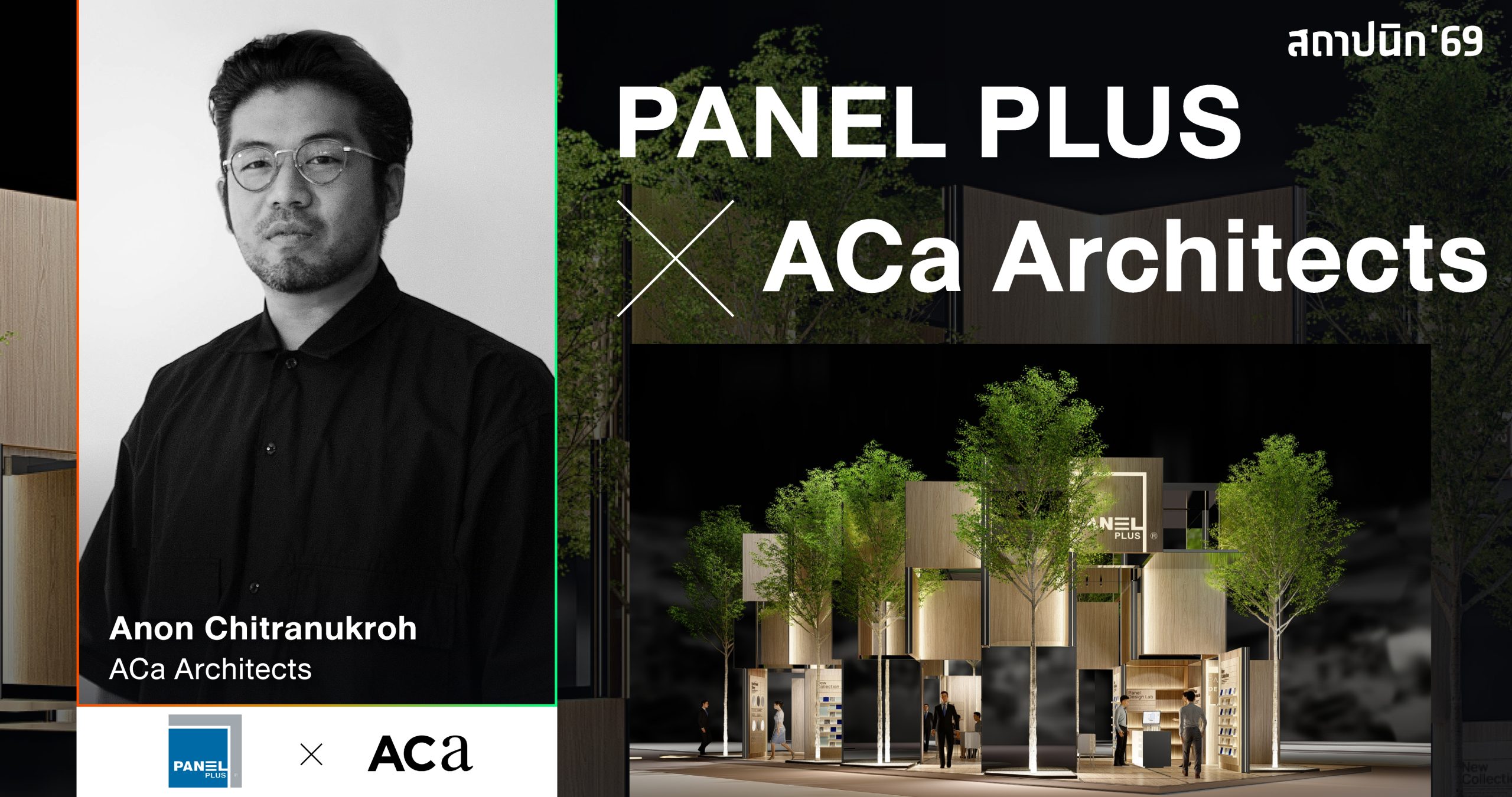
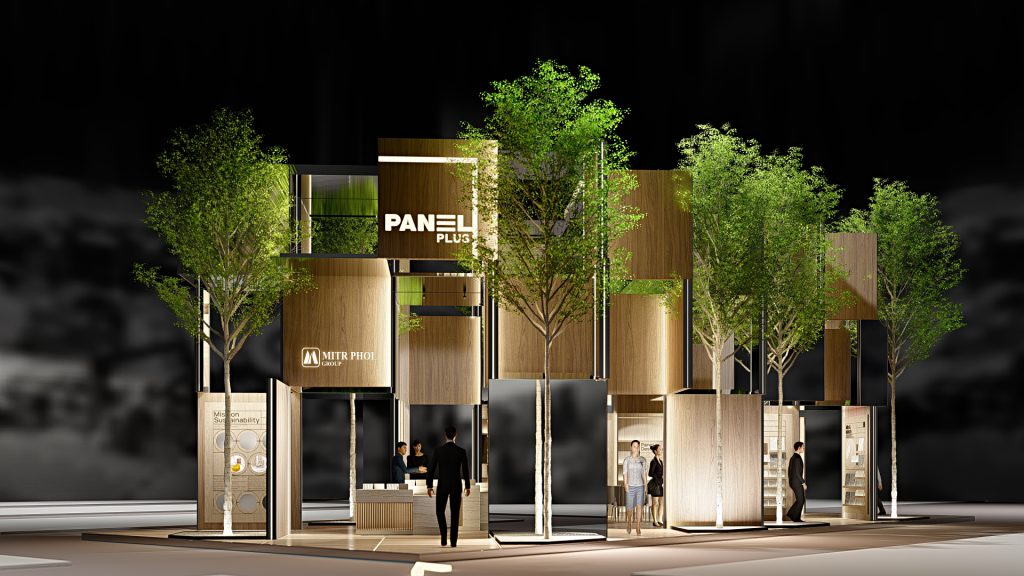
This uniquely shaped Thematic Pavilion, resembling a maze-like structure, is a collaboration between ACA Architects, a studio known for its simple yet refreshing design approach, and Panel Plus, a leading Thai and international manufacturer and distributor of engineered wood substitute materials under Mitr Phol Group.
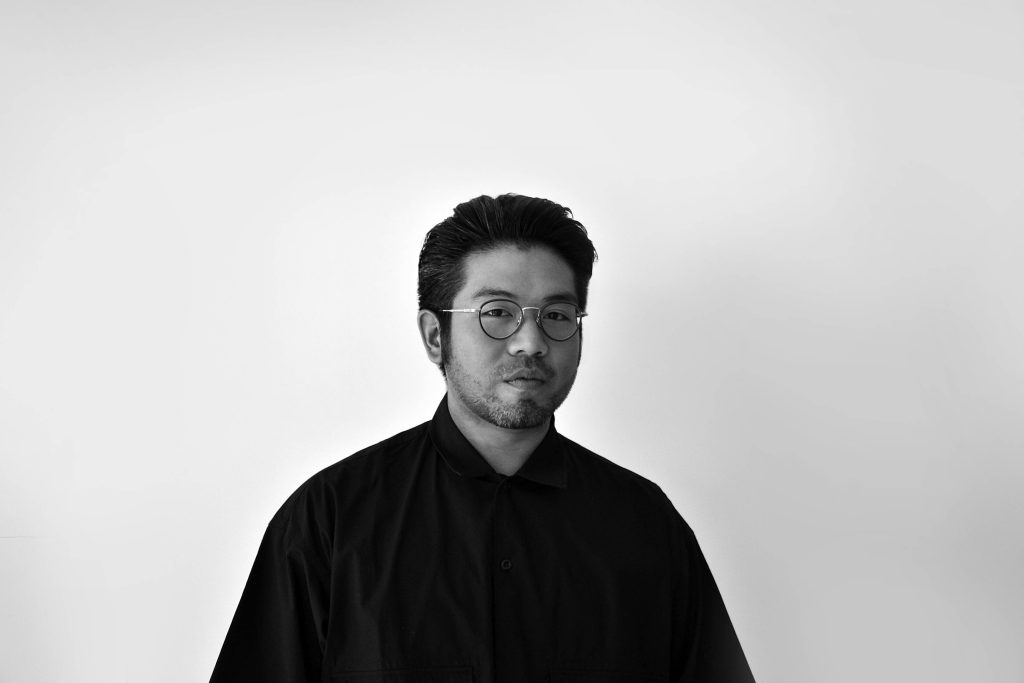
Anon Chitranukroh, Founder & Art Director from ACA Architect.
The return of a designer known for his Thematic Pavilion, constructed from tens of thousands of steel units, is met with a new challenge: a reinterpretation of a simple material, ‘wooden boards,’ transforming them into a multidimensional and intriguing space. Let’s explore the answer with Jok – Anon Jitranukroh, Founder & Art Director from ACA Architect.
From ‘Zero’ to ‘Super E-Zero’
Beginning with sustainability as a starting point
The design concept originates from the intention to express the identity of Perfect Wood, a melamine-faced wood panel innovation that delivers both the aesthetic and tactile qualities of natural wood. The design preserves the character of large board panels while reinterpreting them to narrate their hidden origin story—reflecting the production process that upholds high quality and sustainability standards from start to finish.
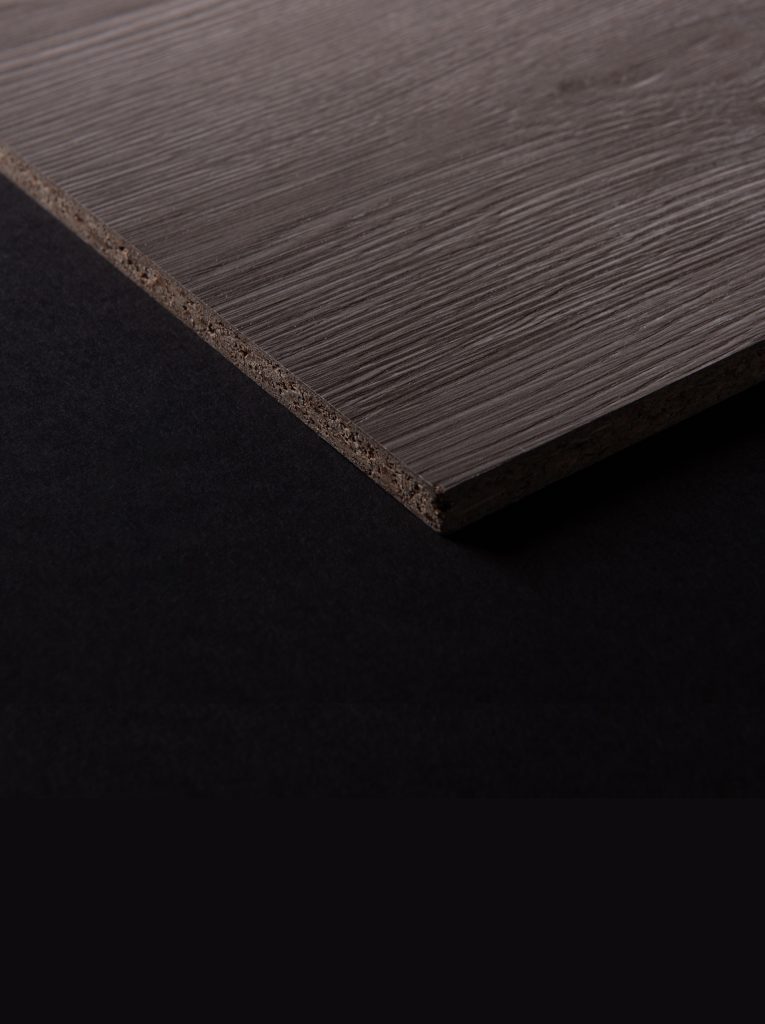
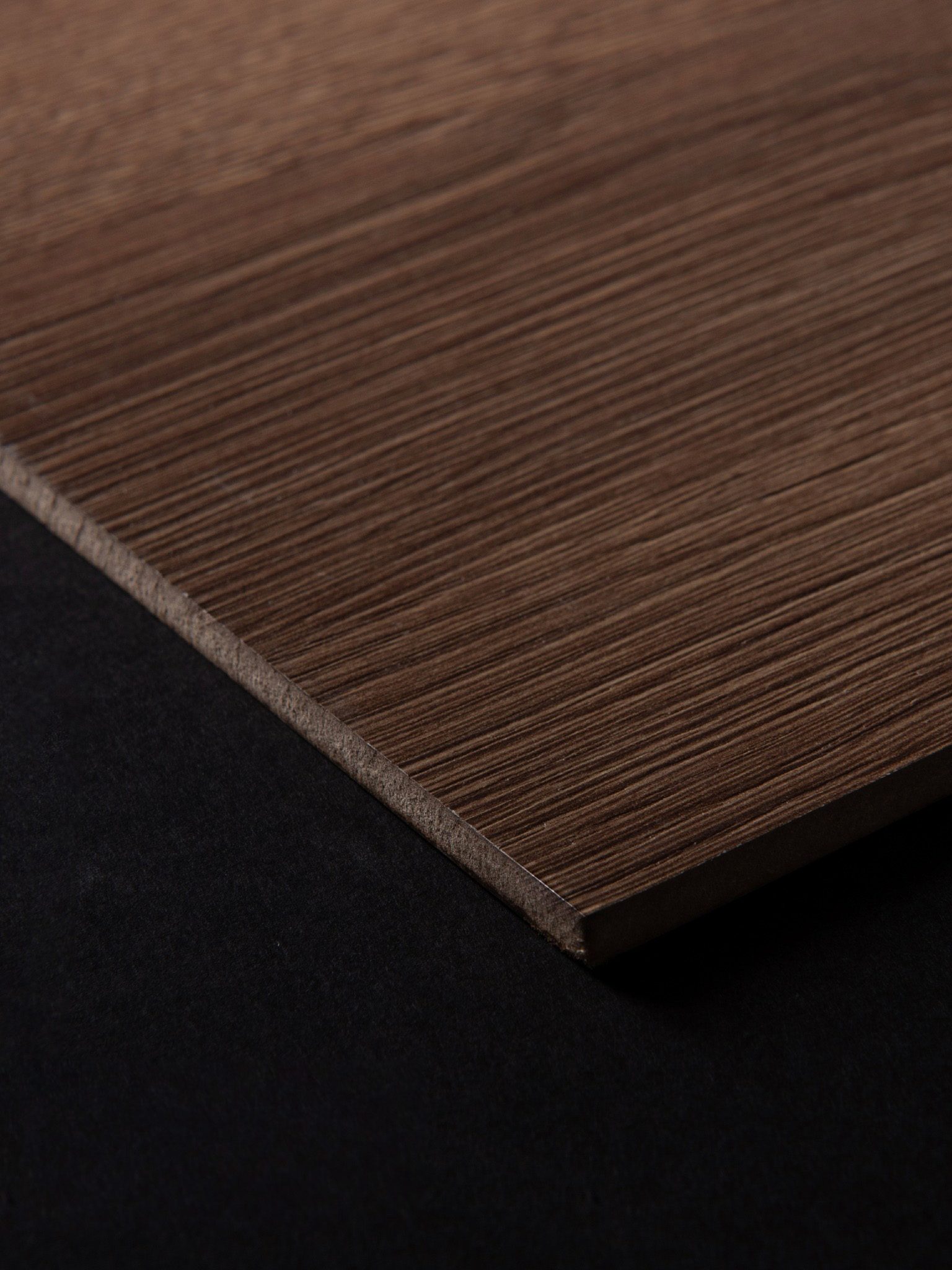
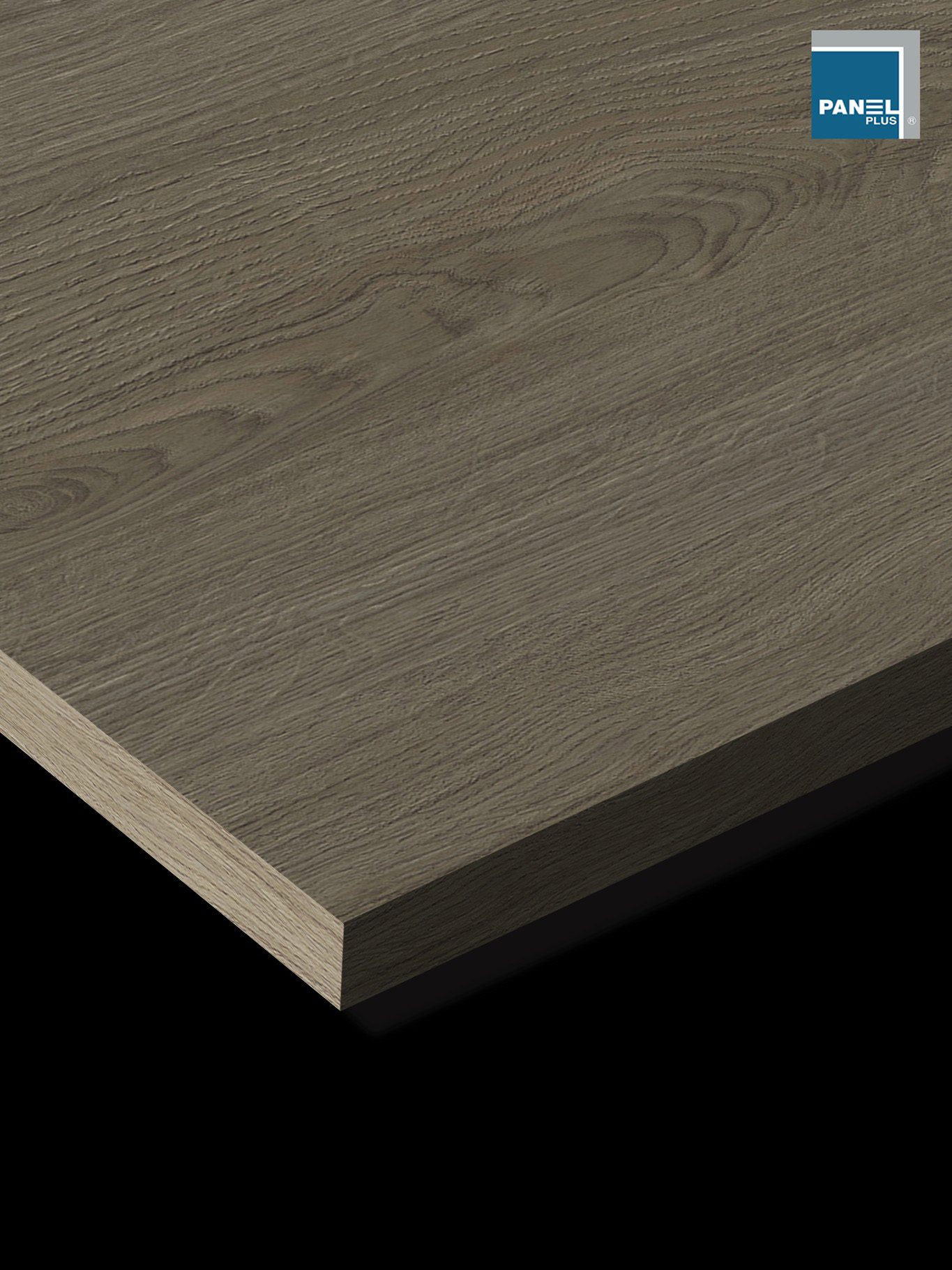
Perfect Wood credit photo by Panel Plus
“Perfect Wood is a Super E-Zero certified material (an international environmental and safety standard), which represents a high level of sustainability. Achieving this requires control from the very beginning—from forest cultivation to the entire production chain, from 0 to 100.

If we only look at a wood panel, we would never know what processes it has gone through. But this is the interesting brand story. Our concept therefore aims to express the image of rubber tree plantations—rows of trees stretching endlessly, forming a boundless forest landscape.”
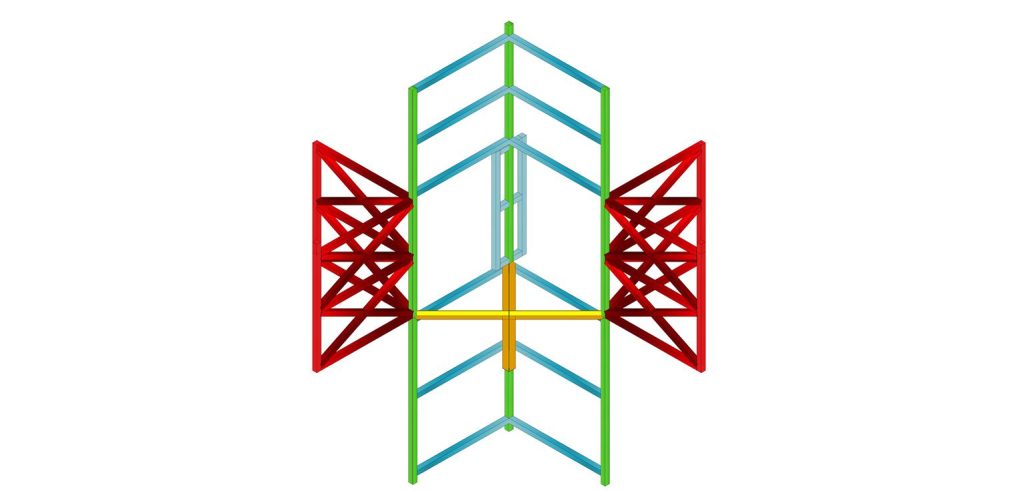
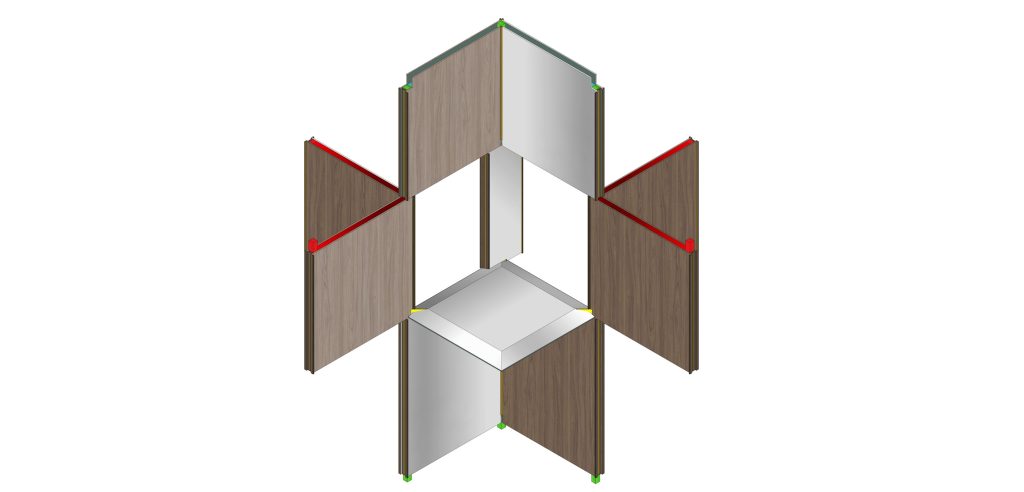
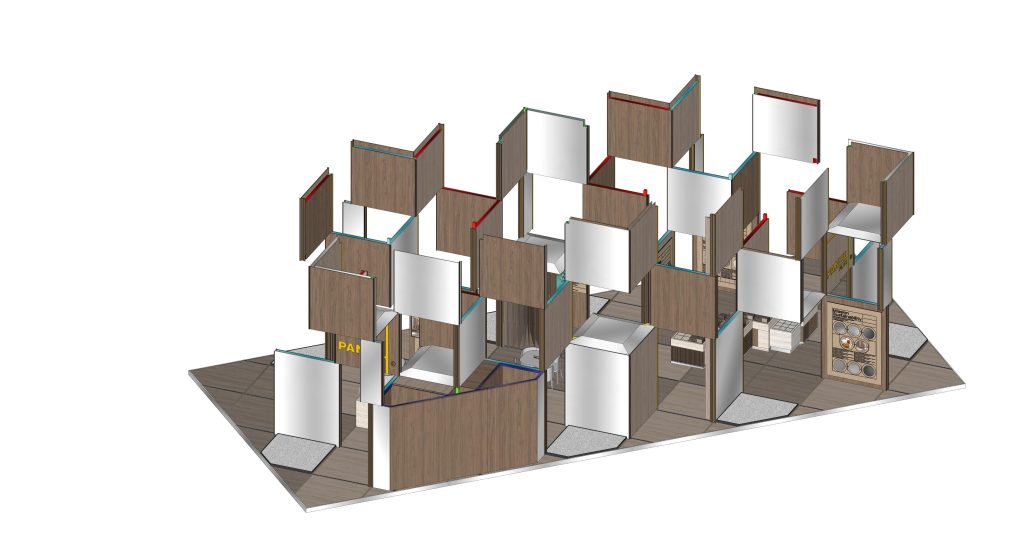
From this inspiration, ACA Architects translated the concept into architecture through a Modular Tower pavilion design, reducing the structure into a vertical axis representing the trunk of a rubber tree. Cantilevered modular extensions mimic branching forms. The structure is clad with Perfect Wood cut-to-design melamine boards and Alu Mirror panels, assembled on a steel frame on both sides.
LIMIT-LESS
Closing boundaries to open perception
One of the pavilion’s highlights is its architectural language, which deliberately breaks the “frame” of a confined space in order to expand spatial perception in a structured and intentional way.
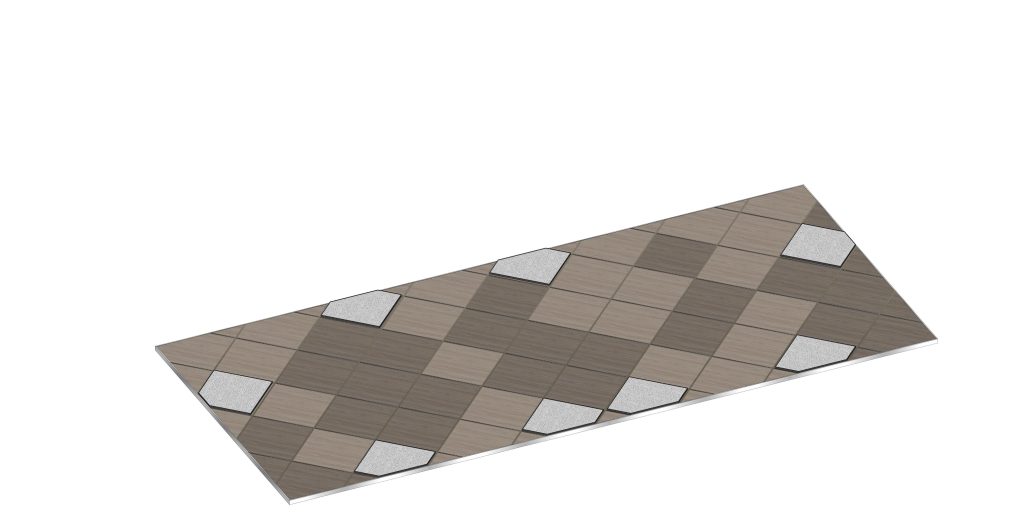
Starting from the rectangular booth footprint, the design transforms the grid into two diagonal axes to increase surface interaction, using the concept of “enclosure” as a tool to dissolve spatial limits.
- Mirrored surfaces to expand perception (The Mirror Illusion)
Alu Mirror panels are applied selectively on walls and ceilings, creating reflective illusions that dissolve spatial boundaries and generate depth and continuity.
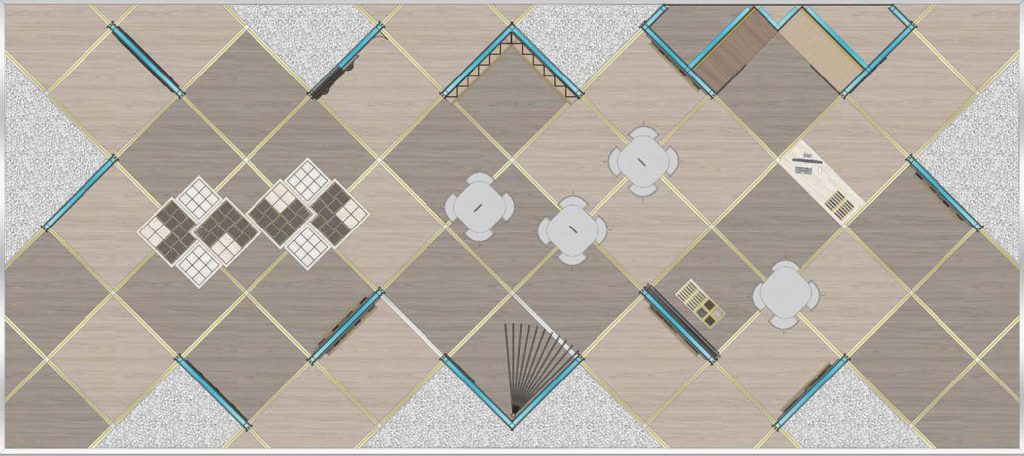
- Controlled visibility to stimulate curiosity (The Curated Journey)
Wood panels are strategically positioned to block full visibility of the entire space, preventing visitors from seeing everything at once. This creates curiosity, encouraging exploration and prolonged engagement.
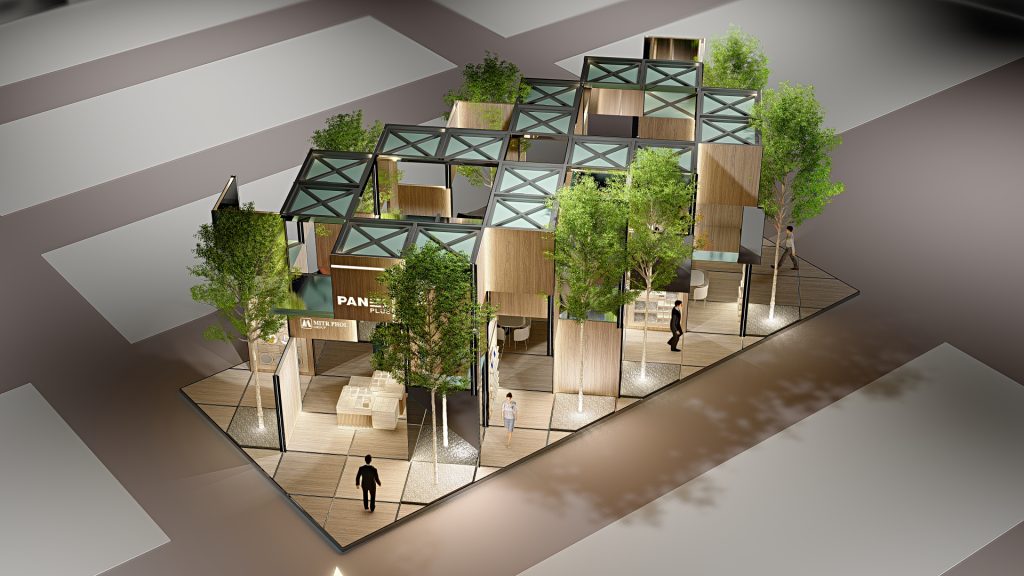
- Layered openness and closure above (The Transition)
The design extends vertically into a 6-meter-high pavilion—equivalent to three floors—where ceiling planes alternate between open and closed zones. This variation in spatial volume creates a dynamic experience as visitors move through different heights and spatial conditions.
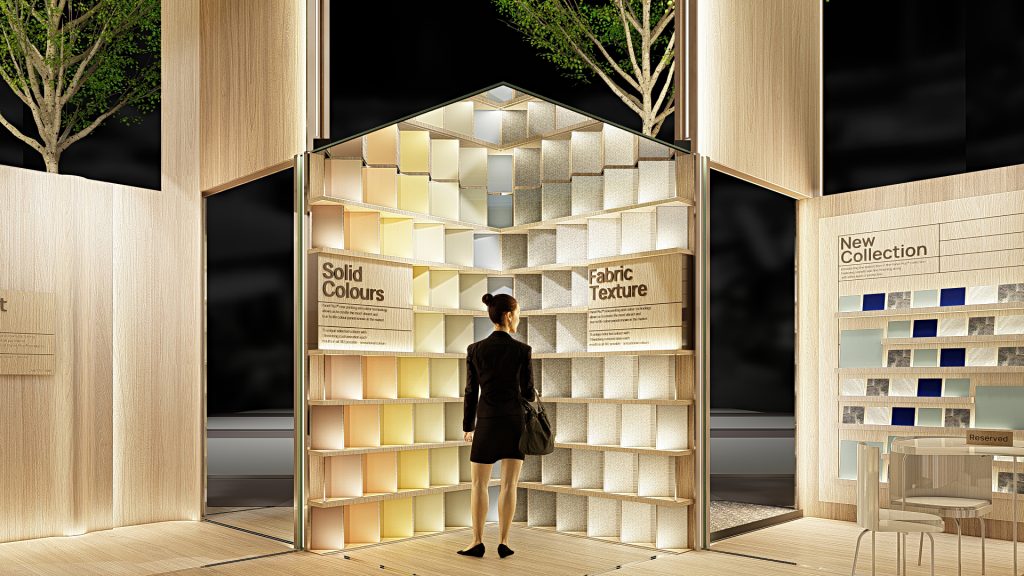
Enclosed spaces enhance focus and intimacy, making them ideal for product presentation zones that require attention to detail.
Visitors transition between low-ceiling “solid” areas and high-ceiling “void” spaces, resulting in a dramatic shift in spatial perception and emotional experience throughout the journey.
PERFECT WOOD, PERFECT MATERIAL
Beyond lighting and composition that enhance material recognition, ACA Architects is also known for designing interactive display systems that help users understand materials more deeply.
Within this pavilion, dedicated zones allow visitors to explore, touch, and learn about the brand and materials—transforming exhibition into an experiential learning environment.
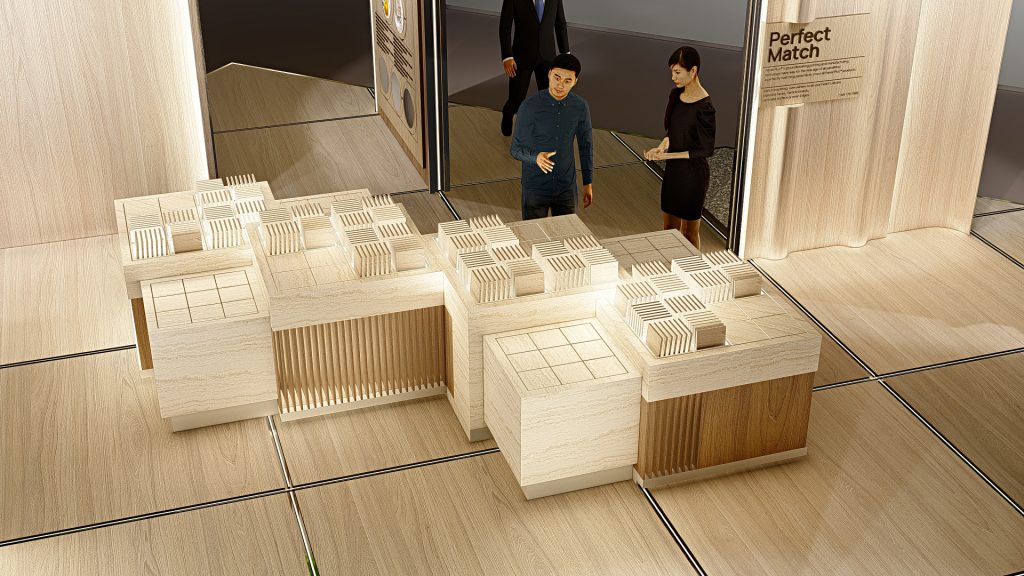
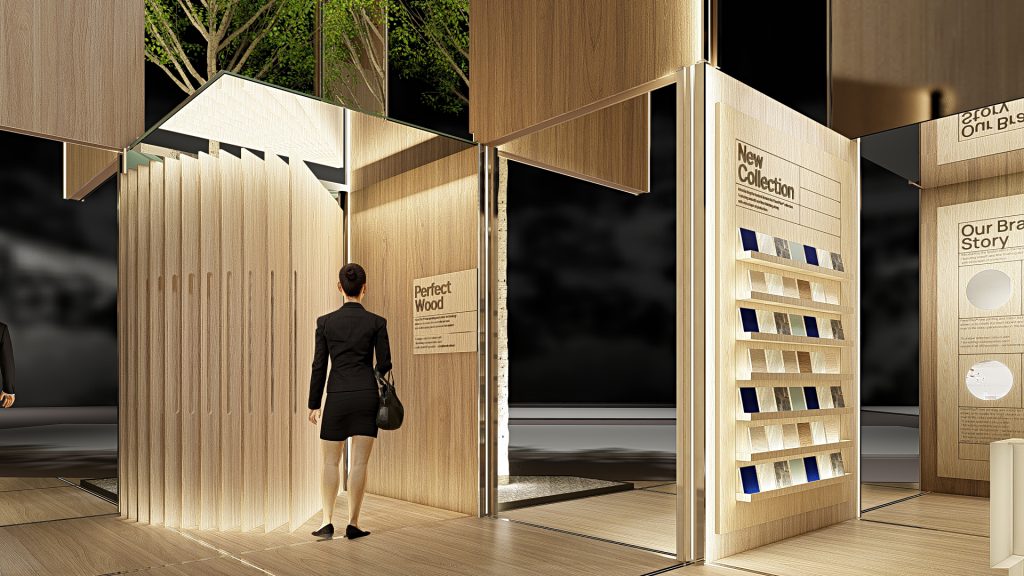
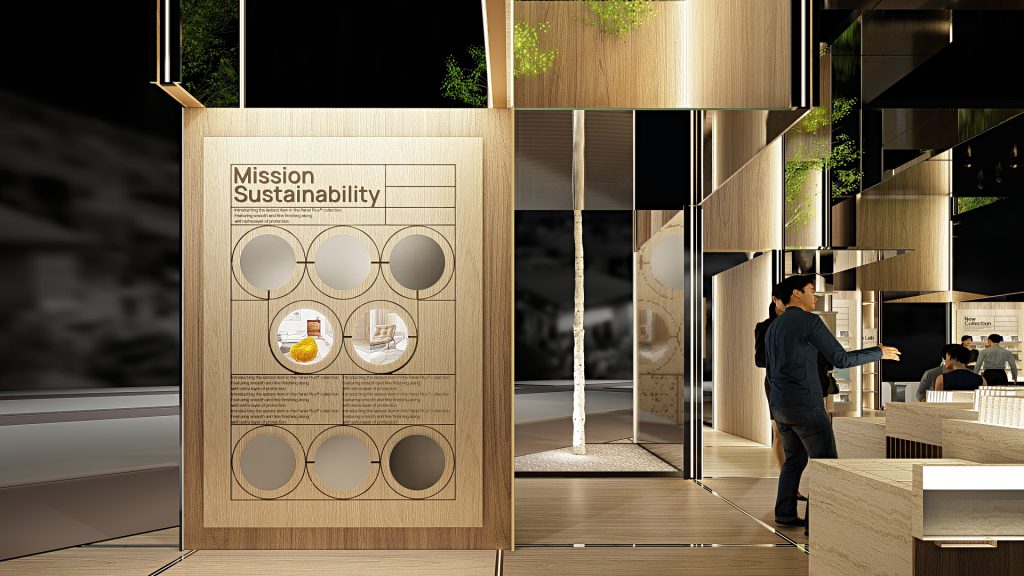
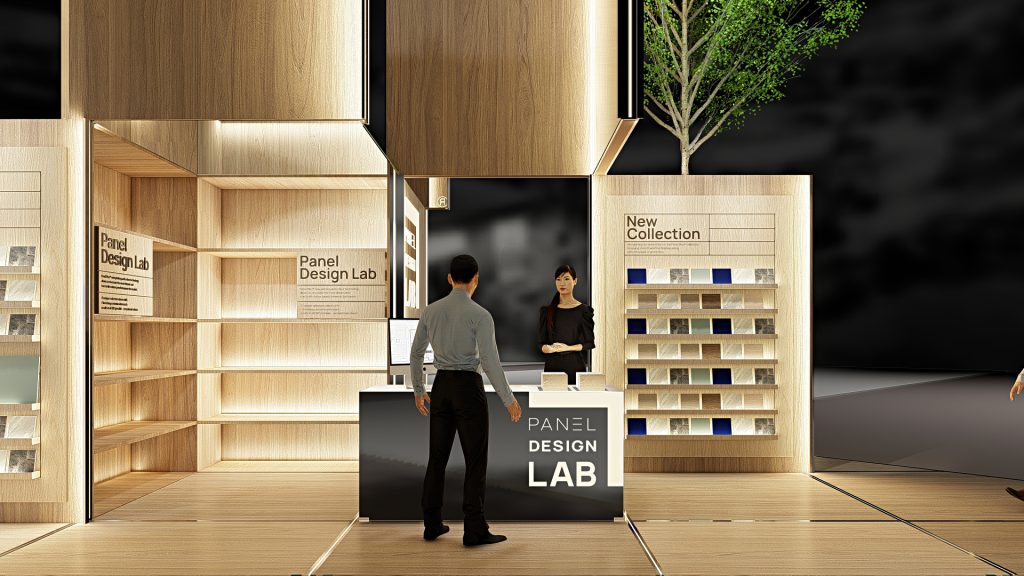
Some images of the exhibits inside the pavilion.
Architects and AI
With this year’s theme, “Mindfulness, Wisdom, and Prompt(ing),” one key question explores how architects view AI and technology.
“AI will continue to improve. Today, it is already more than just a tool for generating visuals or conceptual ideas. Sometimes we use AI to analyze our own design work and provide feedback.
Because working within a team often leads to similar perspectives, AI can act as an external voice—almost like another group of people—helping us see blind spots and refine our work.
In the future, everyone will need to adapt to new technologies. However, replacing human designers is still far away. Design still requires creativity and the ability to produce something new that does not yet exist. Even with prompts, AI outputs are still derived from existing data and rarely fully match what we truly intend.”
Before ending, the architect humorously noted that this pavilion is “a bit resistant to AI,” as ACA Architects intentionally minimized AI usage in favor of human-driven detail and craftsmanship—inviting visitors to experience the freshness of real, tactile design on-site.
They also extended an invitation to everyone looking for ideas to promote the use of materials in a different way, through a hands-on experience at Architect’69: Wisdom and Readiness, which will be on display for only six days, from April 28th to May 3rd, 2026, at Challenger Hall 1-3, IMPACT Muang Thong Thani.
“I think this year is very exciting because we have eight designers collaborating on the Thematic Pavilion, and the Architects’ Fair is getting bigger every year. I’d like to invite everyone to come and see the work, to see the ideas from each designer, because we all have concepts in mind that aim to showcase our potential and products to create an event that is next level.”