Palette of Materials
A New Landmark of Architect Expo
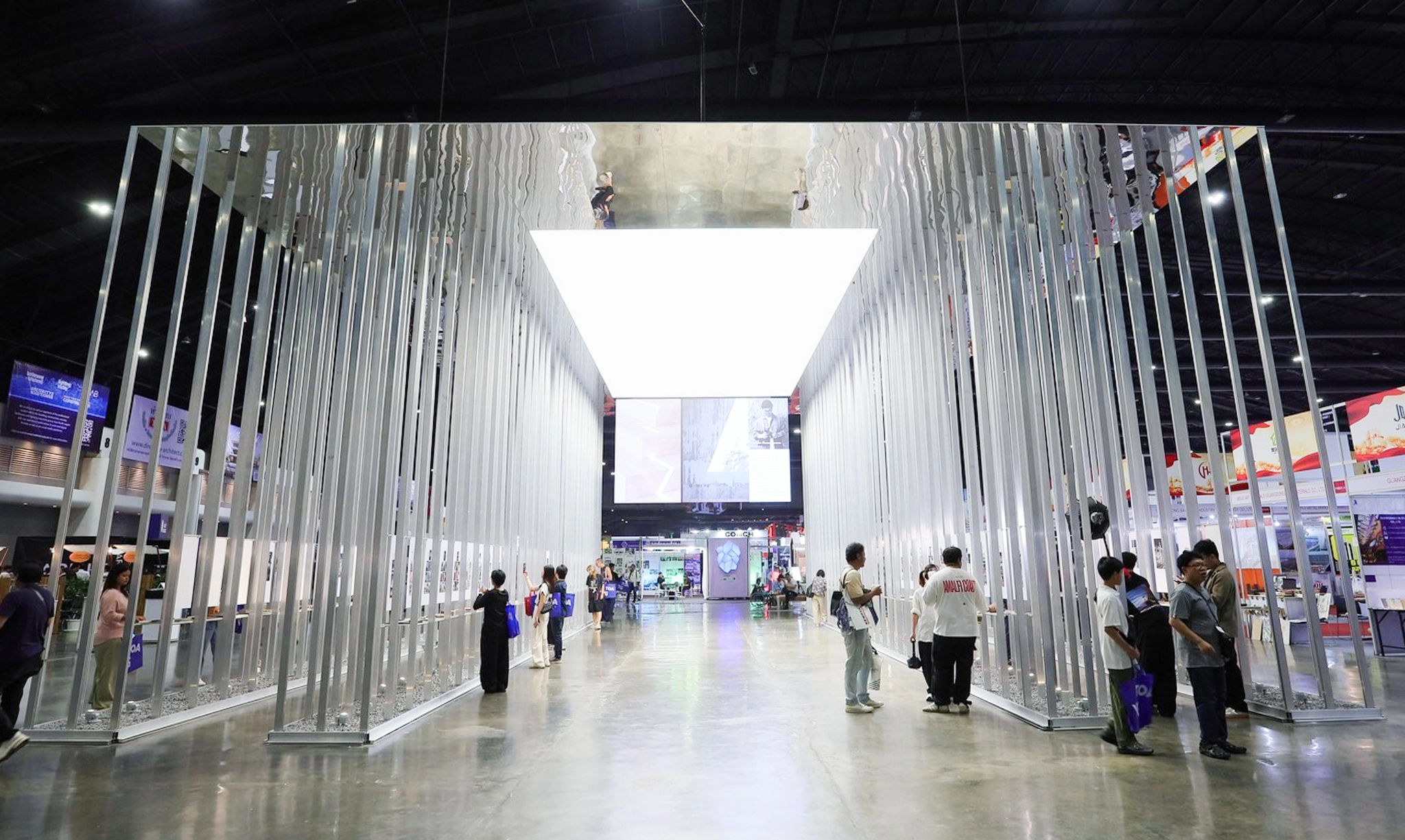
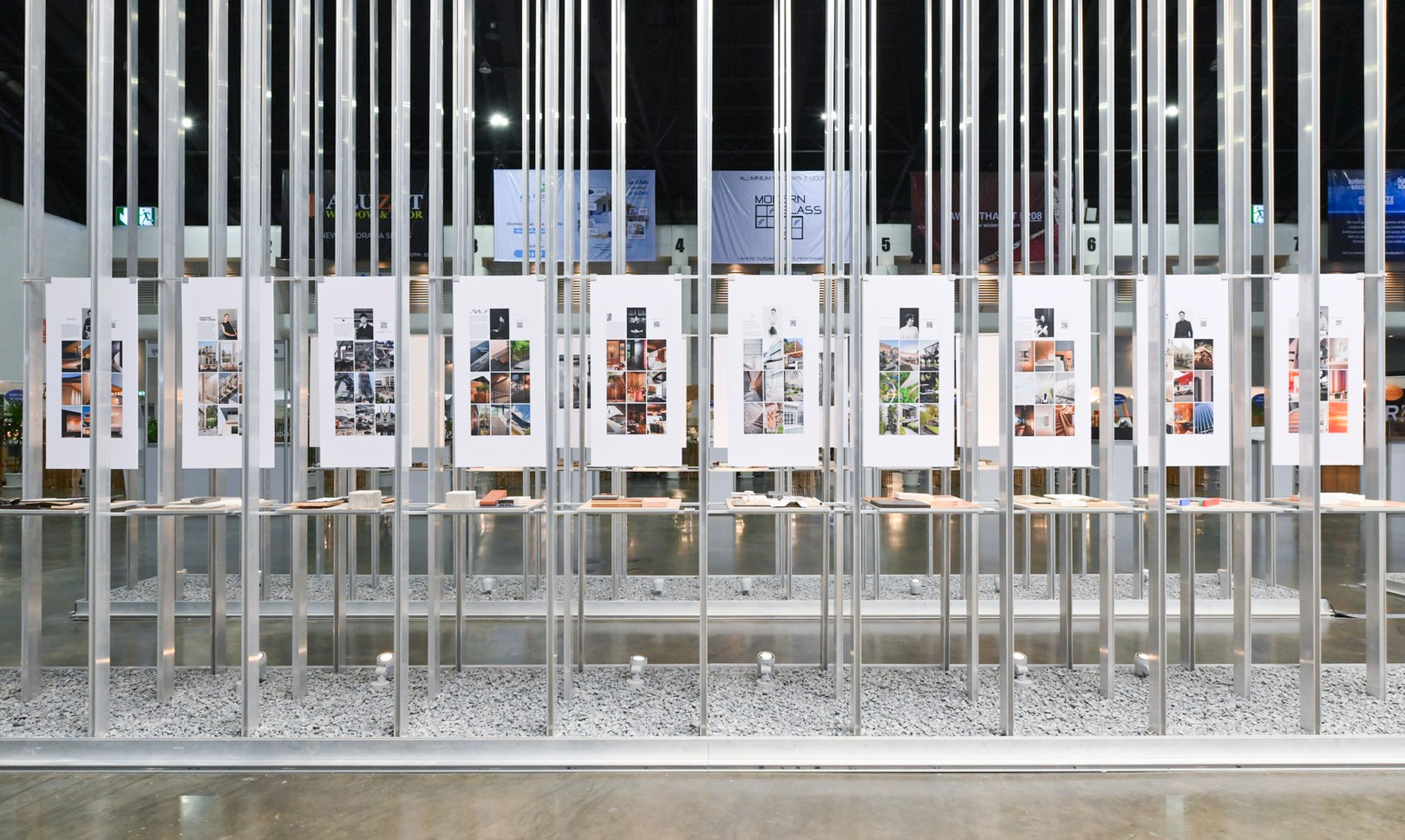
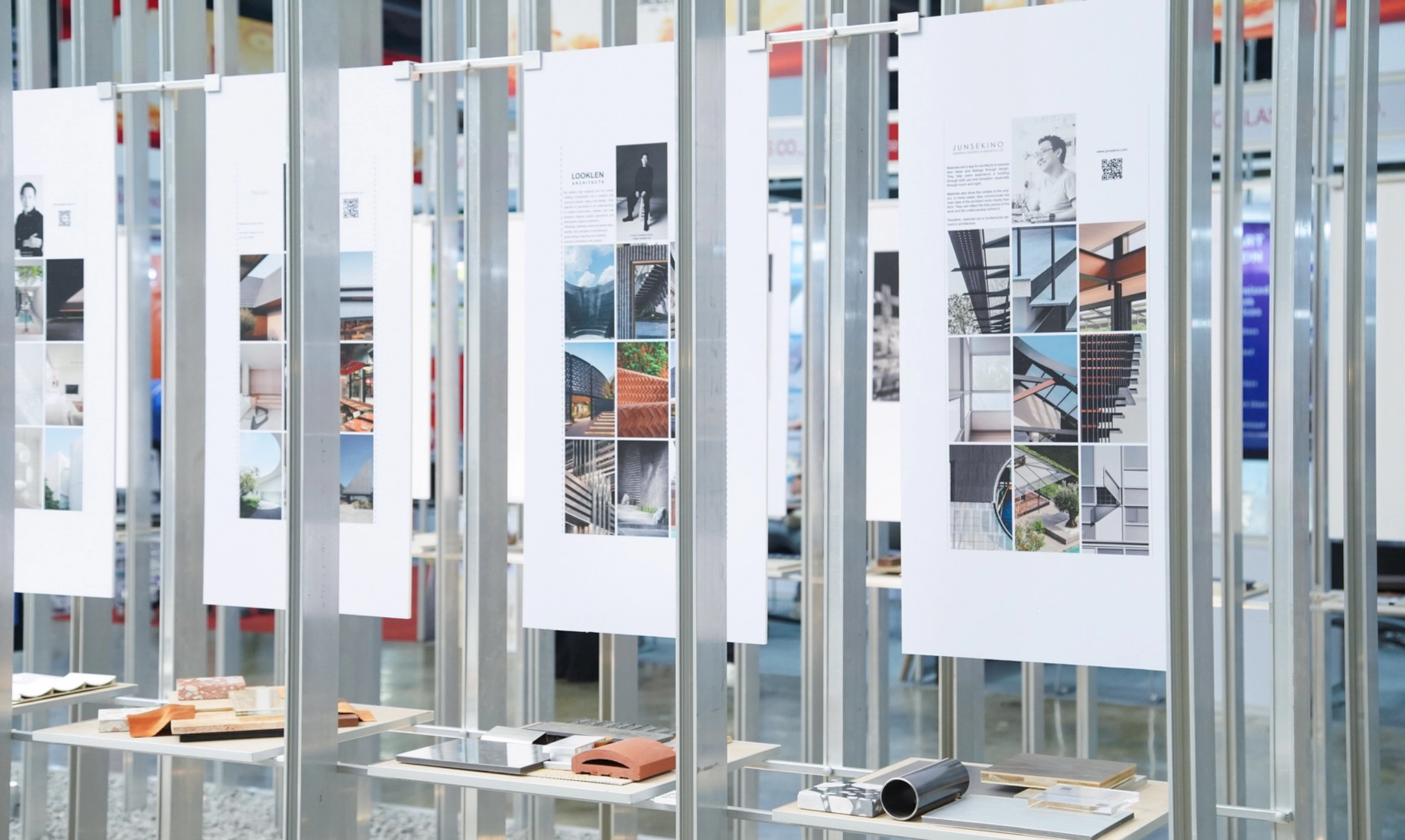
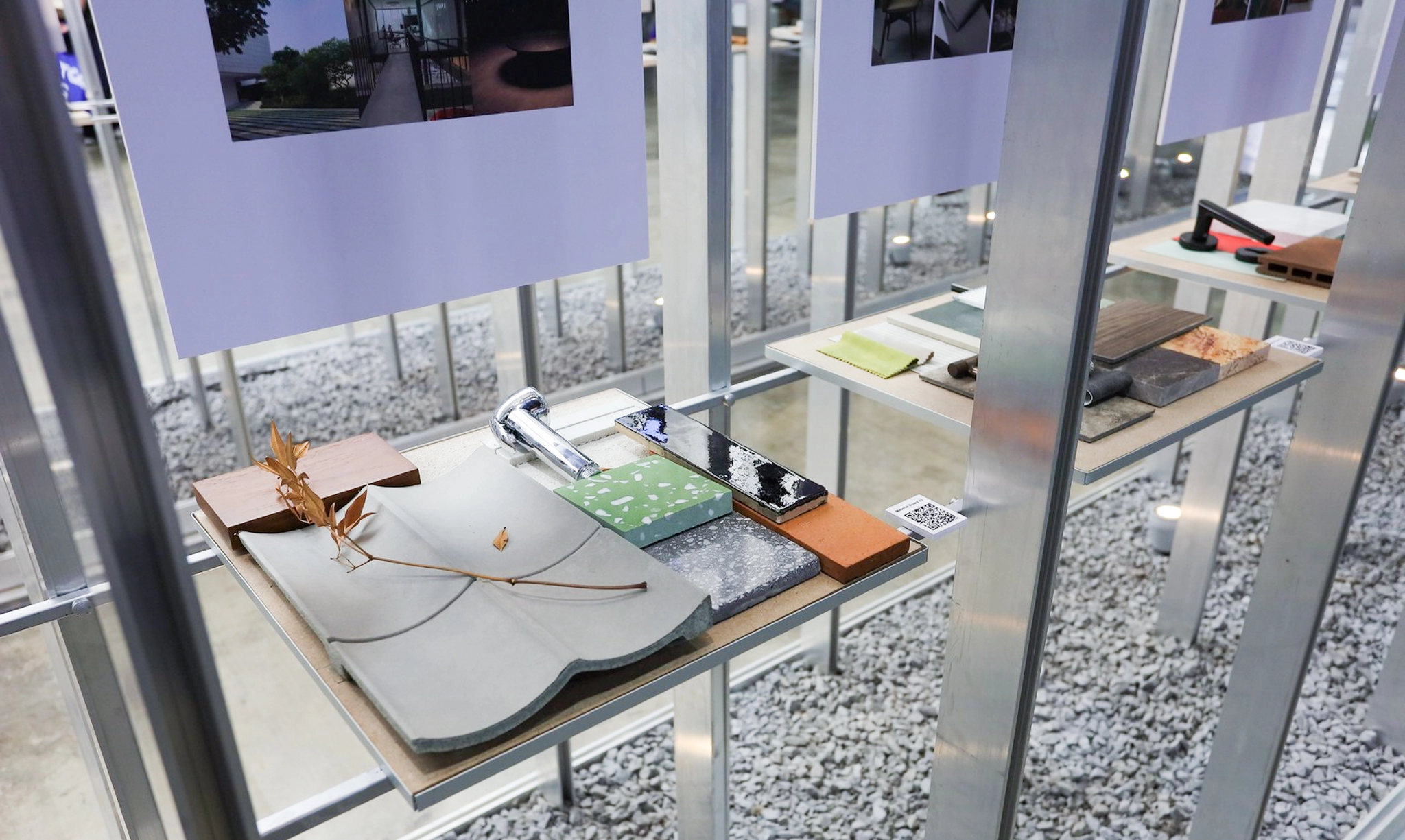
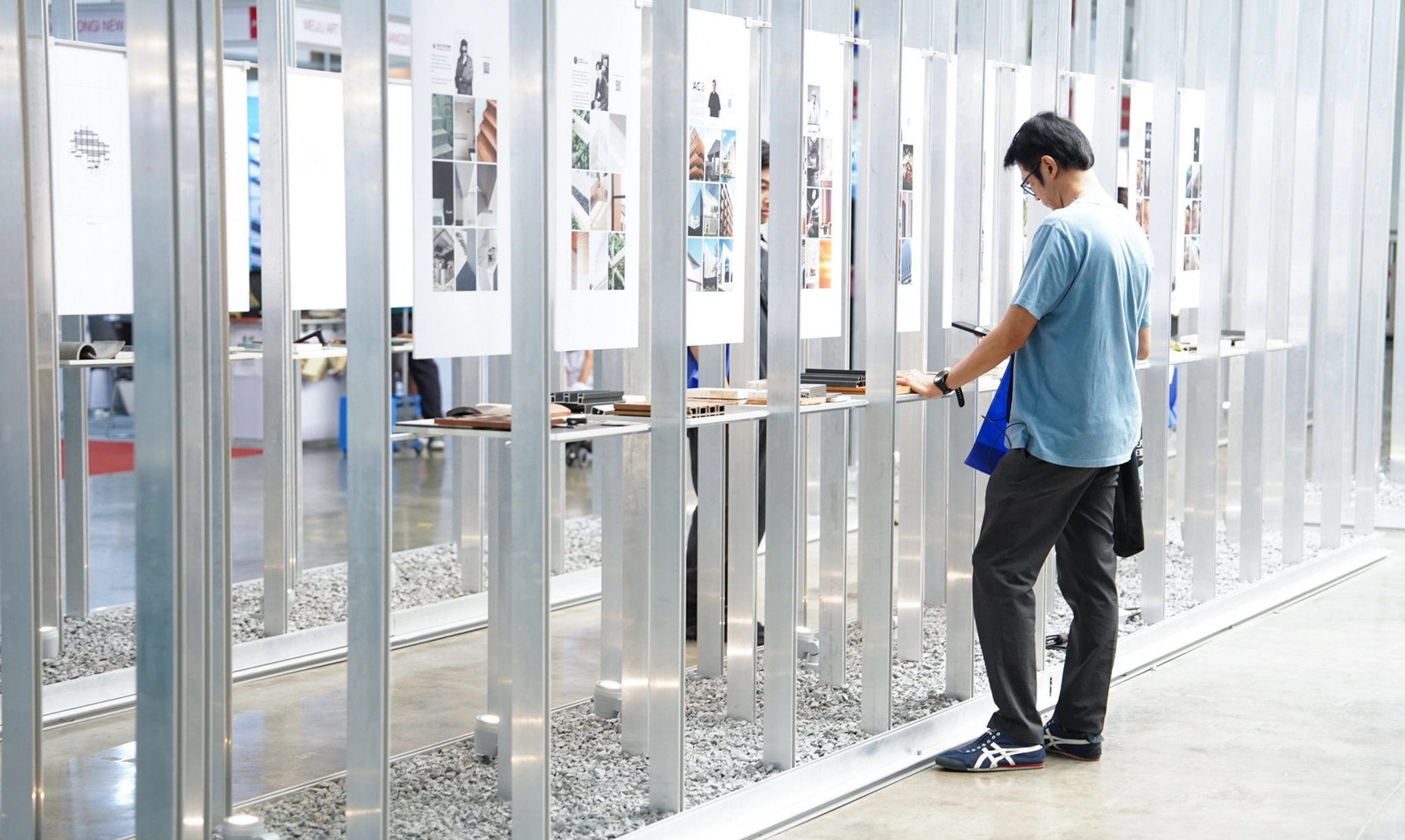
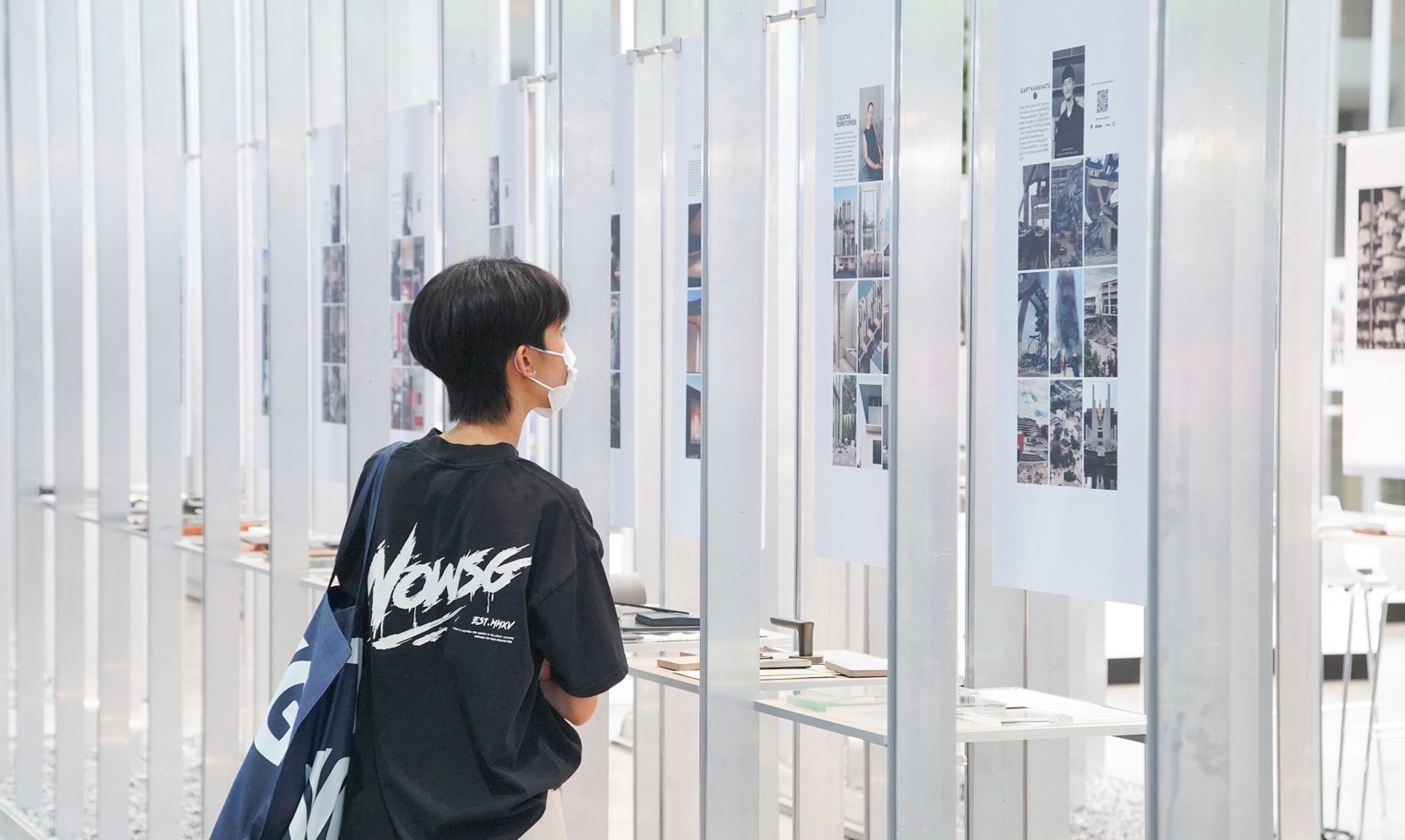
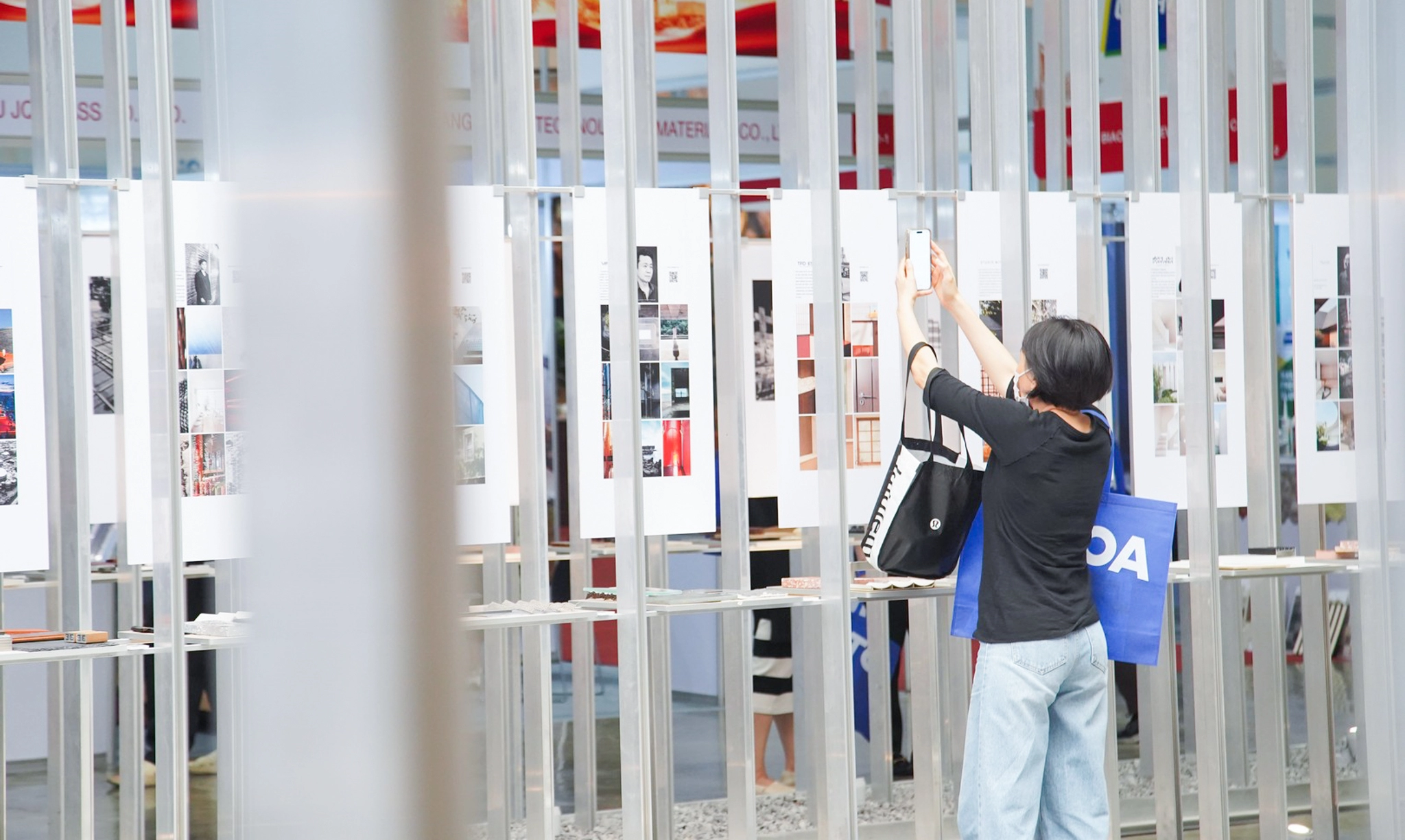
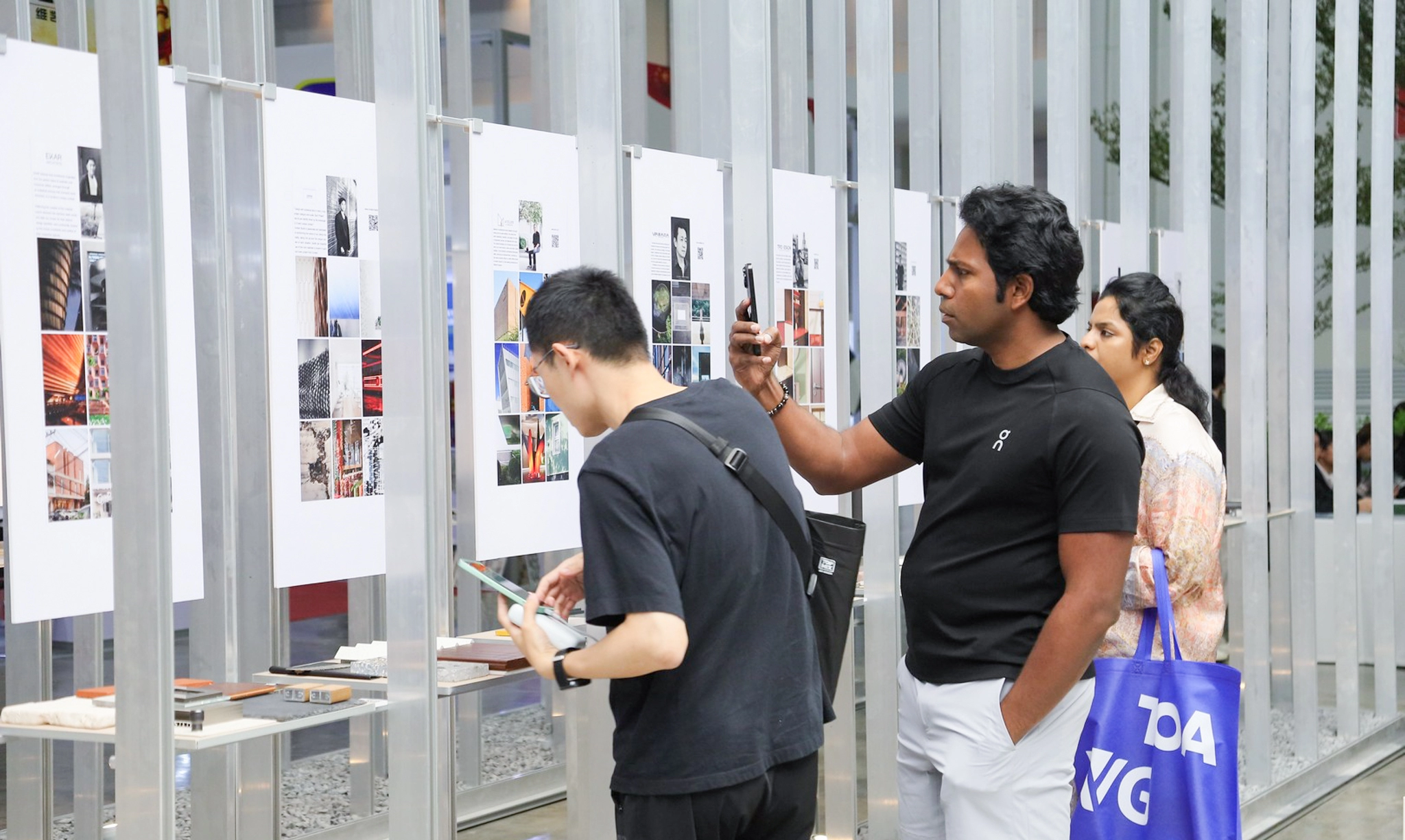
As a directory for the exhibition, Palette of Materials Pavilion – The debut of Architect Expo 2026, created a central space for material exploration, design dialogue, and creative connection between visitors. The Palette of Materials Pavilion gathered over 800 materials through 80 mood boards created by 40 design studios, allowing visitors to experience how architects and designers actually select materials. Colors, textures, and surfaces were available for mix-and-match combinations, showing how different elements work together as one composition.
Take a look back at Palette of Materials Pavilionปัจจุบันงานสถาปนิกได้เนรมิตพื้นที่แห่งการสร้างสรรค์อย่าง Thematic Pavilion มาแล้วทั้งหมด 25 พาวิลเลียน จาก 24 นักออกแบบ ที่สร้างการจดจำและประสบการณ์การมาชมงานที่แปลกใหม่ให้แก่ผู้ชมงาน ตลอดระยะเวลา 5 ปีที่ผ่านมา
past highlights
.
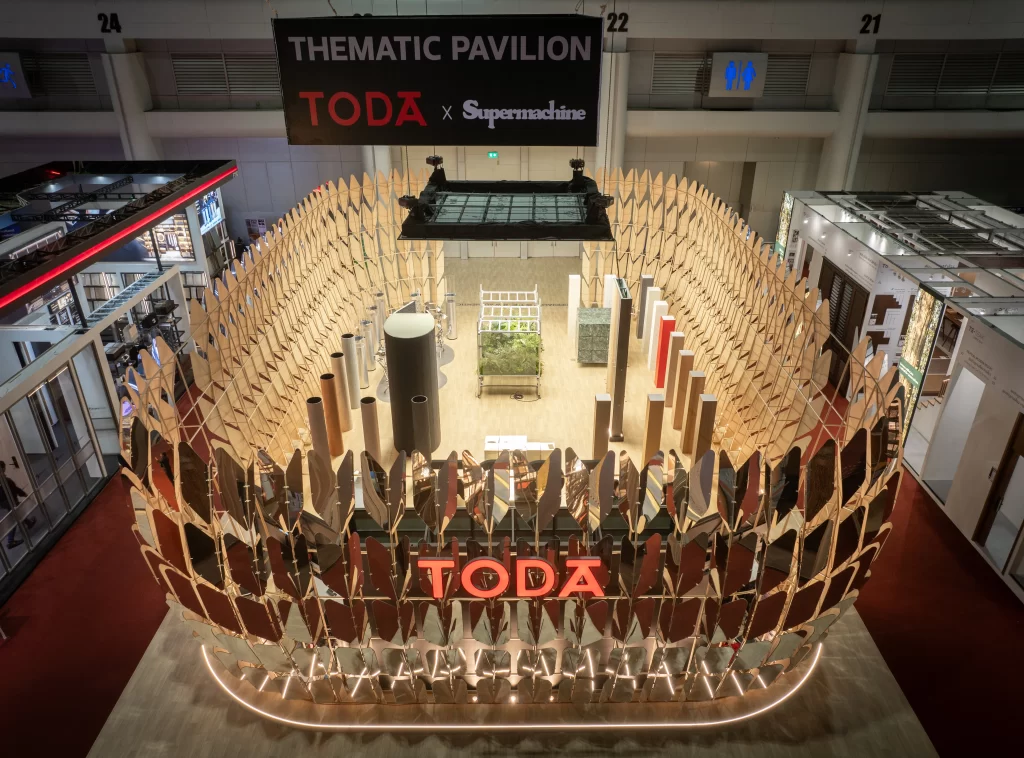
Material: Interior film, SMART FLEX Panel
Designer: Supermachine Studio
การออกแบบเริ่มต้นจากจินตภาพของ ยานอวกาศ ที่ทำหน้าที่บรรทุกวัสดุธรรมชาติจากโลกใบนี้ออกเดินทางไปสู่ดาวดวงใหม่ และเชื่อมโยงโดยตรงกับแนวคิดของ Noah’s Ark—เรือซึ่งไม่ได้เป็นเพียงพาหนะ แต่เป็นโครงสร้างเชิงสัญลักษณ์ของการเก็บรักษาชีวิต ความหลากหลาย และความรู้ ท่ามกลางภาวะวิกฤตของโลกพาวิลเลียนนี้จึงถูกแปลความแนวคิดออกมาในรูปของ Mechanistic Organism Pavilion ถูกออกแบบให้เป็นเสมือนสิ่งมีชีวิตเชิงกล เป็นสเปซที่มีโครงสร้างภายนอกถูกห่อหุ้มด้วยกลีบโลหะจำนวน 860 แผ่น ซึ่งถูกจัดวางให้มองเห็นทะลุได้ เป็นสื่อกลางที่เชื่อมโยงระหว่างภายในและภายนอก ทำให้ผู้คนสามารถรับรู้ถึงสิ่งที่อยู่ภายในพาวิลเลียนได้โดยไม่ถูกเปิดเผยทั้งหมด
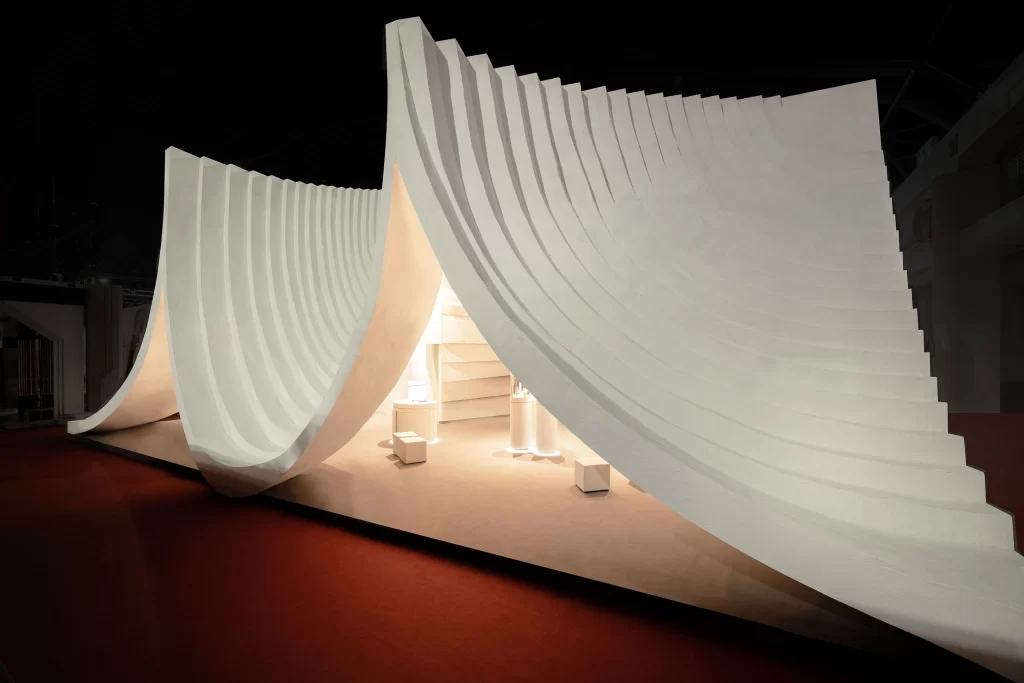
Material: Gel Coat Resin
Designer: Jenchieh Hung + Kulthida Songkittipakdee / HAS design and research
พาวิลเลียนที่ทำหน้าที่เป็นสื่อกลางในการสื่อสารวิสัยทัศน์ของ Häfele ในเรื่องการใช้ชีวิต การอยู่อาศัย และนวัตกรรม ผ่านสถาปัตยกรรม ภูมิทัศน์ และการเคลื่อนไหวของผู้ใช้งานในพื้นที่เดียวกัน การออกแบบพาวิลเลียนนี้จึงมุ่งเน้นการแปลงระบบและโซลูชันของ Häfele ให้กลายเป็น “ภูมิประเทศ” ที่ผู้คนสามารถเดิน สำรวจ และเรียนรู้ได้อย่างเป็นธรรมชาติ สะท้อนบทบาทของพาวิลเลียนในฐานะแพลตฟอร์มที่เชื่อมโยงแบรนด์ เทคโนโลยี และผู้ใช้งานเข้าด้วยกันอย่างไร้รอยต่อ
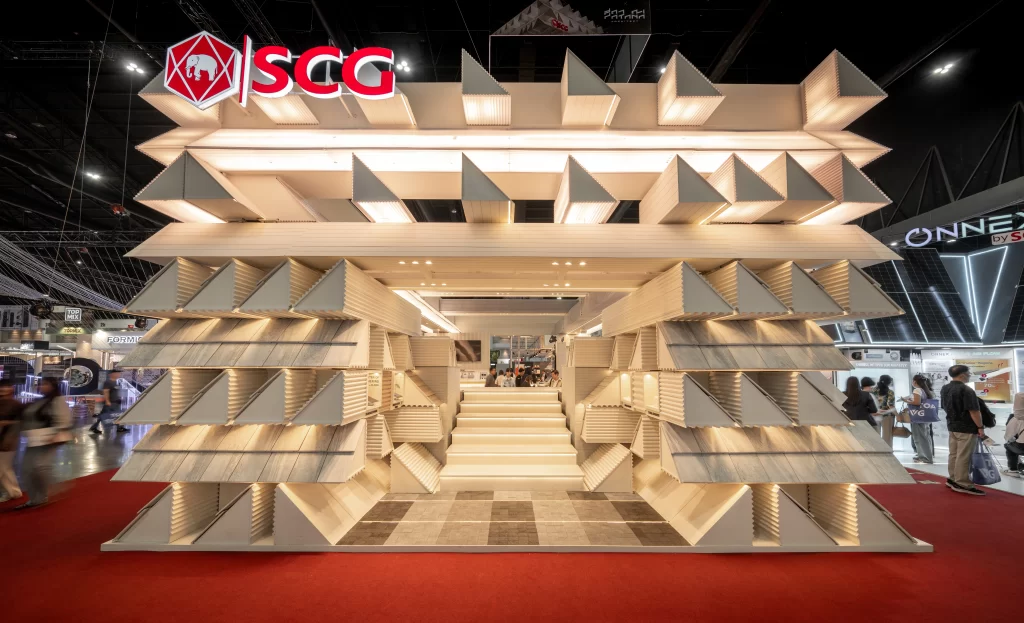
Material: Roof, Translucent sheet, Smartboard, Façade, Landscape
Designer: SaTa Na Architect
พาวิลเลียนที่ถูกตีความจากโจทย์ “Beyond Materials, Into Life” ภายในพื้นที่ถูกออกแบบในลักษณะ “ถํ้า (Cave)” เพื่อเปิดโอกาสให้ผู้คนสามารถนั่ง นอน พิง และสัมผัสวัสดุได้ด้วยทุกส่วนของร่างกาย การรับรู้วัสดุจึงไม่ได้เกิดขึ้นเพียงผ่านสายตาแต่ผ่านผิวสัมผัส นํ้าหนัก อุณหภูมิ และความรู้สึกของร่างกาย เมื่อวัสดุถูก สัมผัส เข้าใจ และประกอบ จนกลายเป็นพื้นที่สถาปัตยกรรมจึงก้าวข้ามการแสดงวัสดุและกลายเป็นพื้นที่ที่ผู้คนสามารถใช้งาน พักพิง และเกิดชีวิตขึ้นภายในนั้นอย่างแท้จริง
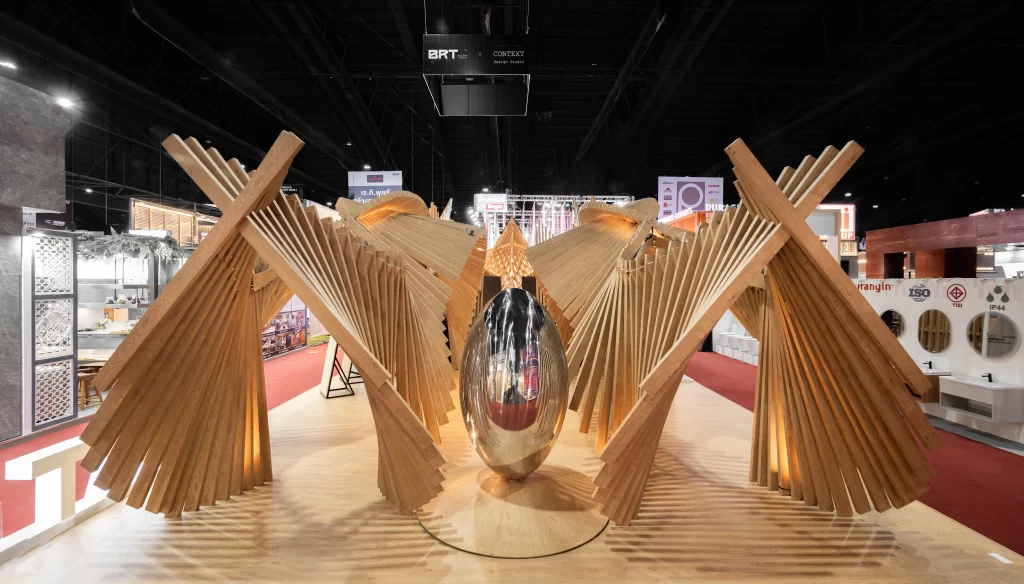
Material: Door, SPC Flooring
Designer: Context Studio
สถานที่สำหรับการรวบรวมสติ เส้นสายของอาคารถูกแปลมาจากค่าของลมหายใจที่สงบนิ่งและมีสติสัมปชัญญะ ค่าเข้าออกของลมหายใจได้ถูกแปลเป็นการบีบเข้าและเปิดออกของพื้นที่ภายในและส่งผลถึงรูปลักษณ์ วัสดุไม้สังเคราะห์ SPC จาก SMARTMATT ได้ถูกนำมาเรียงอย่างละเอียดอ่อนให้เกิดความโค้งมนรวมถึงจังหวะของช่องว่างระหว่างไม้แต่ละชิ้น จะช่วยดึงอารมณ์และความรู้สึกของทุกคนที่เดินเข้ามา วัสดุและโครงสร้างสามารถถอดและประกอบขึ้นมาใหม่ได้ทั้งหมด รวมถึงปรับเปลี่ยนรูปทรงให้เหมาะสมกับ function ของกิจกรรมต่าง ๆ
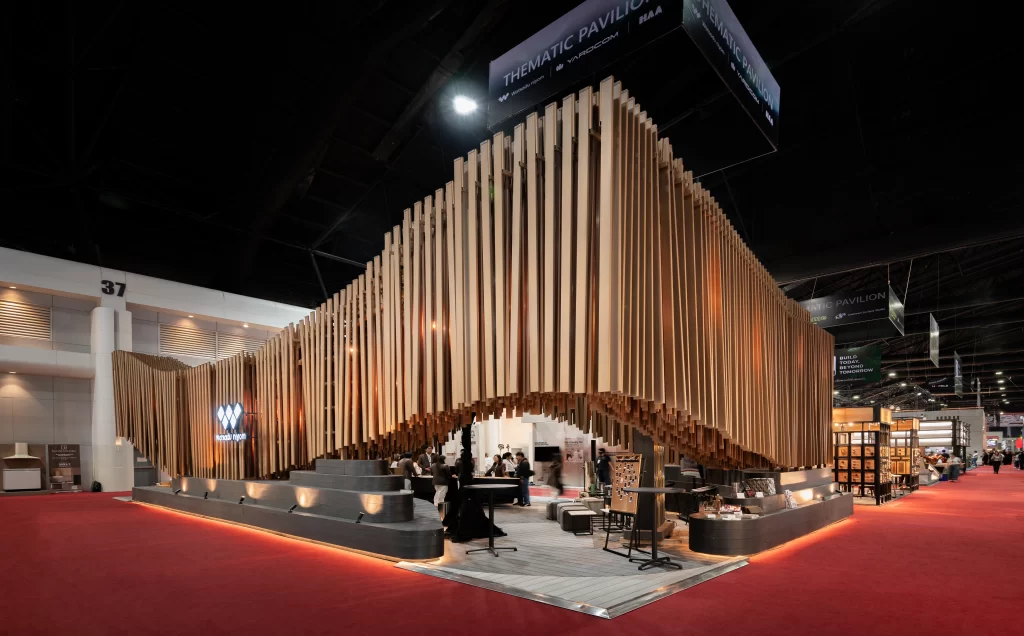
Material: Wood Plastic Composite
Designer: HAA Studio
การออกแบบเน้นไปที่รูปทรงที่พริ้วไหวเหมือนเส้นสายของแสงออโรร่าบนท้องฟ้า สื่อถึงการเดินทางที่ไม่หยุดนิ่งตลอด 10 ปี ของแบรนด์ Watsadu niyom ด้วยการใช้โครงสร้างแบบ Organic Form ที่มีความยาวต่อเนื่องกันเปรียบเป็นเส้นเรื่อง (Timeline) ของ 10 ปีที่ผ่านมา พาวิลเลียนถูกสร้างขึ้นเพื่อให้ผู้คนได้ซึมซับความรู้สึกเสมือนยืนอยู่ท่ามกลางแสงออโรร่าที่พริ้วไหวและไม่หยุดนิ่ง วัสดุที่คุ้นเคยอย่างระแนงไม้เทียมถูกตีความใหม่ให้กลายเป็นงานศิลปะเชิงพื้นที่ที่อ่อนโยน สร้างความแตกต่างจากภาพจำเดิม และเปิดมุมมองใหม่ให้กับศักยภาพของวัสดุในงานสถาปัตยกรรม
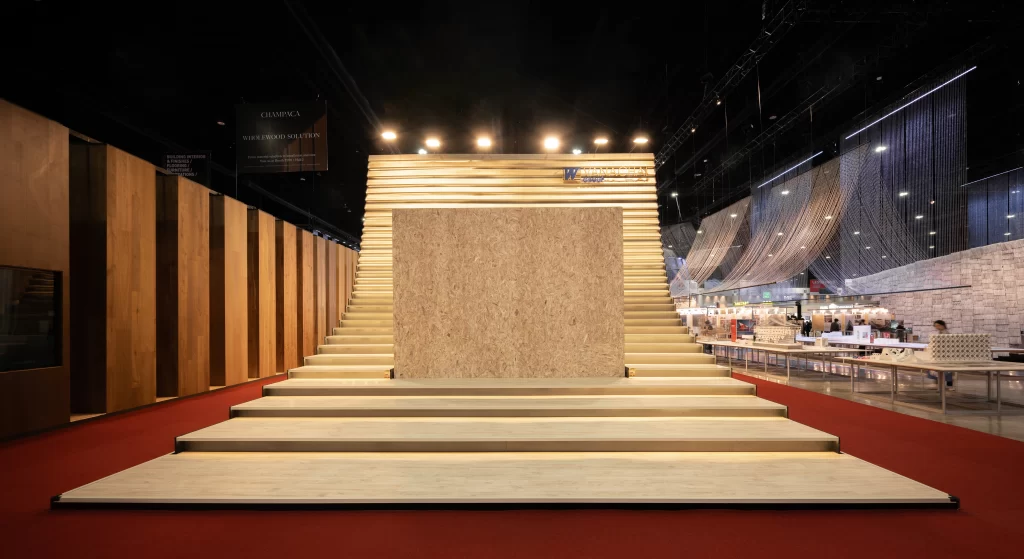
Material: Wood-based Panels
Designer: Studio Tofu
คาแรกเตอร์งานคราฟท์จากวัสดุไม้ดูเป็นมิตร ระนาบพื้นสู่ผนังรูปทรงโค้งงอเอียงองศาอย่างช้า ๆ มีกล่องใบใหญ่สอดอยู่ รูปทรงที่สื่อถึงความเป็นมิตร เชื่อมโยงกับผู้คนได้อย่างรวดเร็ว ทั้งจากการมองเห็น และสัมผัสจริง ความคิดทางด้านแบรนด์ที่มาจากชื่อ วู้ดสมิตร (Woodsmith) อีกแบรนด์ ของ วนชัยกรุ๊ป เป็นวัสดุที่เป็นมิตรกับสิ่งแวดล้อม จนมาสู่ชิ้นงานที่โตฟูได้ออกแบบโดยเน้นวัสดุไม้พื้น พัฒนารูปทรงจนกลายเป็น ที่นั่ง บันได พื้นที่สาธารณะ หรือกระทั่ง ฉากโรงละคร เหมือนศิลปะการจัดวางใน museum gallery plaza
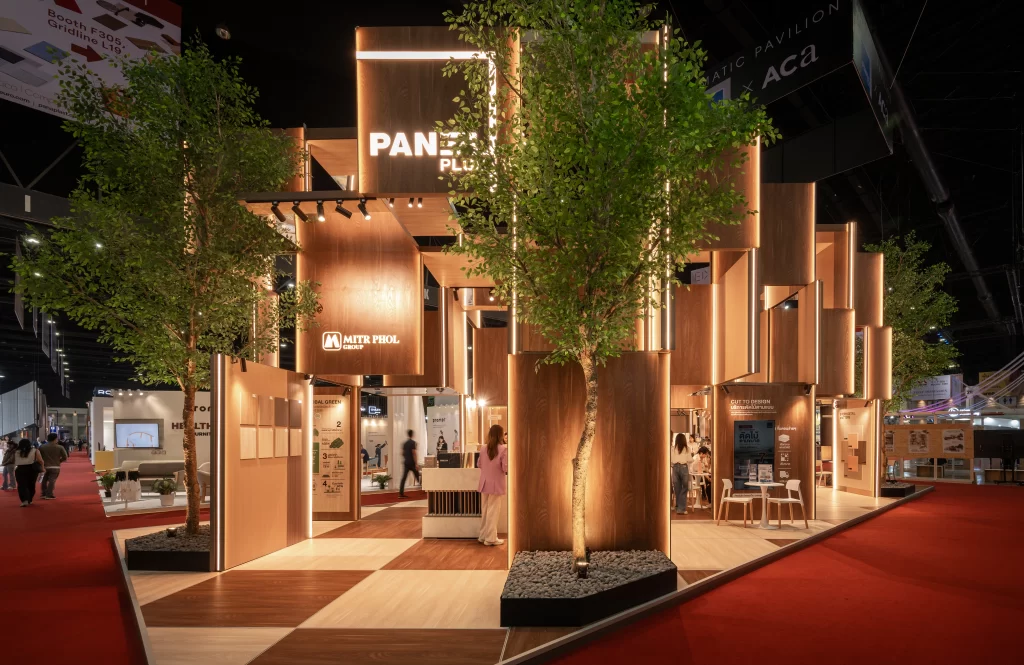
Material: Melamine Faced Boards, High Moisture Resistant Board, High Pressure Laminate
Designer: ACa Architects
พาวิลเลียนที่ถ่ายทอดประสบการณ์ของการอยู่ท่ามกลางธรรมชาติ เสมือนยืนอยู่ในสวนยางที่ต้นไม้เรียงตัวเป็นระเบียบแต่ก็ไร้ขอบเขต โดยผสมผสานความเป็น grid/order ของสถาปัตยกรรมเข้ากับความรู้สึกของป่าแบบ limitless ผ่านการใช้แกนที่มีระเบียบ ร่วมกับแผ่นผิวไม้ทึบและแผ่นกระจกที่สร้างความต่อเนื่องของพื้นที่บูธแม้พื้นที่จำกัด
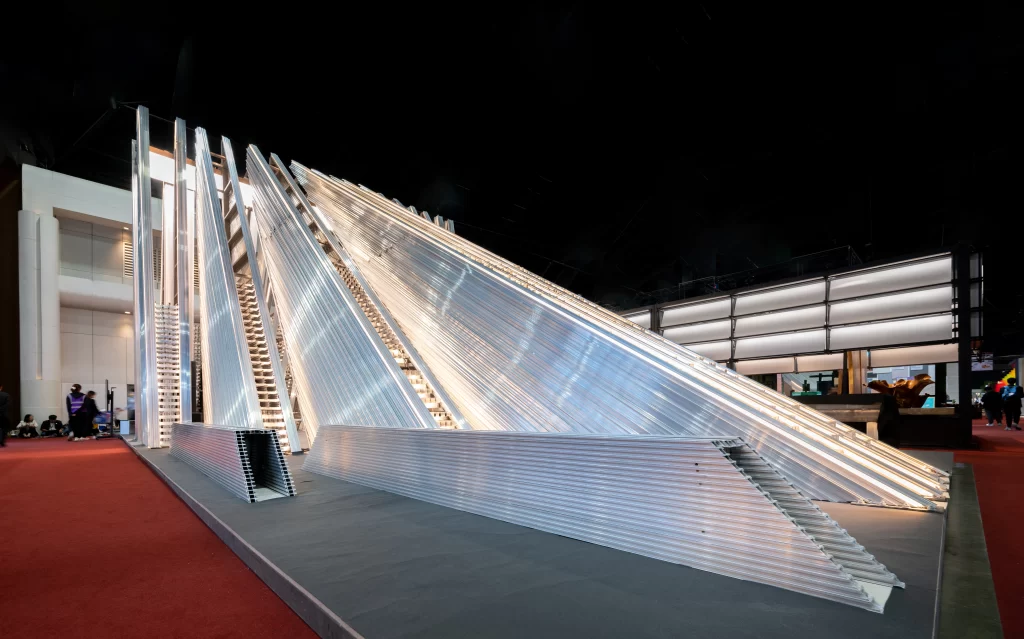
Material: Aluminum
Designer: Unknown Surface Studio
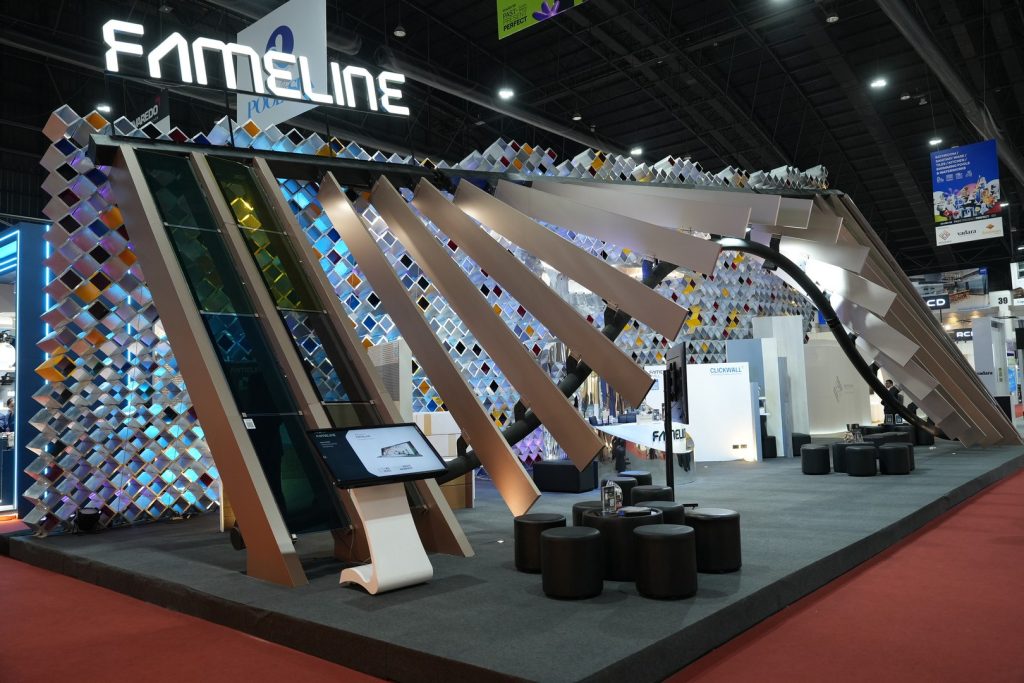
พาวิลเลียนนี้ถูกออกแบบให้เป็นโครงสร้างสามเหลี่ยมที่คลี่ออกคล้ายพัด (Fan-shaped) เกิดเป็นเลเยอร์ซ้อนทับกันหลายชั้น เสมือนชั้นวางวัสดุที่ถูกดึงออกจากแนวตั้งสู่พื้นที่เชิงสถาปัตยกรรม แต่ละเลเยอร์สร้างทั้งผนัง พื้นที่จัดแสดง และโซนพักผ่อน ผิวของพาวิลเลียนเกิดจากการนำหน้าตัดอลูมิเนียมมาเรียงต่อกันจนเกิดเป็น Pattern เชิงมิติ เปลี่ยนวัสดุอุตสาหกรรมให้กลายเป็นพื้นผิวที่มีชีวิต ราวกับบัวผนังร่วมสมัยที่สะท้อนความแม่นยำของงานวิศวกรรม
Material: Door, SPC Flooring
Designer: Studio Tofu
คาแรกเตอร์งานคราฟท์จากวัสดุไม้ดูเป็นมิตร ระนาบพื้นสู่ผนังรูปทรงโค้งงอเอียงองศาอย่างช้า ๆ มีกล่องใบใหญ่สอดอยู่ รูปทรงที่สื่อถึงความเป็นมิตร เชื่อมโยงกับผู้คนได้อย่างรวดเร็ว ทั้งจากการมองเห็น และสัมผัสจริง ความคิดทางด้านแบรนด์ที่มาจากชื่อ วู้ดสมิตร (Woodsmith) อีกแบรนด์ ของ วนชัยกรุ๊ป เป็นวัสดุที่เป็นมิตรกับสิ่งแวดล้อม จนมาสู่ชิ้นงานที่โตฟูได้ออกแบบโดยเน้นวัสดุไม้พื้น พัฒนารูปทรงจนกลายเป็น ที่นั่ง บันได พื้นที่สาธารณะ หรือกระทั่ง ฉากโรงละคร เหมือนศิลปะการจัดวางใน museum gallery plaza
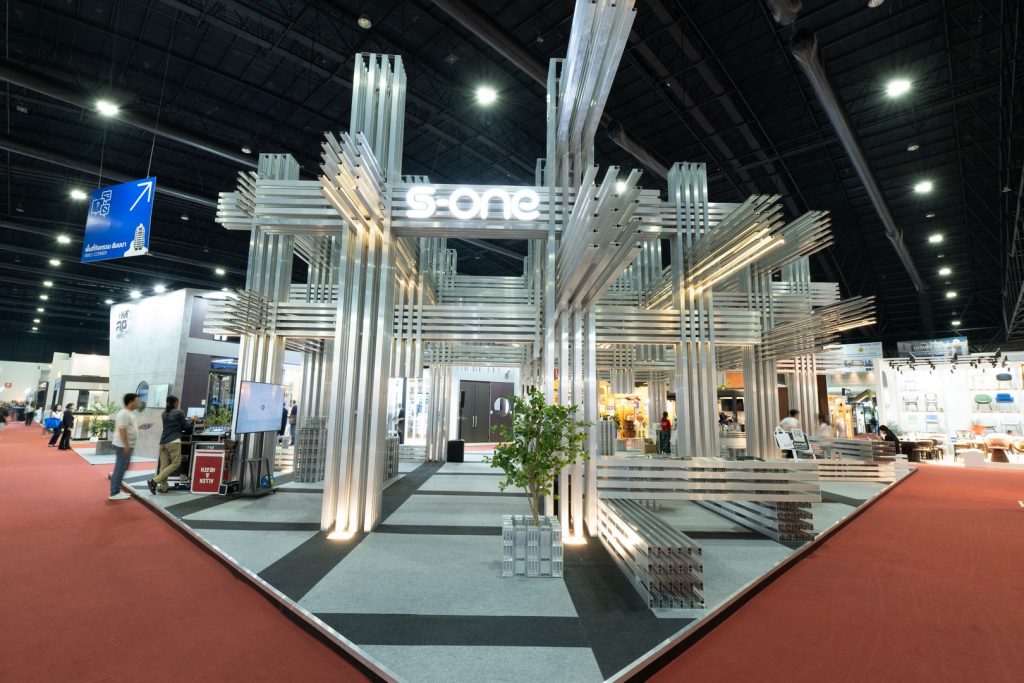
Material: Aluminum
Designer: Looklen Architects
With the designer’s intention of presenting a new perspective on aluminum, This pavilion was created to tell the for visitors by utilizing mill finish aluminum, which is authentic surface of aluminum that has not been coated or polished, and is rarely seen in conventional architecture. Additionally, it is installed in a modular structure system that can be disassembled and reused completely. This concept enables adaptation and further development in other projects for supporting to reduce overconsumption of resource.
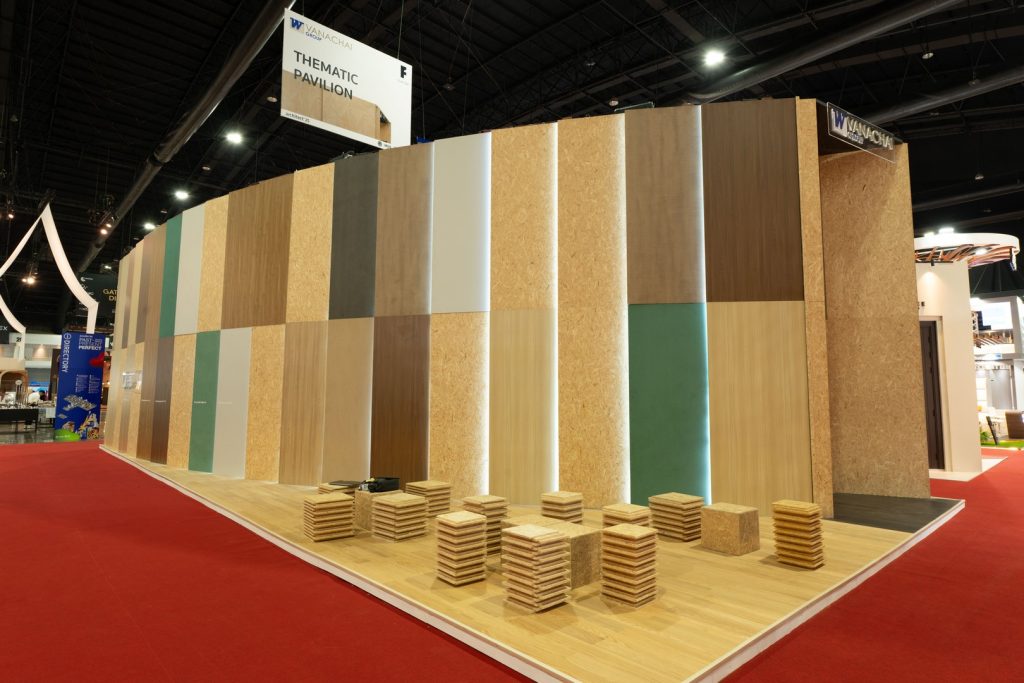
Material: Wood-based Panels
Designer: FLAT12x
This pavilion features plywood as the main material in its design, with emphasizing the surface texture and thickness– two key factors in the proper selection and application of plywood in construction. The result is an architectural structure in the form of a tunnel, which allow visitors to understand more in the product details and brand history of VANACHAI, with the destination of being a symbolic sculpture that embodies the brand’s identity.
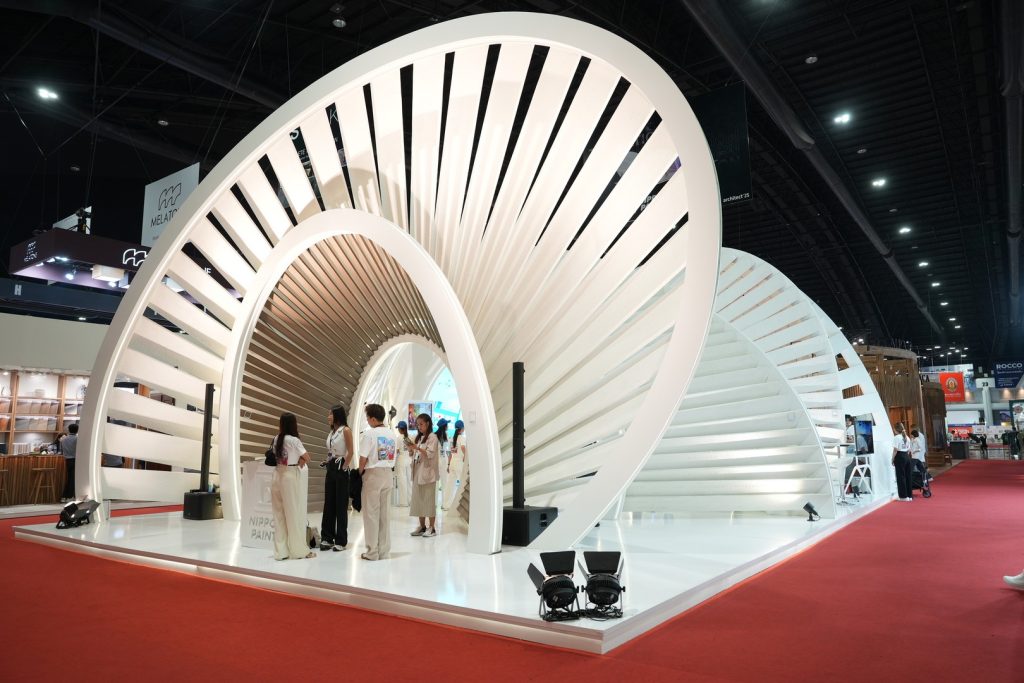
Material: Paint and Architectural Coating
Designer: pbm
The inspiration behind the design of this pavilion comes from the “Fan Deck” The shape of pavilion features overlapping wooden layers and curved steel structures resembling an unfolding fan deck presenting a variety of shade seamlessly integrated. The exterior is designed in entire white to present simplicity and encouraging visitors to use their imagination before entering inside to experience the colorfulness, which reflects the ever-shifting moments of color in our lives whether it is the vibrant bursts of joy, the soothing hues of tranquillity, or the dramatic effects of light and shadow.
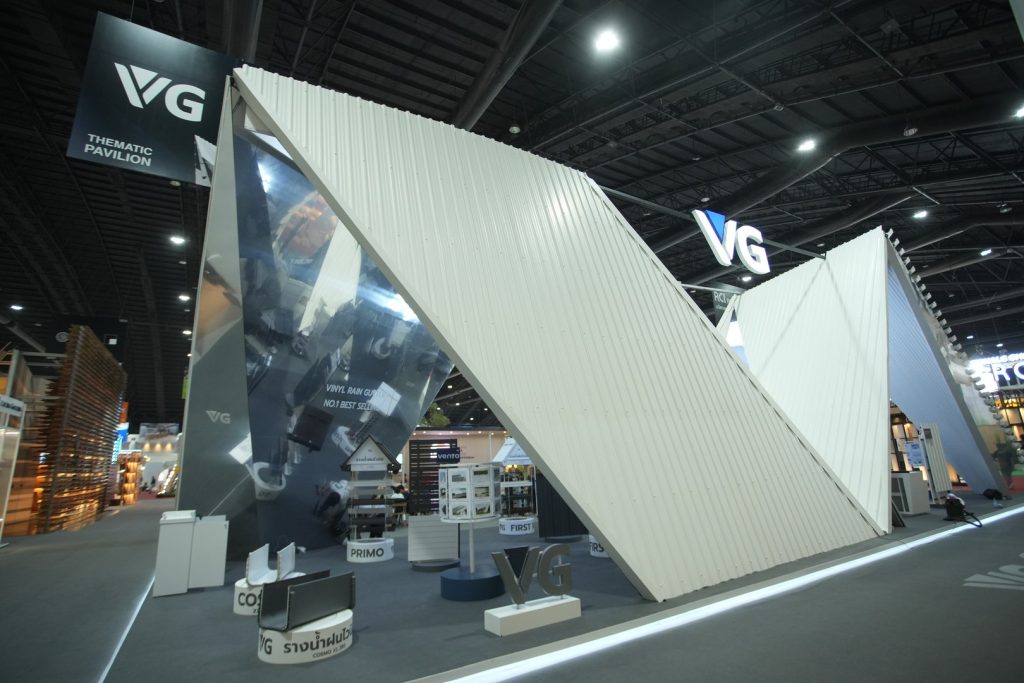
Material: Vinyl Rain Gutter
Designer: ativich
This architectural space invites everyone to fully immerse themselves in its dimensions. Visitors can create their own unique experiences and perspectives, akin to rotating an image within kaleidoscope through the manipulation of reflective panels in The Forest of Mirrors. This interaction allows them to enjoy a variety of spatial perceptions by using shiny materials to experience optical illusions—making the roof panels and vinyl slat appear to float and feel weightless. It effectively highlights the outstanding qualities of VG’s products.
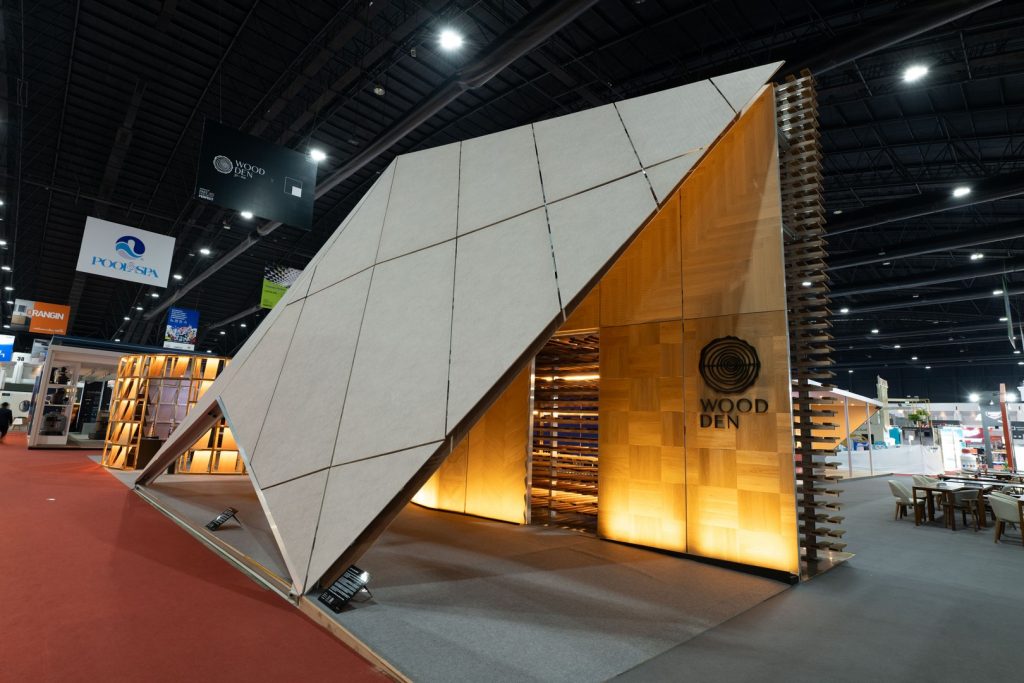
Material: Solid Teak, Wall Panels
Designer: POAR
This thematic pavilion is designed under the concept of “Piece by Piece” to convey the unique charm of natural wood through a two-part structure that reflects a collaborative construction process. These two components are placed in parallel and structurally transfer the load. The first part consists of stainless steel shelving system, inspired by factory wood-storage racks used to sort and showcase gain patterns, distorted gable structure which is featured WOODDEN’s modular wood paneling and MOSU 3D wall products. Between a narrow and contemplative pathway – inviting visitors to walk through and appreciate an experience gained from physical and interactions with materials.
Material: Aluminium Composite
Designer: Architects & Associates (A&A)
“My Time, My Space” is the pavilion design concept that conveys continuous transformation and development by combining the stories of “time” and “space”. The design embodies the advancement of aluminum that adapts to present with applying metal as the core structural element, which is being curved and flowing frameworks. This concept is also connected to the feeling of “the identity of aluminum” and “the value of design” showcasing the flexibility and creativity of aluminum cladding.
Material: Aluminium Composite
Designer: Architects & Associates (A&A)
“My Time, My Space” is the pavilion design concept that conveys continuous transformation and development by combining the stories of “time” and “space”. The design embodies the advancement of aluminum that adapts to present with applying metal as the core structural element, which is being curved and flowing frameworks. This concept is also connected to the feeling of “the identity of aluminum” and “the value of design” showcasing the flexibility and creativity of aluminum cladding.
Material: Paint and Architectural Coating
Designer: pbm
The inspiration behind the design of this pavilion comes from the “Fan Deck” The shape of pavilion features overlapping wooden layers and curved steel structures resembling an unfolding fan deck presenting a variety of shade seamlessly integrated. The exterior is designed in entire white to present simplicity and encouraging visitors to use their imagination before entering inside to experience the colorfulness, which reflects the ever-shifting moments of color in our lives whether it is the vibrant bursts of joy, the soothing hues of tranquillity, or the dramatic effects of light and shadow.
Material: Aluminum
Designer: Looklen Architects
With the designer’s intention of presenting a new perspective on aluminum, This pavilion was created to tell the for visitors by utilizing mill finish aluminum, which is authentic surface of aluminum that has not been coated or polished, and is rarely seen in conventional architecture. Additionally, it is installed in a modular structure system that can be disassembled and reused completely. This concept enables adaptation and further development in other projects for supporting to reduce overconsumption of resource.
Material: Wood-based Panels
Designer: FLAT12x
This pavilion features plywood as the main material in its design, with emphasizing the surface texture and thickness– two key factors in the proper selection and application of plywood in construction. The result is an architectural structure in the form of a tunnel, which allow visitors to understand more in the product details and brand history of VANACHAI, with the destination of being a symbolic sculpture that embodies the brand’s identity.
Material: Vinyl Rain Gutter
Designer: ativich
This architectural space invites everyone to fully immerse themselves in its dimensions. Visitors can create their own unique experiences and perspectives, akin to rotating an image within kaleidoscope through the manipulation of reflective panels in The Forest of Mirrors. This interaction allows them to enjoy a variety of spatial perceptions by using shiny materials to experience optical illusions—making the roof panels and vinyl slat appear to float and feel weightless. It effectively highlights the outstanding qualities of VG’s products.
Material: Solid Teak, Wall Panels
Designer: POAR
This thematic pavilion is designed under the concept of “Piece by Piece” to convey the unique charm of natural wood through a two-part structure that reflects a collaborative construction process. These two components are placed in parallel and structurally transfer the load. The first part consists of stainless steel shelving system, inspired by factory wood-storage racks used to sort and showcase gain patterns, distorted gable structure which is featured WOODDEN’s modular wood paneling and MOSU 3D wall products. Between a narrow and contemplative pathway – inviting visitors to walk through and appreciate an experience gained from physical and interactions with materials.
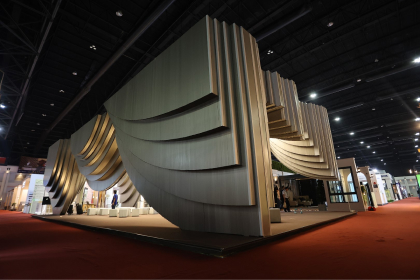
Material: Aluminum
Designer: HAS design and research
The concept behind the design of the S-ONE Aluminum Grotto is to use industrial materials such as aluminum to create a space that reflects the natural characteristics in a new form, stimulating people’s perception and coexistence between industrial products and the search for natural spaces in today’s society. This combination of aluminum is considered to be a new phenomenon in the use of this material in an innovative, integrated architectural form, to further enhance the possibilities of aluminum in the future.
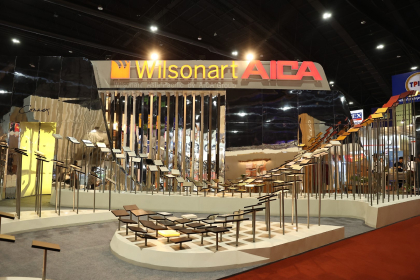
Material: Laminate and Engineered Surface
Designer: pbm
The pavilion takes 700 pieces of laminates painted with each different colors and pattern for embroidering a story of relations between materials and nature. The display zone has shared “CONNEX” with Thematic and exhibiting space seamlessly.
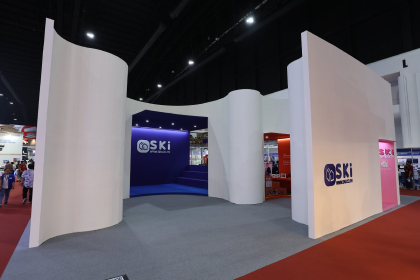
Material: Tools and home improvement online store
Designer: anonym studio
This space is inspired by a huge and high wall of warehouse, with its functions divided by colors and scale of height. The window frame is in a perfect position to see the products inside. The wall line ended with curve shape has guided the visitors for walking into the main pavilion.
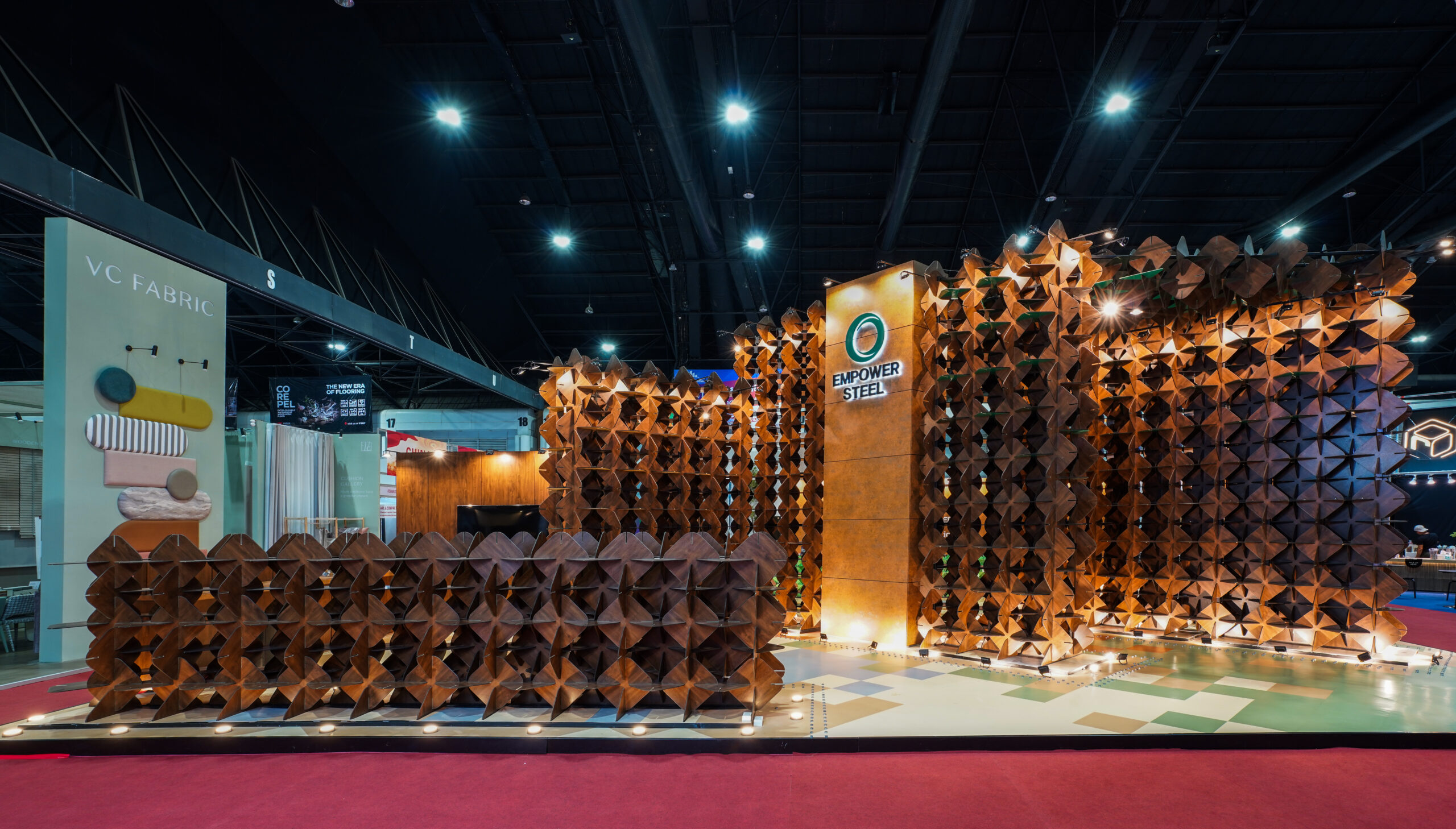
Material: Pre-painted Steel and Pattern Painted Steel
Designer: ACa Architects
The design of this Thematic Pavilion has applied the principles of RETHINK, REUSE, and RE-FORM. By rethinking the possibilities of steel structures and applying those to create modules of metal sheets that can be reused due to the longevity, durability, and sustainability of the material. They can be transformed or reassemble to be suitable for future projects. With the ability to change and reuse these modules, it enhances the potential of the design, as embodied in the concept of “EMPOWER YOUR IMAGINATION”.
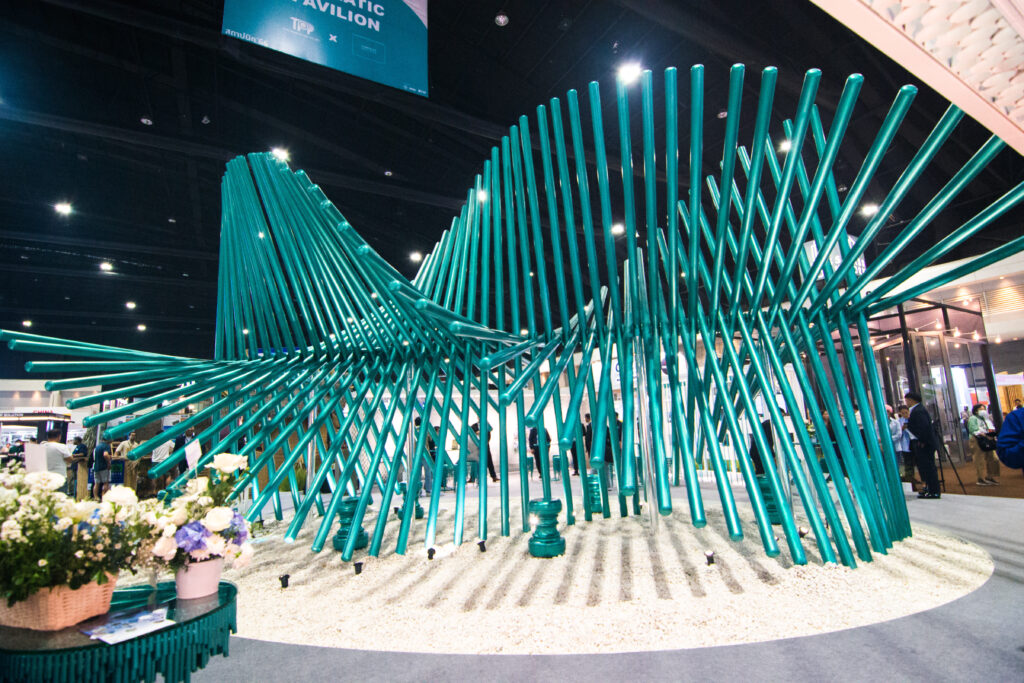
Material: Steel Pipe & Chain
Designer: Context Studio
Design that reveals the identity of products by taking straight and rigid pipes and make them feel as gentle and fluttering as much as possible, which results in this idea. The straight pipes gradually move and adjust their angle little by little to create a spiral movement. Besides the main sculpture at the center, there is also furniture specially designed as part of Thematic Pavilion for visitors to sit and relax, as well as to provide a space for organizing activities for visitors to listen and exchange interesting ideas with speakers.
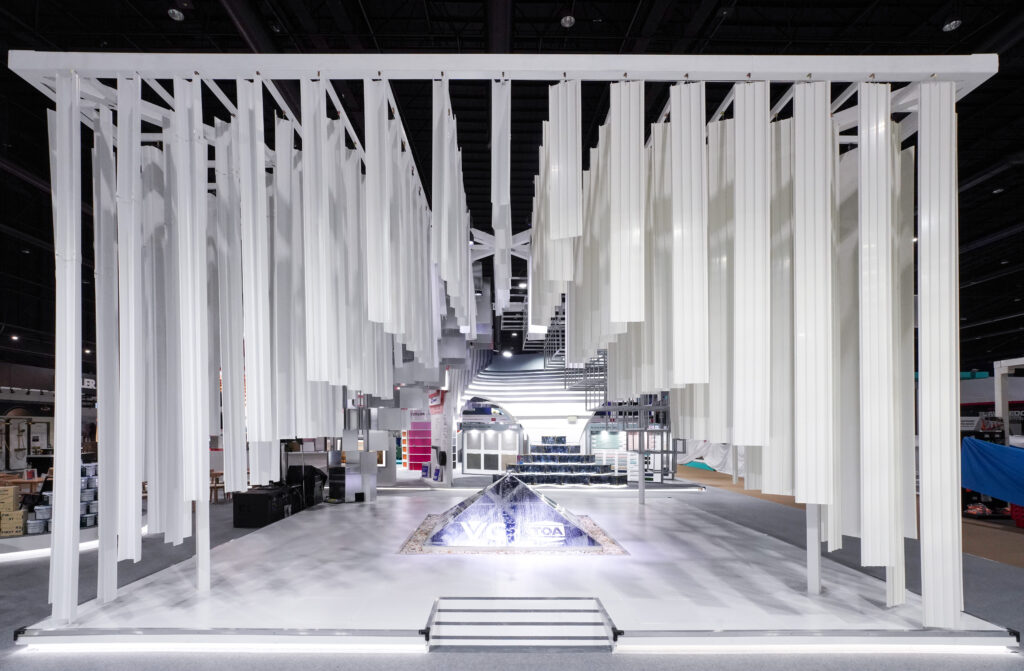
Material: C-Line, Gypsum, Tile, iR-uPVC Rain Gutter, iR-uPVC Roof Sheet
Designer: Hypothesis
The shape of a pyramid represents the elements that TOA and VG have in common. Both brands feature upstream process in their production, thus such idea is communicated through the stream emerging from the top of the glass pyramid. This pavilion is designed to go with the white color for being a neutral color which is common in the materials of both brands, the color also balances the overall design of the Thematic pavilion, not complimenting one brand over the other.
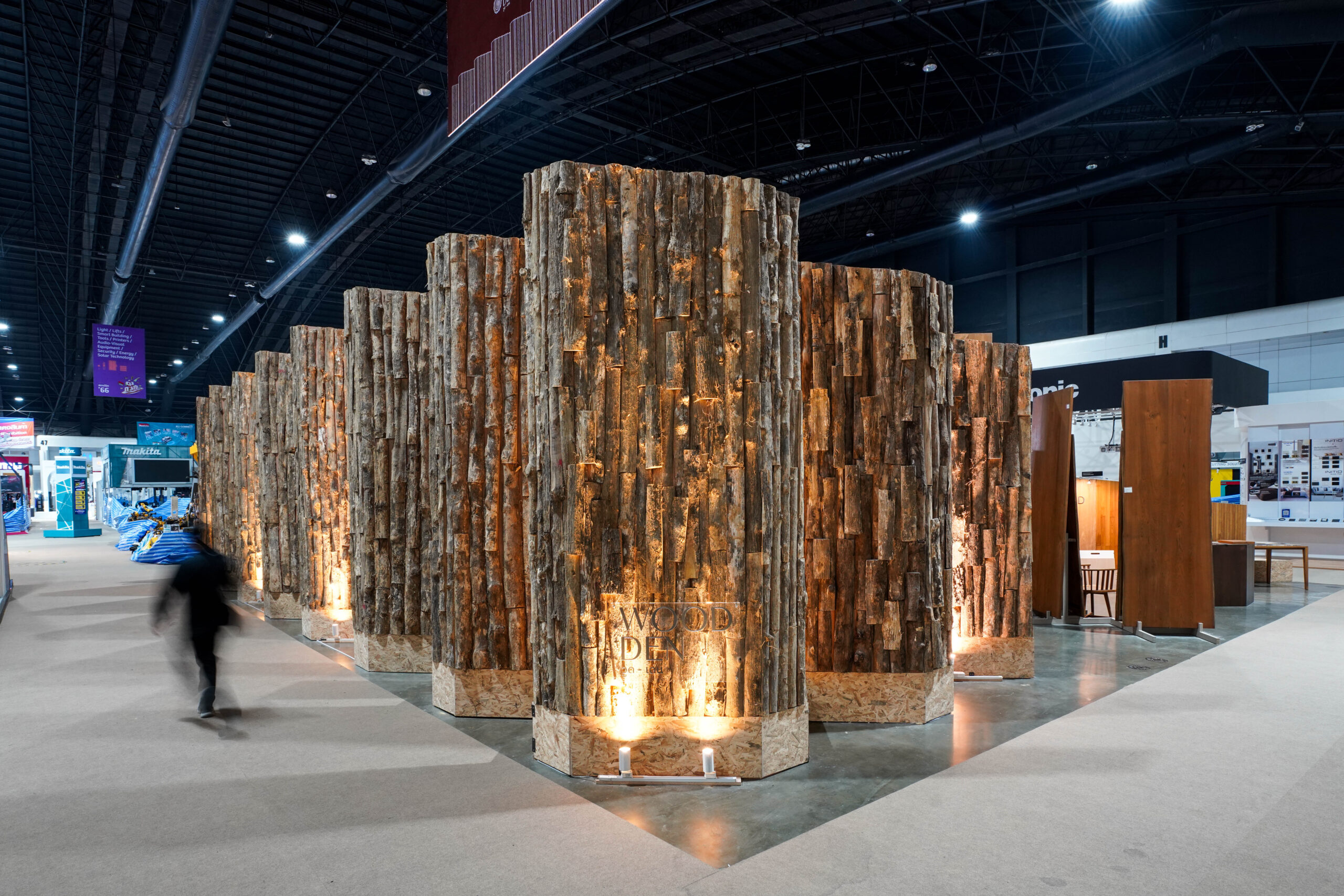
Material: Teak Painted Steel
Designer: PAVA architects
The pavilion is an enclosed space with teakwood as walling to provide a contrasting experience for visitors. Outside, the booths may be bustling with people, but upon stepping into this space, the placement and design can reduce noise, and this becomes a peaceful space to relax your mind, stop by and chill so you can absorb the story to the fullest.
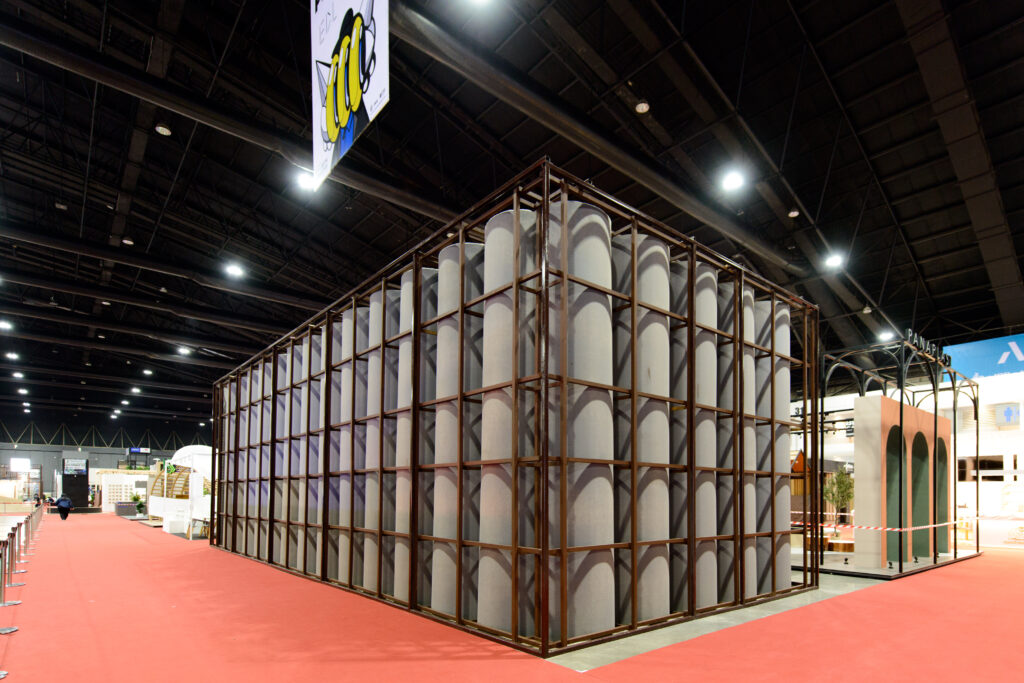
Material: Laminate
Designer: Sher Maker
Visitors are invited into an enclosed, experiential space with a dimly-lit atmosphere from only the light that penetrates through the laminate ceiling.
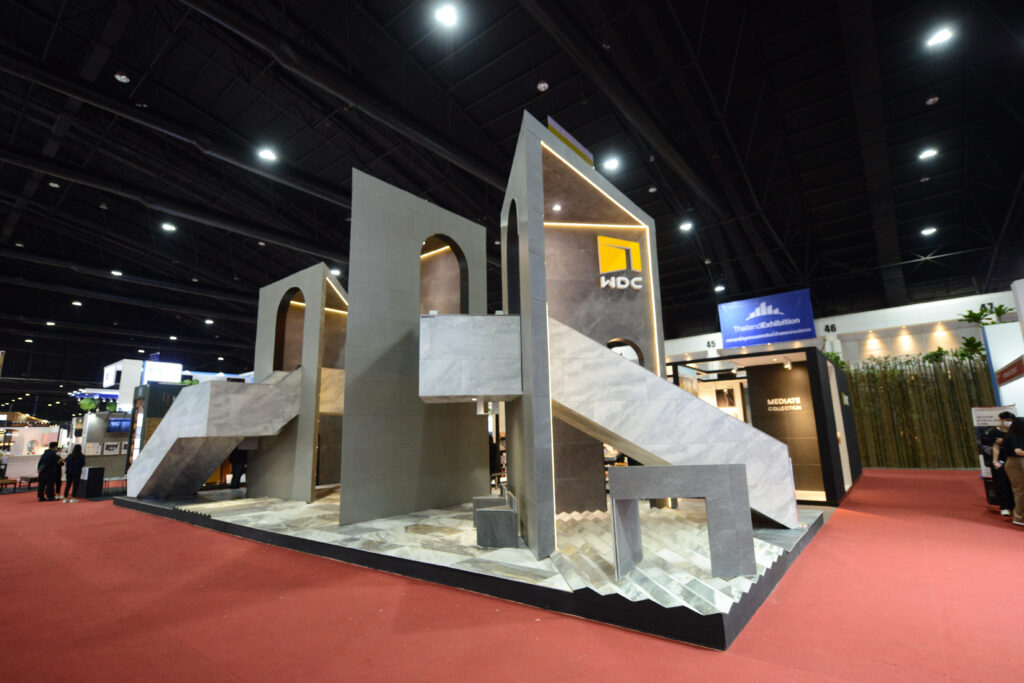
Material: Tile
Designer: ACa Architects
The pavilion showcases innovations such as tiles that instantly transforms its soft to rough texture when exposed to water in Conceptual Space, simulating space from different rooms of a residence.
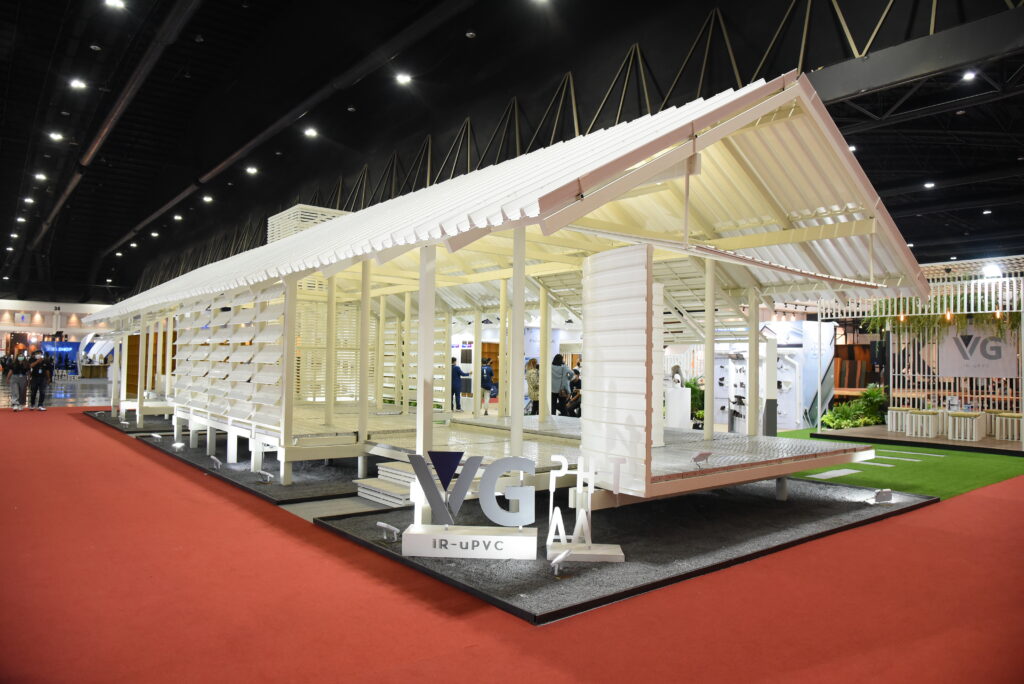
Material: iR-uPVC Rain Gutter, iR-uPVC Roof Sheet
Designer: PHTAA Living Design
Thai-style house whose structure is not traditional wood but is constructed from iR-uPVC rain gutters for roofs and retractable wall, perfect for the concept of ‘re-appropriate’ to showcase new possibilities of material.
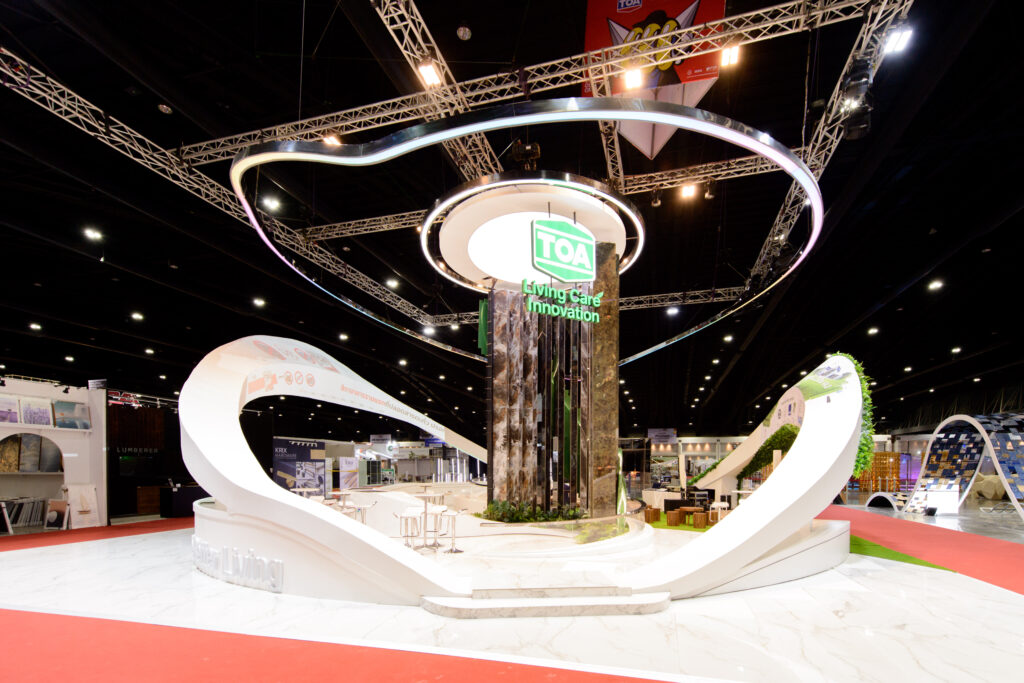
Material: TOA Organic Care, Tile, Gypsum
Designer: ARiA Design Architects
The pavilion tells the story of the TOA brand, from the production of paint to the introduction of new materials like gypsum, as well as the idea of eco and sustainable development.