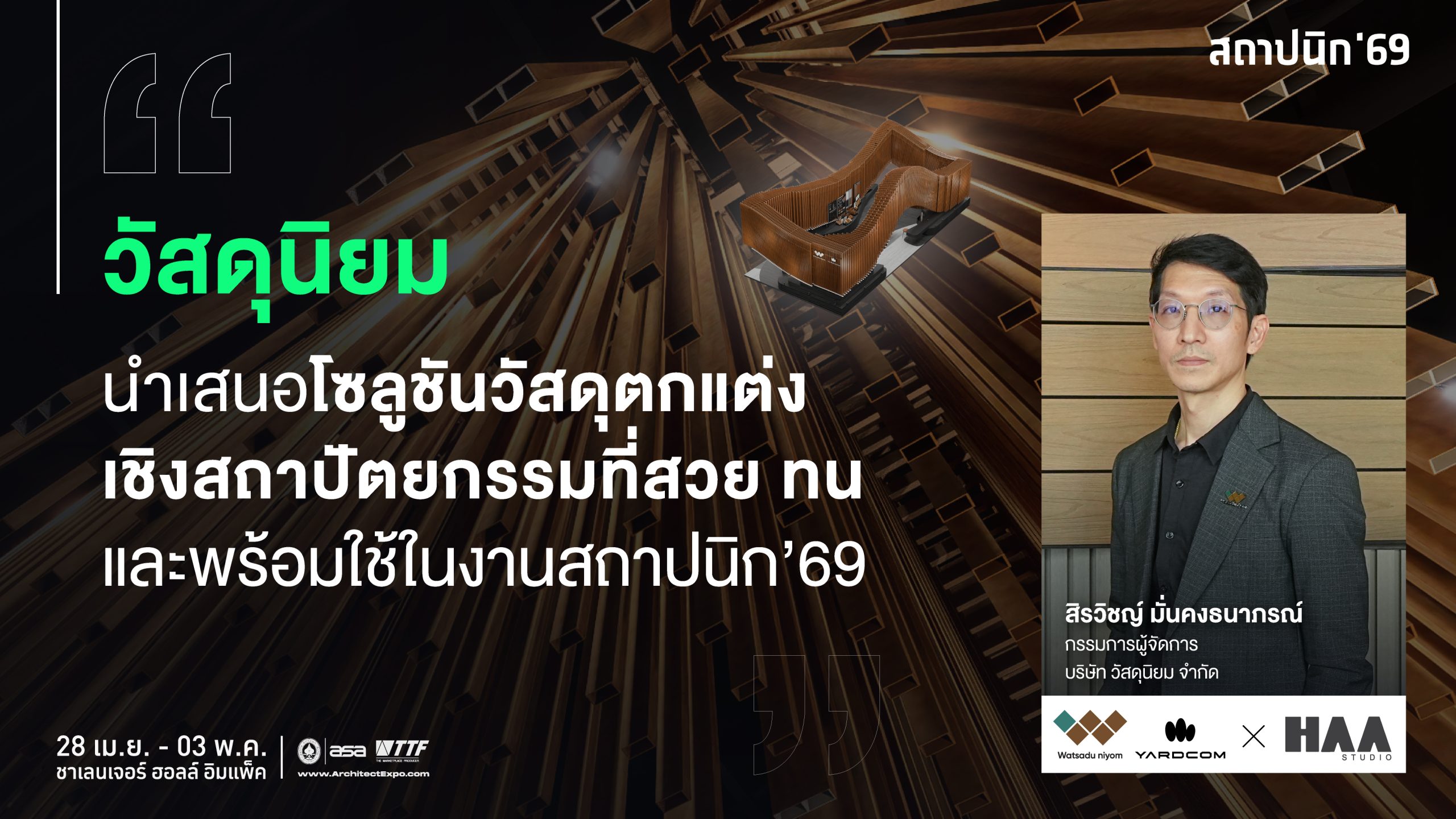
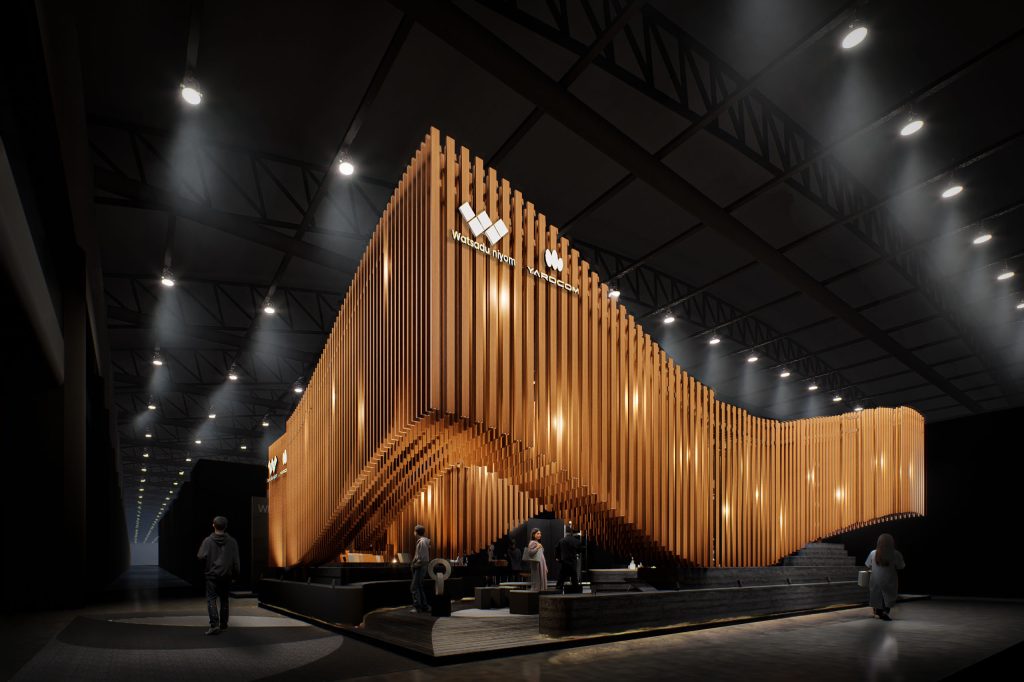
Watsadu niyom, a brand specializing in architectural decorative material solutions — particularly WPC composite wood and surface covering materials for both exterior and interior applications — has made the decisive move to elevate its presence at Architect’26 through a Thematic Pavilion format, aiming to communicate the identity of its materials as clearly and completely as possible, all at once.
Over the years, the brand has continuously developed innovative products and received consistently positive feedback from multiple appearances at the Architect expo. Yet from the management’s perspective, that was no longer enough.
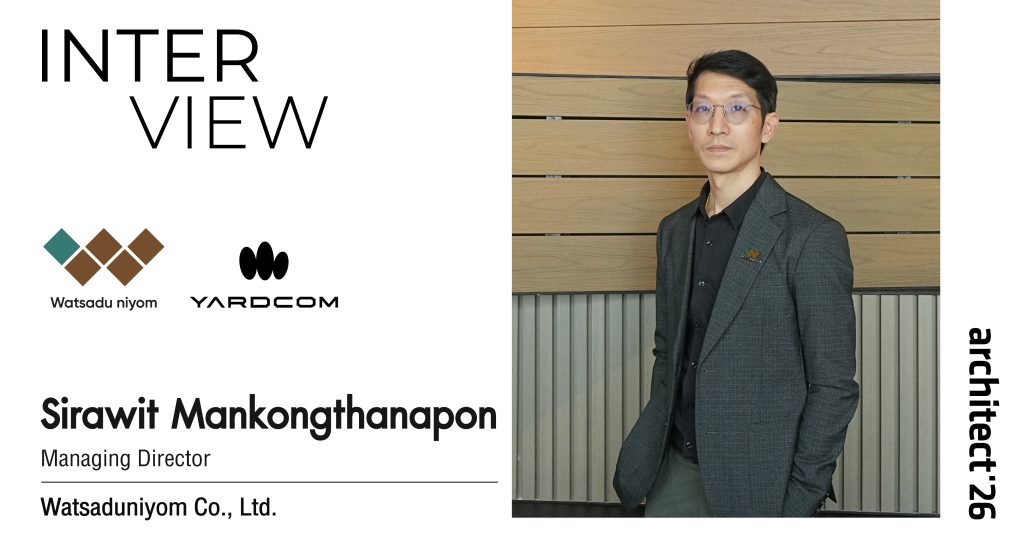
Mr. Sirawit Mankongthanapon, Managing Director of Wasduniyom Co., Ltd., explains the thinking behind this year’s participation: the brand wants to elevate its communication so that the market understands its materials on a deeper level — not merely recognizing individual products in isolation, but fully grasping Wasduniyom’s positioning, philosophy, and the value it has developed, all in a single experience.
Under this vision, the Thematic Pavilion was seen as the most fitting vehicle — capable of telling the story of materials through architecture, through concept, and through a space with a clear and deliberate point of view, going far beyond a conventional commercial booth layout.
Good Materials Must Be Beautiful, Durable, and Ready for a Changing Labor Era
One of the clearest challenges Wasduniyom has identified is the ongoing transformation of the construction industry: the decline in skilled labor, the increasing difficulty of finding reliable craftsmen, and the unpredictability of job sites that drives up costs unnecessarily.
Mr. Sirawit explains that for architectural materials — especially composite wood — next-generation products can no longer rely on aesthetics alone. Innovation must step in to compensate for labor limitations. The guiding principle is straightforward: “materials must be ready to use” — essentially Plug & Play — easy to install, with fewer steps, less dependence on highly skilled labor, and reduced exposure to uncontrollable variables on site.
The brand’s thinking is anchored in three enduring principles: beauty must come first; durability must be built into the product for the long term; and usability must align with an era where labor-intensive processes are steadily giving way.
Alongside this is a genuine commitment to “Green” — which for Wasduniyom is not a branding exercise, but a megatrend and a real industry imperative that demands thinking from the very beginning to the very end of every material’s lifecycle.
Why a Thematic Pavilion: Choosing to Change the Way the Story Is Told
Wasadu niyom has participated in the Architect expo multiple times, consistently receiving positive responses — particularly for its surface covering and composite wood products, which are materials that must be touched. Texture, color, and the emotional presence of a material cannot be fully conveyed through a screen. A brief moment of seeing and touching the real thing is usually all it takes for visitors to understand.
However, the traditional booth format — focused on presenting as complete a product range as possible — can leave the brand’s overall identity feeling scattered. Visitors walk away knowing “what they have”, but without a clear sense of “where Wasduniyom stands.”
This year marks the first time the brand has made a serious commitment to changing how it tells its story. The Thematic Pavilion format demands choices — it requires a concept, and it requires distilling the essence of the entire portfolio into its clearest possible form. Instead of asking “what products do we have?”, the question this year becomes: “what do we want the market to understand us as?”
This reinterpretation came to life through a collaboration with Mr. Bas from HAA Studio, who translated the “position of the material” into a tangible, inhabitable space.
Mr. Sirawit reflects that as a manufacturer, the brand typically views materials through the lens of production processes and technical properties. But working alongside an architect opened another perspective entirely — one that questions limitations, seeks new potential, and applies materials in contexts beyond the familiar.
This exchange not only gave the Wasadu niyom Pavilion a sharper conceptual edge, but prompted the brand itself to reconsider how the materials it has been developing all along can be told through architecture.
APC, ASA, and AEF: Representing Beauty and Strength
Although Wasduniyom carries a broad product portfolio, the Thematic Pavilion deliberately distills the brand’s essence down to its most essential form — selecting just three core innovations to represent the entire vision.
The first material is APC (Aluminium Plastic Composite) — a composite material formed by combining two components with distinctly different natures. The outer layer is a BRC-technology plastic that develops texture and color tones closely resembling real wood, both visually and to the touch, and is suitable for exterior use in hot and humid climates. The inner core is aluminium, serving as the structural backbone — delivering strength, stability, and long-term durability.
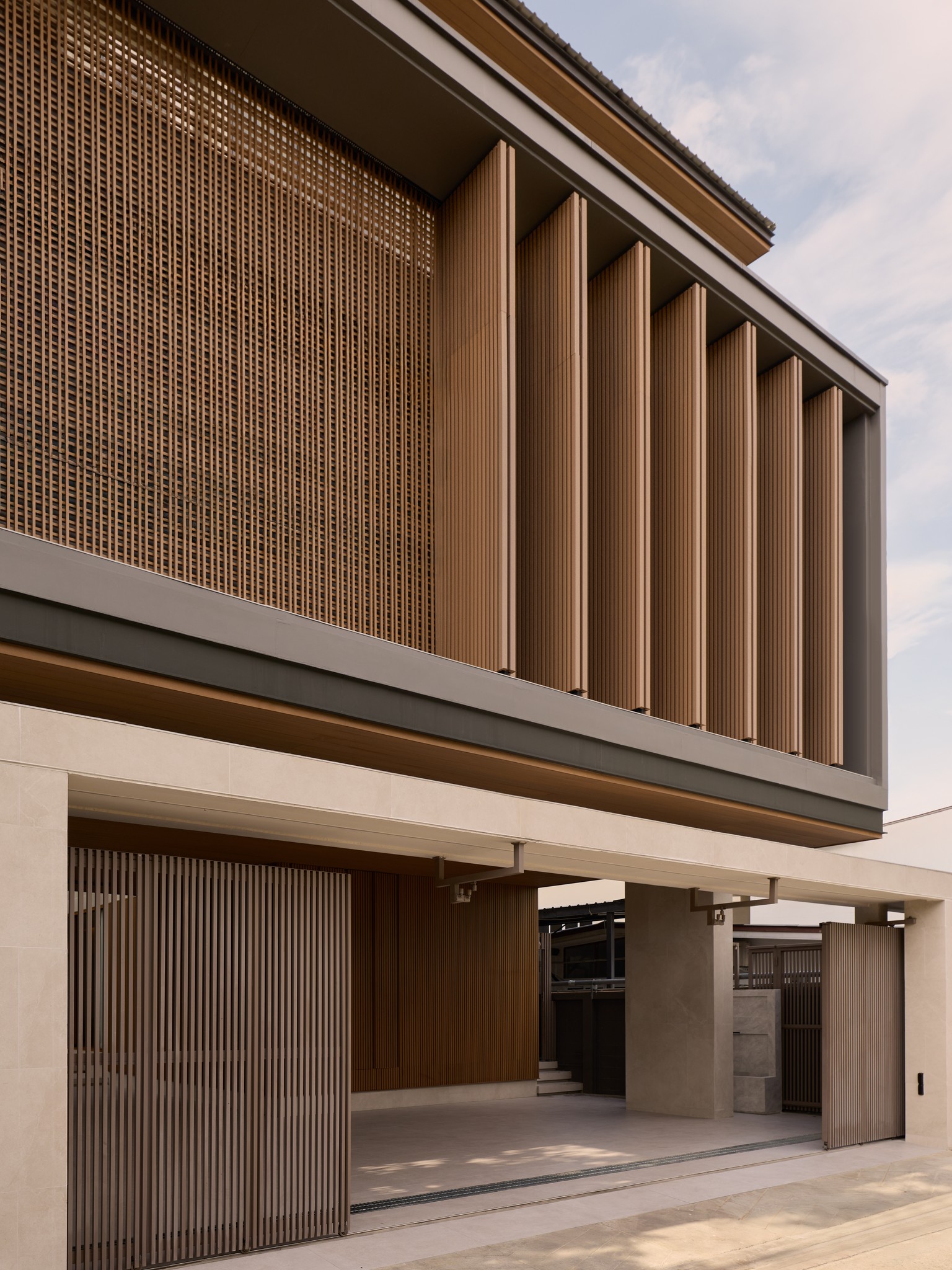
The fusion of a “wood surface” with a “metal core” is not merely the joining of two materials. It reflects a central brand philosophy: that beauty and strength can coexist within a single material — without having to choose one over the other.
ASA — Acrylonitrile Styrene Acrylate
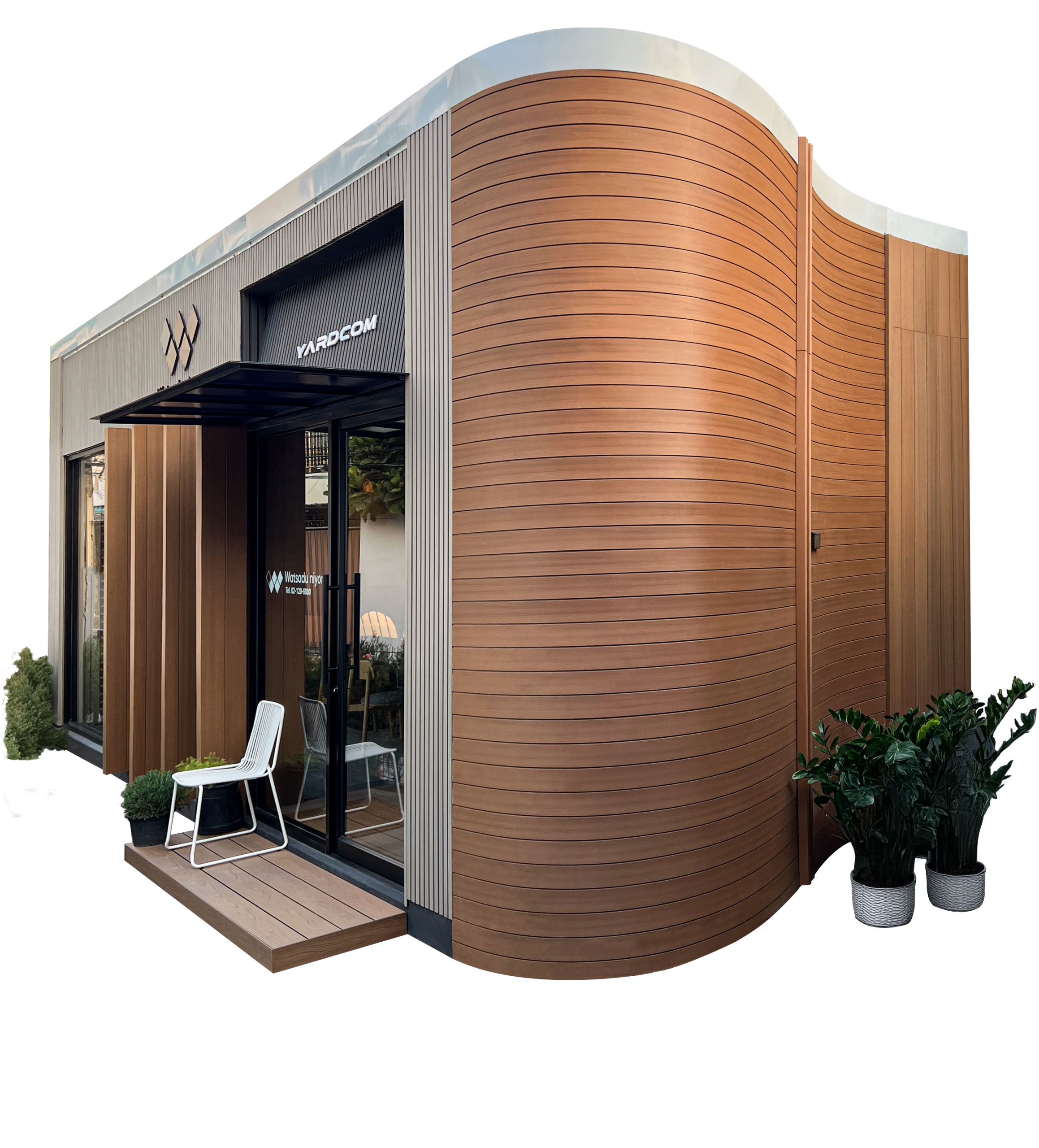
The second key material is ASA (Acrylonitrile Styrene Acrylate) — a high-performance plastic previously used in the automotive and aerospace industries. Its properties include resistance to UV radiation, hot and humid climates, and surface wear, while remaining structurally strong even at thin gauges. It has been developed into a surface coating layer that effectively extends the service life of the materials it protects.
Within the Thematic Pavilion, both materials are presented through a clear “two-layer” concept: the outer layer represents beauty and environmental resilience; the inner layer reflects structural strength and stability. This concept directly mirrors the brand’s dual-layer coating technology — designed so that both aesthetics and performance work in balanced harmony.
AEF — Advance Engineered Flooring
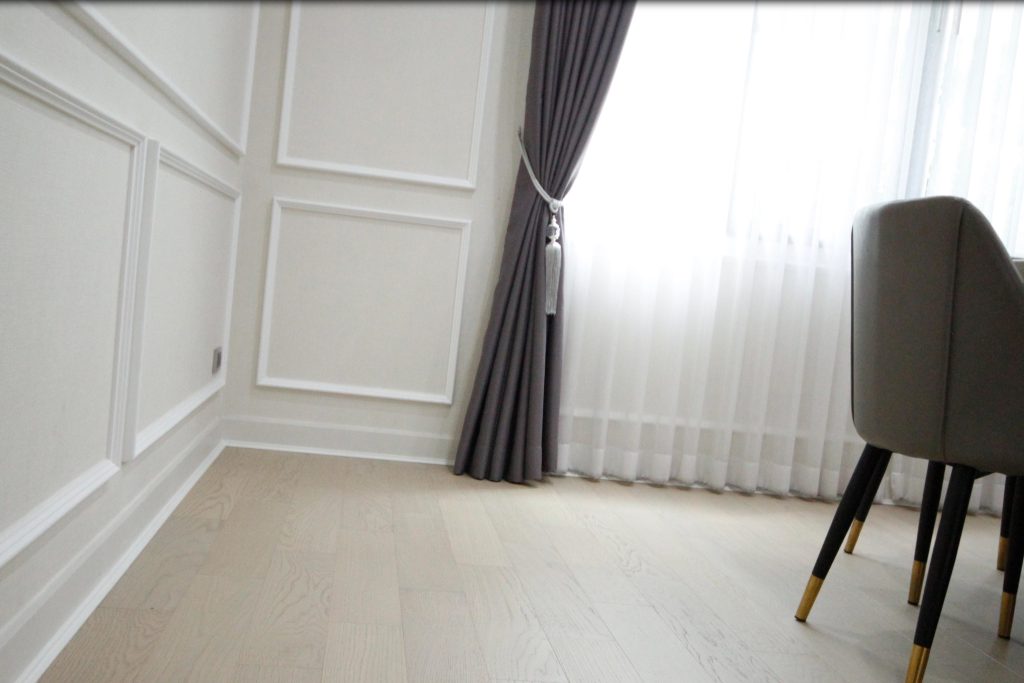
Choosing interior flooring today is no longer purely a matter of appearance. It must address usability, durability, and installation convenience — especially in an era where construction increasingly faces labor shortages and compressed timelines. Modern flooring materials are therefore developed as ready-made solutions that simplify installation and improve performance in use.
AEF (Advance Engineered Flooring) from Wasduniyom brings together engineered wood and vinyl tile options that blend the natural beauty of wood grain with a strong material structure, purpose-built for efficient installation.
AEF Engineered Wood features an AB Grade real wood surface with a multi-layer wood structure that minimizes expansion and contraction with temperature changes, along with a Click Lock 5G installation system for fast and precise fitting. AEF Vinyl Tile stands out with a moisture-resistant, non-swelling structure and 3D Direct Printing Texture technology that delivers highly realistic wood grain patterns. Both materials suit a wide range of design styles, feel comfortable underfoot, and are easy to maintain — making them a flooring solution that genuinely balances beauty, durability, and ease of use.
Responsibility That Extends Well Beyond Six Days of Exhibition
The key question for the materials industry going forward may not be who can develop something more novel — but who can take greater responsibility.
Watsadu niyom therefore does not evaluate product development solely through performance, differentiation, or technical appeal. The question extends further: where does every material end up? When its service life is over, where does it go? How will it be managed? And can it re-enter a new cycle of use?
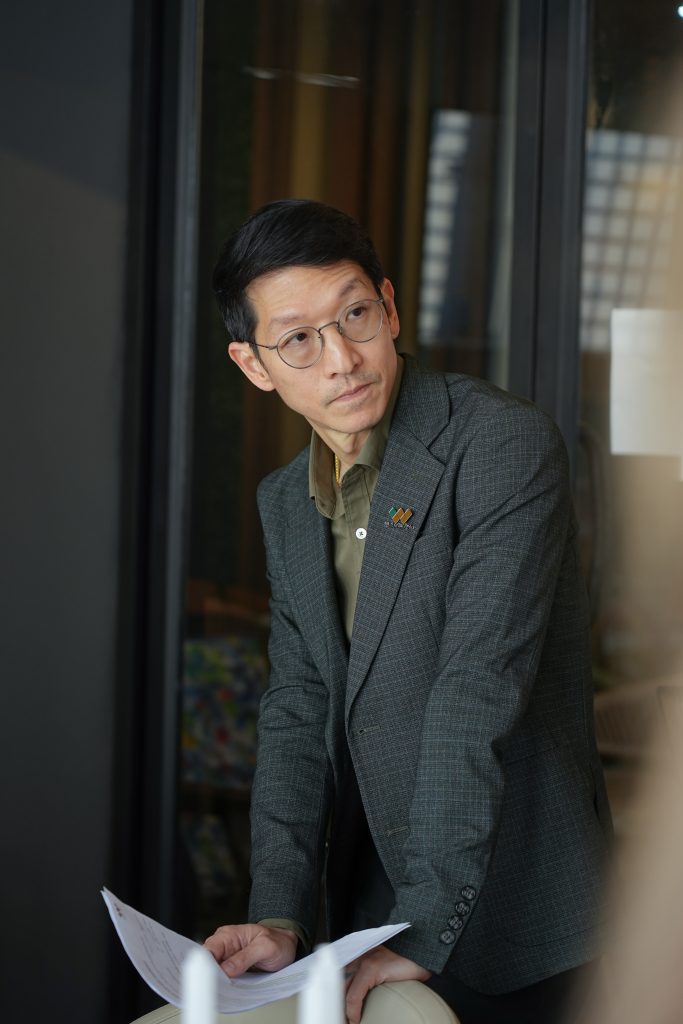
This thinking led to the establishment of an internal R&D unit focused on the Recycle Plus project — working to recover material offcuts and waste and redevelop them into new products, such as paving blocks and outdoor and garden panels. These re-enter the world of architecture in a form that carries genuine value — not merely as waste disposal, but as an extension of the material’s journey.
This “end-of-life” mindset does not stop at the product level. It applies directly to the Thematic Pavilion itself.
For Watsadu niyom, a pavilion should not be a structure built solely for six days and then demolished. This year’s design begins from the same question: if we treat this pavilion as a 365-day investment, how do we design it to continue working long after the event ends?
Every component is planned to be disassembled and redeployed — whether for display in other venues, adaptation as product elements, or by maximizing the use of offcuts and existing site materials from the outset — keeping waste to a minimum from the very beginning.
In this sense, the Thematic Pavilion is not just a brand communication exercise — it is a structural-level experiment in responsibility: that good materials, and good exhibitions, should be designed to outlast the event itself, and to generate value well beyond what is visible in the short term.
Come and Experience Materials in a Dimension You’ve Never Seen Before
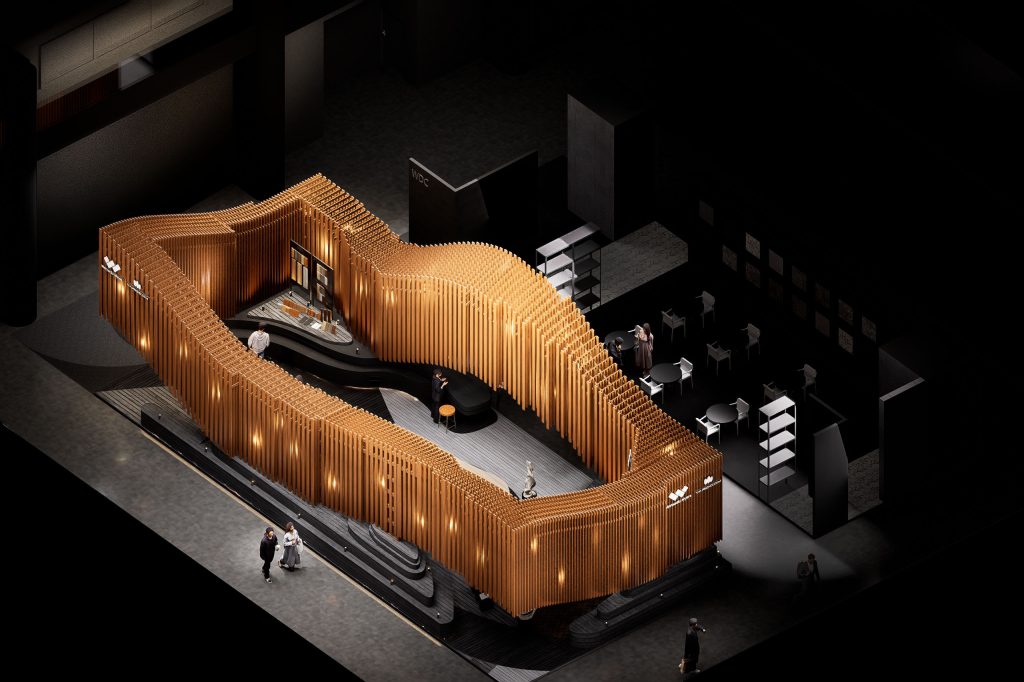
For this year’s Wasduniyom Thematic Pavilion, the intention is not simply for visitors to walk through and look at products as they would a conventional booth. It is an invitation to see the full story of materials as a coherent system — how they are developed, how they are used, and how they are thought through into the future.
Architects, designers, and project developers will gain a fresh perspective on the use of composite wood and surface covering materials in architectural applications — discovering how much further they can be extended, differentiated, and applied to solve design challenges beyond what is already familiar.
The pavilion is structured across multiple narrative zones: the main design space, a collaboration with artists and architects that reflects more than a decade of Wasduniyom’s journey, and participatory activities that invite visitors to understand materials through direct experience — not merely through observation.
If you want to see how materials can be told through architecture, and where they are headed in the future, Wasduniyom invites you to come, have a conversation, and experience it for yourself.
Find Wasduniyom at Booth TP01 — Architect’26—the 38th THE ASEAN’S LARGEST BUILDING TECHNOLOGY EXPOSITION taking place from April 28 – May 3, 2026, from 10:00 AM – 8:00 PM at IMPACT Challenger Hall 1–3, Muang Thong Thani.