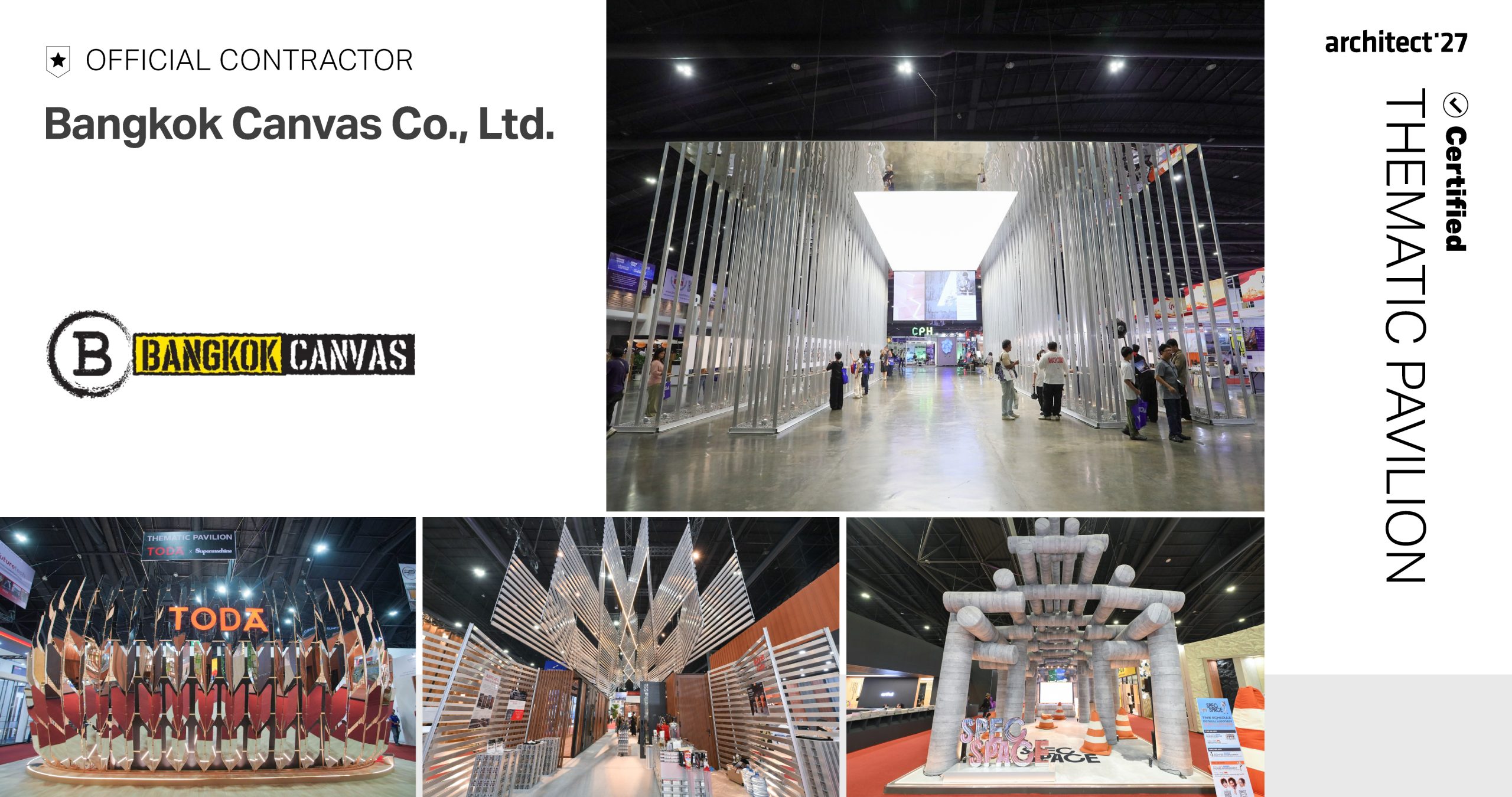
Every year, when Architect opens its doors, visitors see the beauty of exhibition booths in their finished form—the carefully selected materials, distinctive designs, and brand stories brought to life.
But behind those impressive spaces, during the few days of set-up, there is a team of people counting down every minute, racing against a deadline that cannot be extended.
From Canvas Printing to Full-Service Exhibition Expertise
Bangkok Canvas began as a canvas printing business before gradually expanding into steel structures, tents, beer gardens, and other types of projects.
Its willingness to take on diverse challenges and avoid limiting itself to a single area of expertise has allowed the company to evolve into a contractor capable of managing projects from end to end. This versatility has become one of the key reasons why Bangkok Canvas has earned the continued trust of its clients and partners.
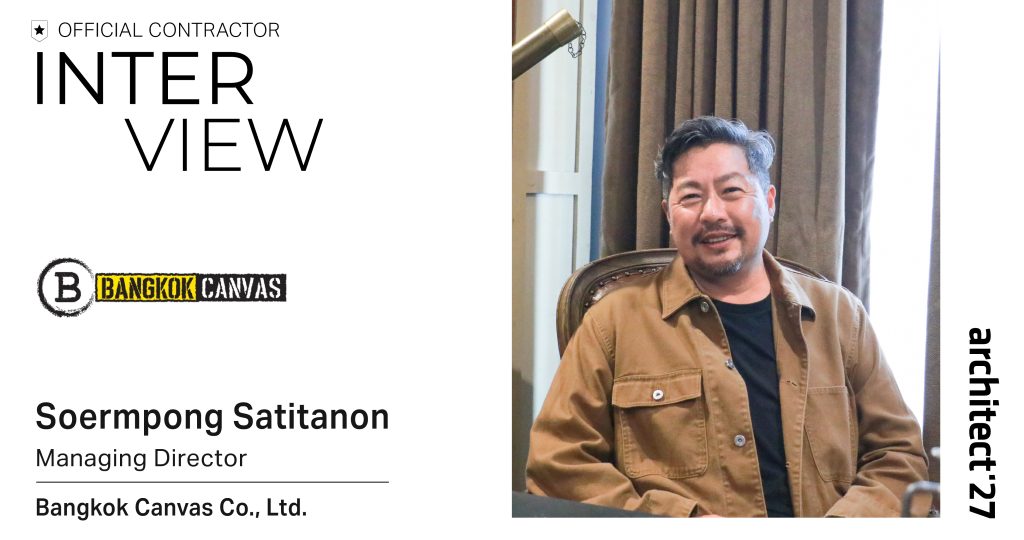
Soermpong Sathitanon, Managing Director of Bangkok Canvas Co., Ltd., explains that exhibition work requires extremely strict time control, while relying heavily on outsourced contractors can introduce significant risks.
“If we hire someone and they cannot deliver on time or complete the work, it affects our entire operation.”
Today, the company’s factory has 14 specialized departments, enabling Bangkok Canvas to manage projects through a comprehensive one-stop service model, with greater control over production, coordination, quality, and delivery.
Embracing Every Challenge, Creating Every Project the Bangkok Canvas Way
From its beginnings in the printing business, booths and exhibition projects have now become the core of Bangkok Canvas’s operations, accounting for approximately 80% of its overall business.
The company draws on experience from a wide range of projects and applies that knowledge to the design and construction of exhibition spaces—including structural work, fabric, woodworking, and various supporting systems.
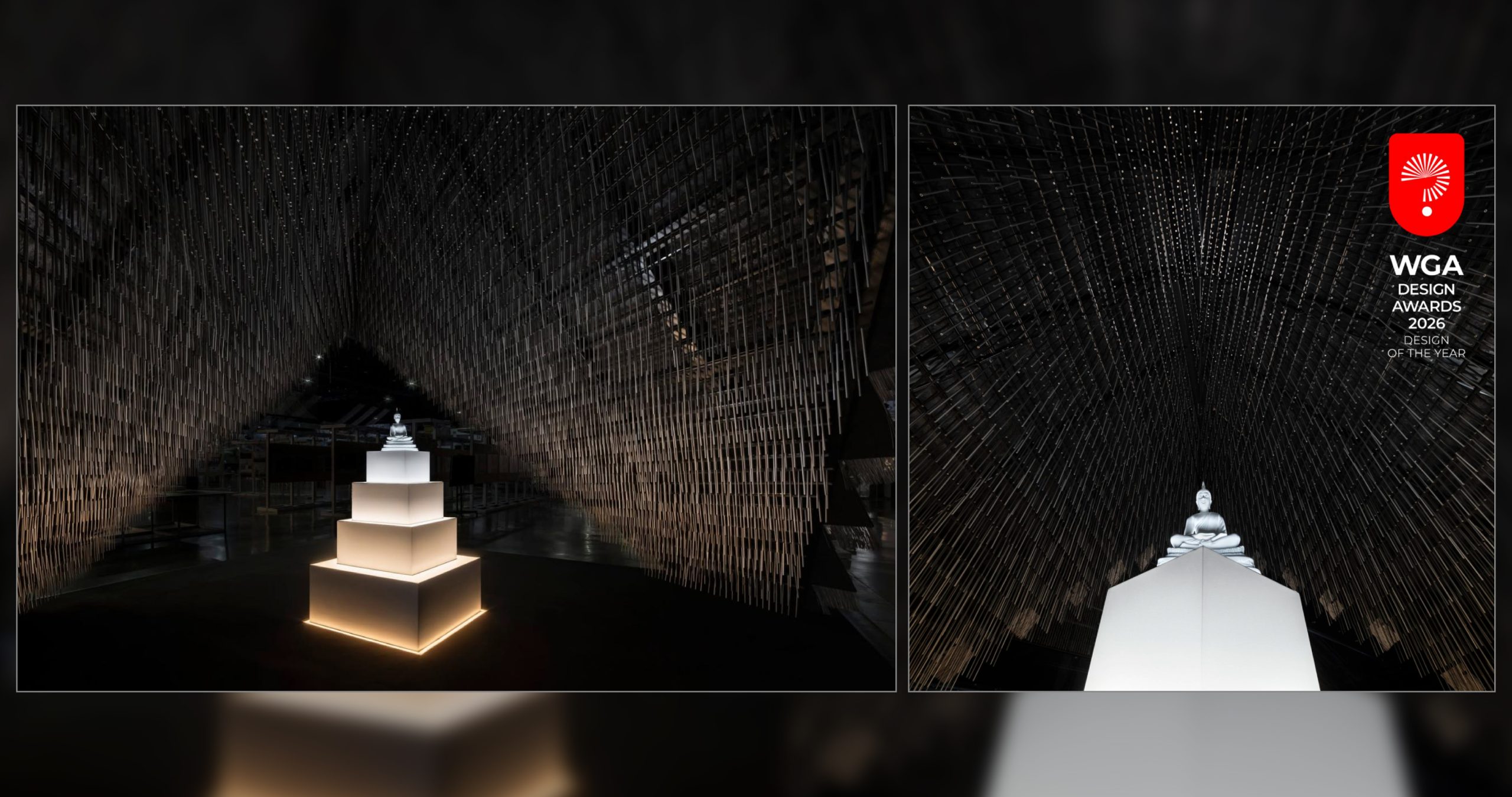
At Architect’26, Bangkok Canvas was behind the creation of booths for a number of brands and projects, helping bring greater color and enhance the visitor experience throughout the exhibition, including TODA, Palette of Materials Pavilion, Specspace, and S-ONE.
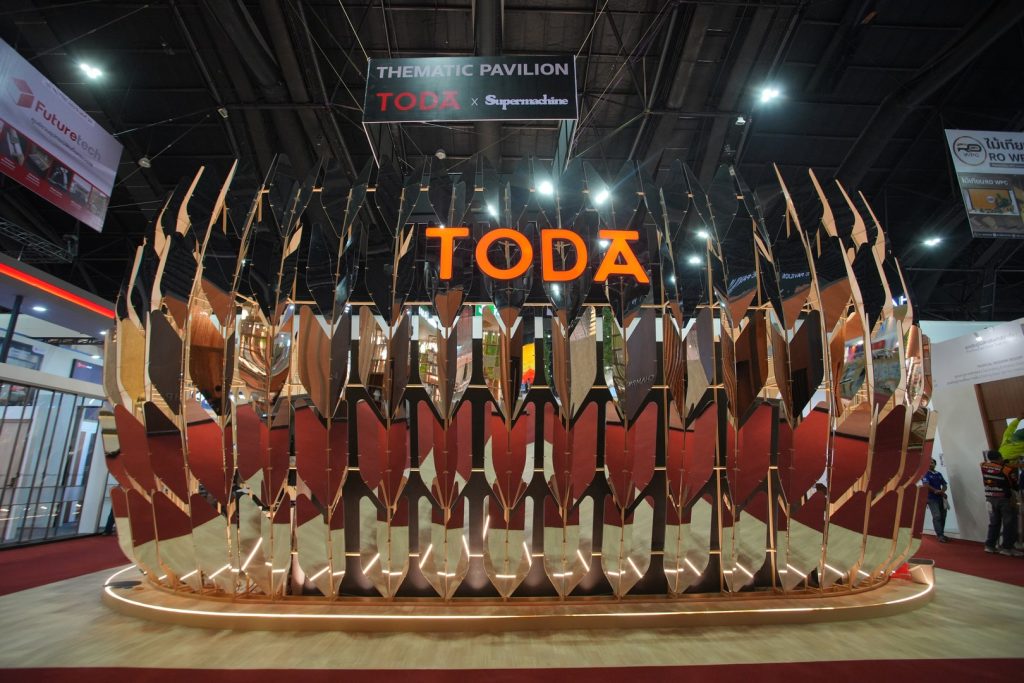
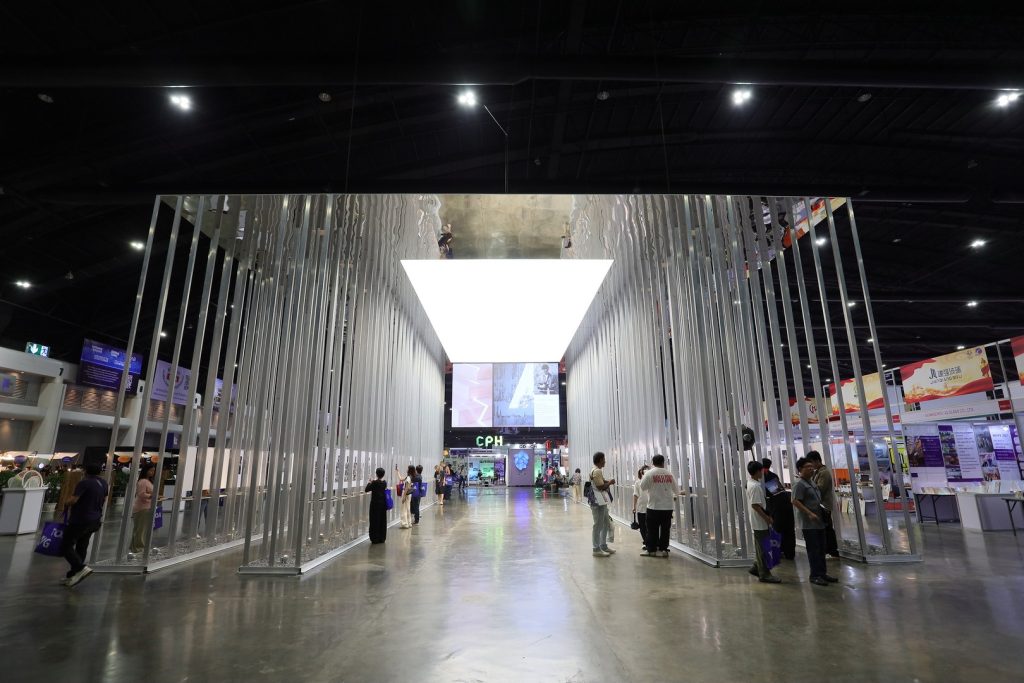
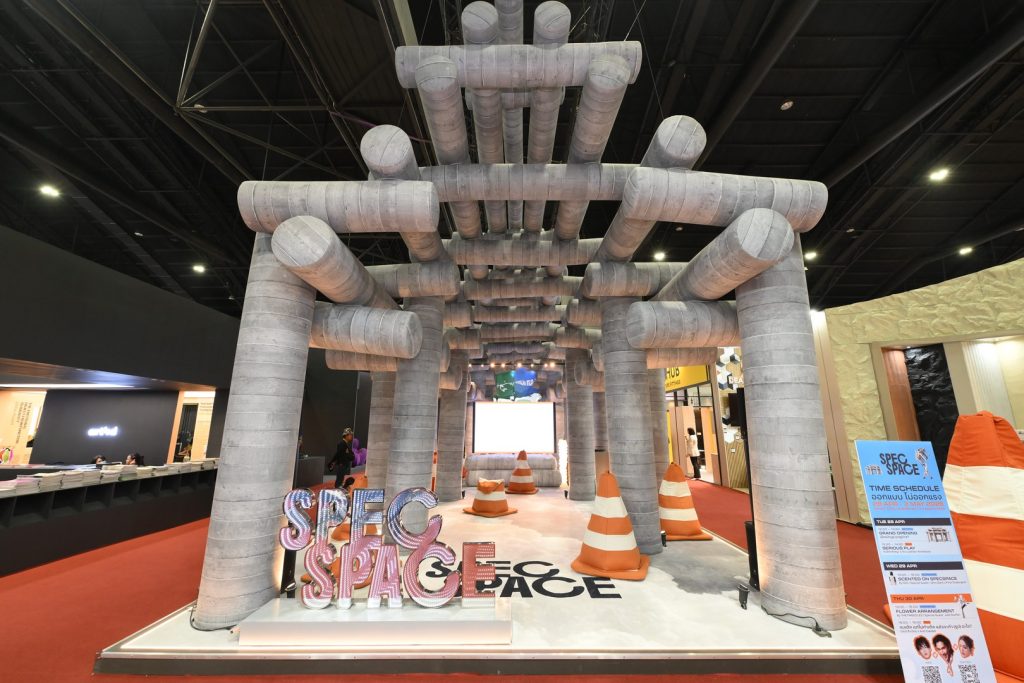
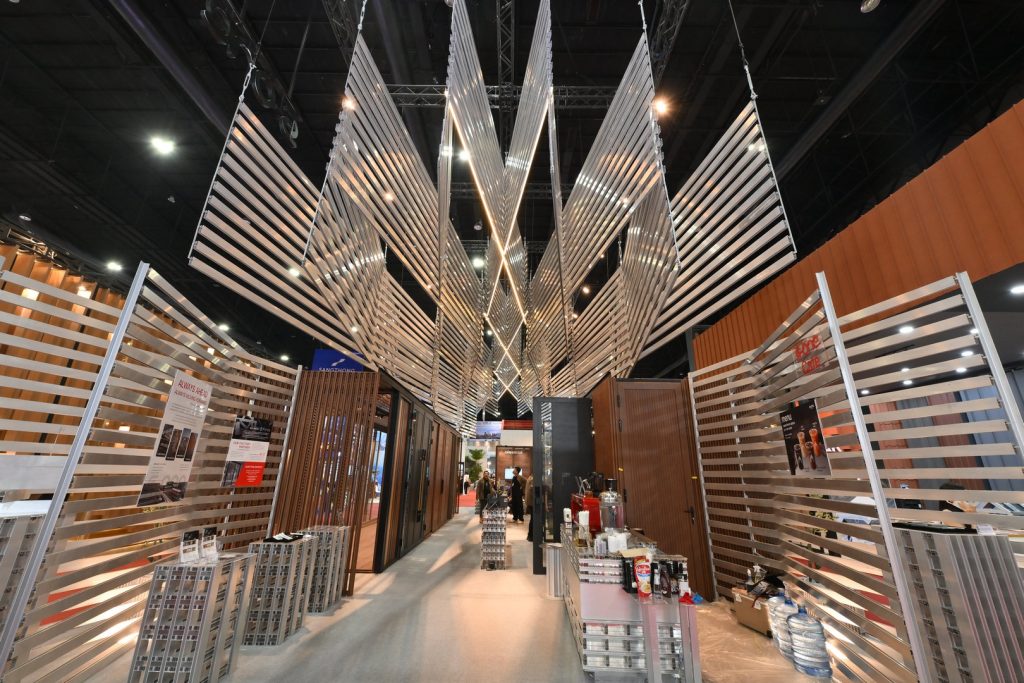
A good booth is not about putting everything into a limited space. It is about identifying what matters most and using that space strategically to communicate the brand’s identity clearly.
The process begins by identifying the “key content” the client wants to highlight, then prioritizing it so that the most important elements stand out within the available space.
The Four Equations of Success: Cost, Safety, Quality, and Time
Creating an exhibition booth is not simply about making it look good according to the design. It requires careful management of four interconnected factors: Cost, Safety, Quality, and Time.
If any one of these elements falls out of balance, it can affect the success of the entire project.
For Bangkok Canvas, cost control does not mean compromising on quality. It means planning and managing the entire workflow efficiently.
The company operates as a one-stop service provider, with its own teams and in-house production departments. This reduces reliance on external contractors, minimizes coordination errors between multiple parties, and provides greater control over cost, quality, and delivery schedules.
At the same time, safety must be considered from the design stage through to actual installation. Whether it involves material selection, transportation planning, or the installation of large structures, every step must comply with the required standards to ensure the safety of both the team and exhibition visitors.
Another equally important factor is quality. Quality is not created by solving problems on-site; it comes from being prepared from the beginning.
This means understanding materials and their limitations—knowing what can and cannot be done—as well as maximizing the amount of production and trial assembly that can be completed at the factory. Wherever possible, clients are also given the opportunity to inspect the work before it is transported and installed at the venue.
This preparation helps reduce risks, preserve the details of the original design, and ensure a smoother installation process.
Above all, time is the most critical factor.
The first question is always whether the required timeline is realistically achievable. Every stage must therefore be planned in detail—from the sequence of site access and team allocation to completing and handing over the booth ahead of schedule.
This gives brand owners sufficient time to prepare their products, inspect the finished space, and ensure everything is ready to welcome visitors on opening day.
An exhibition contractor, therefore, is not simply responsible for building a booth. The role also involves managing time, resources, and coordination to ensure that everyone moves in the same direction and the project is delivered on schedule.
Materials Should Not End Up in a Landfill
For Bangkok Canvas, reuse is not simply a way to reduce costs for the following year. It is also about the satisfaction of seeing the same materials given a new life.
As Soermpong explains:
“It feels much better to see the same materials come back to life than to spend so much time creating something that is used for only three days before being taken away and thrown out.”
The reality, however, is that after an exhibition ends, only around 10–15% of materials can typically be kept and reused.
Most of the remaining materials have to be discarded because clients often do not have sufficient storage space. The responsibility then falls on the project team to find appropriate ways to dispose of the materials.
It is a recurring loss that happens after almost every exhibition.
This is why Bangkok Canvas continues to promote a more reuse-conscious approach to exhibition design—considering from the very beginning where each material can go next.
The goal is to ensure that materials do not have to reach the end of their useful life in a landfill simply because one exhibition has come to an end.
Three Decades of Trust
With 30 years of experience, Bangkok Canvas has developed expertise across almost every stage of exhibition booth production. By minimizing reliance on outsourced contractors, the company can maintain greater control over both quality and delivery.
Its disciplined approach to planning allows the team to work within the exhibition industry’s demanding timelines, where there is often no room for delay.
Most importantly, Bangkok Canvas has built a culture of never turning down a difficult challenge. Instead, the team looks for ways to make it work.
Ultimately, what has allowed Bangkok Canvas to stand strong for three decades is not simply its technical expertise or comprehensive range of in-house departments.
It is the mindset of never stopping at a problem, but always looking for a solution—no matter how challenging the brief or how limited the time.
Because the true destination is not simply a beautiful booth.
It is the trust that clients continue to place in Bangkok Canvas, time and time again.