In design, surface materials are more than elements that complete the aesthetics of a space. They are details that shape its mood, atmosphere, and the experience of everyone who interacts with it.
Over the years, EDL Laminates, as a specialist in surface materials, has continuously developed material innovations—from 3-metre Oversize Laminates and bendable Compact Laminates to surfaces crafted with an artistic sensibility. Under the concept of Total Material Solution, EDL gives designers greater freedom to create spaces without limitations in function, flexibility, or aesthetics.
But for EDL, a good material should not fulfill its purpose only by creating a beautiful space. It should also be used efficiently and continue to hold value even after the exhibition it was created for has come to an end.
This philosophy was brought to life through EDL’s exhibition space at Architect’26, designed by Looklen Architects and submitted for evaluation under the ASA100 Sustainable Goal initiative. The project received a Gold Award from the ASA Green Pavilion Awards for its approach to valuing materials throughout their entire lifecycle—from selection and exhibition to their reuse after the event.
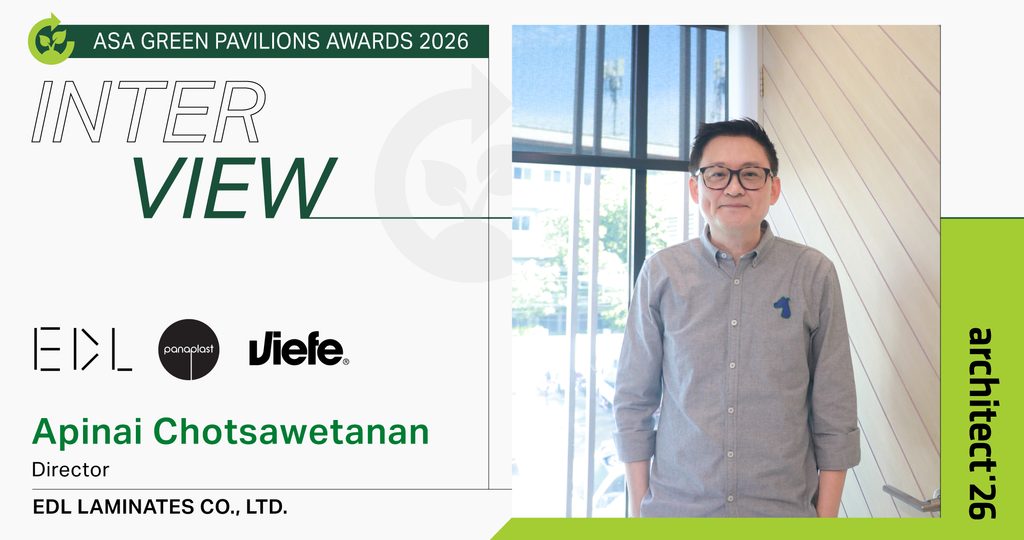
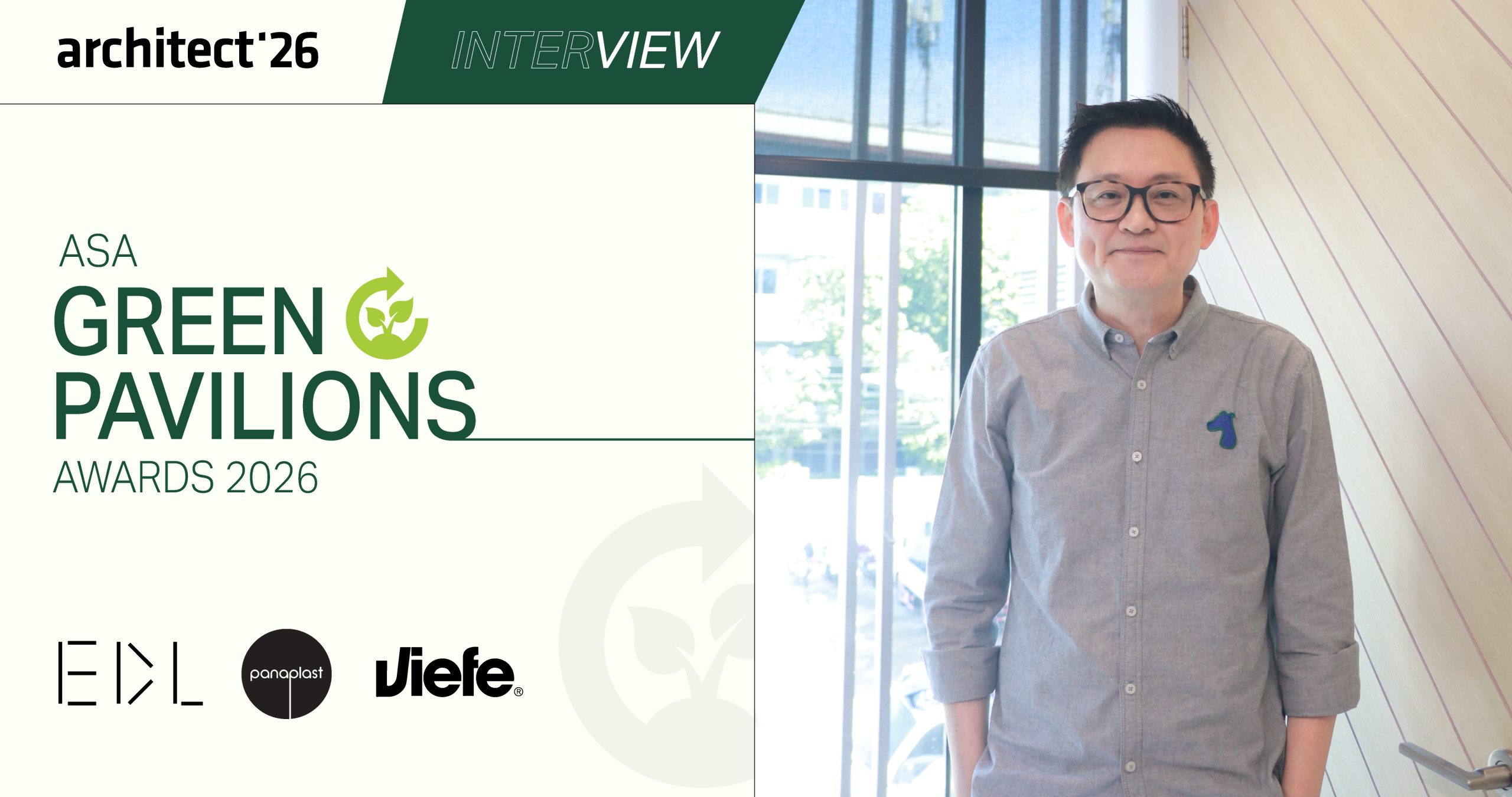
Apinai Chotsawetanan, Director of EDL LAMINATES CO., LTD., explains that every material EDL produces requires resources, time, and energy. The design of an exhibition space, therefore, should not focus only on the period during which it is on display, but should also consider what happens after the closing day.
“It takes resources and energy to produce every piece of material. It would be a waste if everything had to be discarded once the exhibition ended. But if the materials can be reused, at least we can reduce the need for new resources and help reduce our carbon impact, even if only to a small extent.”
This perspective clearly reflects EDL’s approach. For a brand that works directly with surface materials, sustainability does not begin only with waste management at the end of a product’s use. It begins by recognizing the value of the material from the moment it is produced.
When every material has been intentionally designed and developed, allowing it to become waste after being used for only a few days is not an outcome EDL believes in.
From the Pain Points of Exhibition Design to a New Way for Materials to Create Value Again
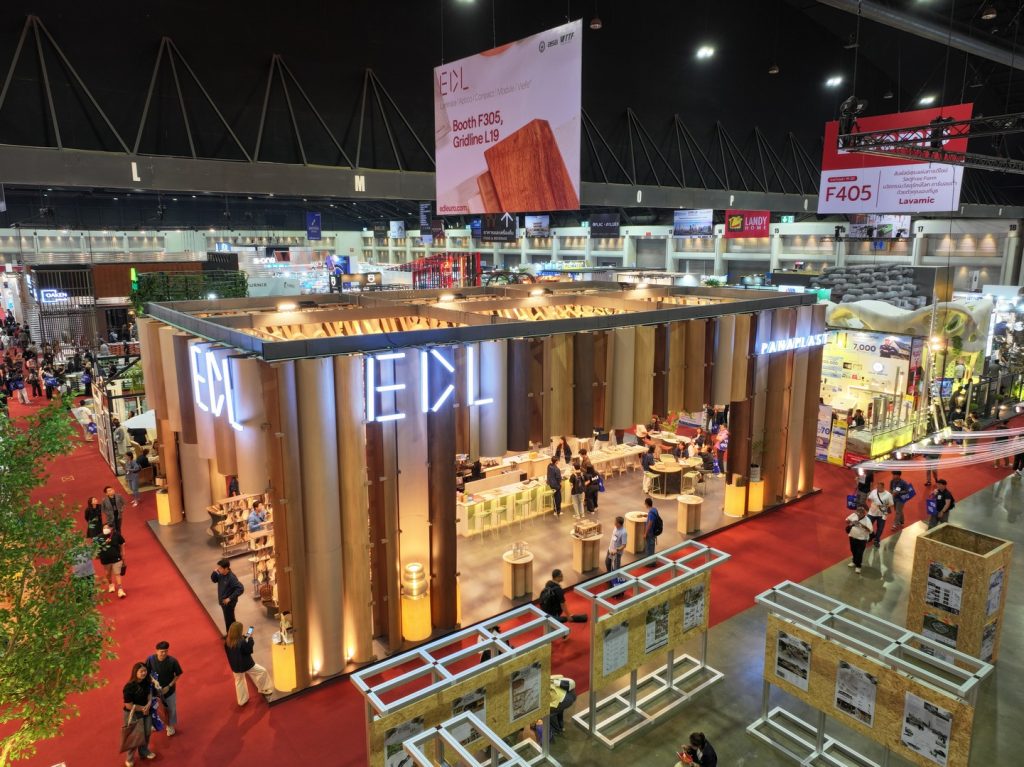
EDL has long embraced the idea of Design for Reuse. Over the years, the company has found ways to reuse certain elements of its exhibition booths, such as freestanding furniture that can be donated to educational institutions and schools, or modified and reused for the following year.
However, the previous approach still had its limitations. Some elements—particularly walls and larger components—often became waste after an exhibition ended. Even when efforts were made to reuse them, the proportion of materials that could actually be recovered and put back into use remained relatively low.
A significant turning point came when EDL began working with Ton of Looklen Architects, who identified a common pain point in exhibition design: large amounts of resources are often used to create exhibition spaces that exist for only a few days, after which a considerable amount of material is discarded.
Through their discussions, the two sides began asking a new question about this year’s exhibition booth: What if the materials displayed inside the exhibition could be removed and put back into use—not simply by adapting them for another purpose, but by returning them to the market or turning them into material samples that could genuinely be used by clients and designers?
For EDL, this question was particularly relevant because laminate is not simply a decorative material used for a booth. It is one of the brand’s core products, with value in its own right.
If the laminates could be removed intact after the exhibition, they could continue their journey through the real-world material system.
Instead of reusing only a portion of its materials, EDL took the concept a step further this year by designing the booth so that many of the laminate sheets could be removed intact and returned to sale. Materials that were not in perfect condition could still be cut into A4 or A5 samples and distributed to clients, designers, and design studios to support material selection for future projects.
Every Component Was Designed with Life After the Exhibition in Mind
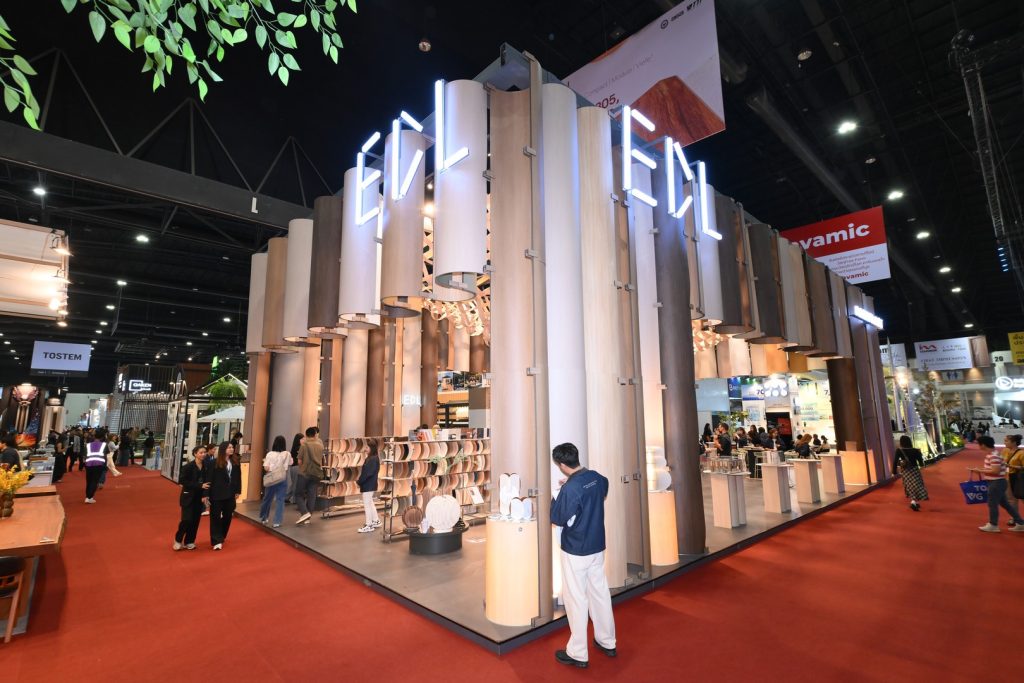
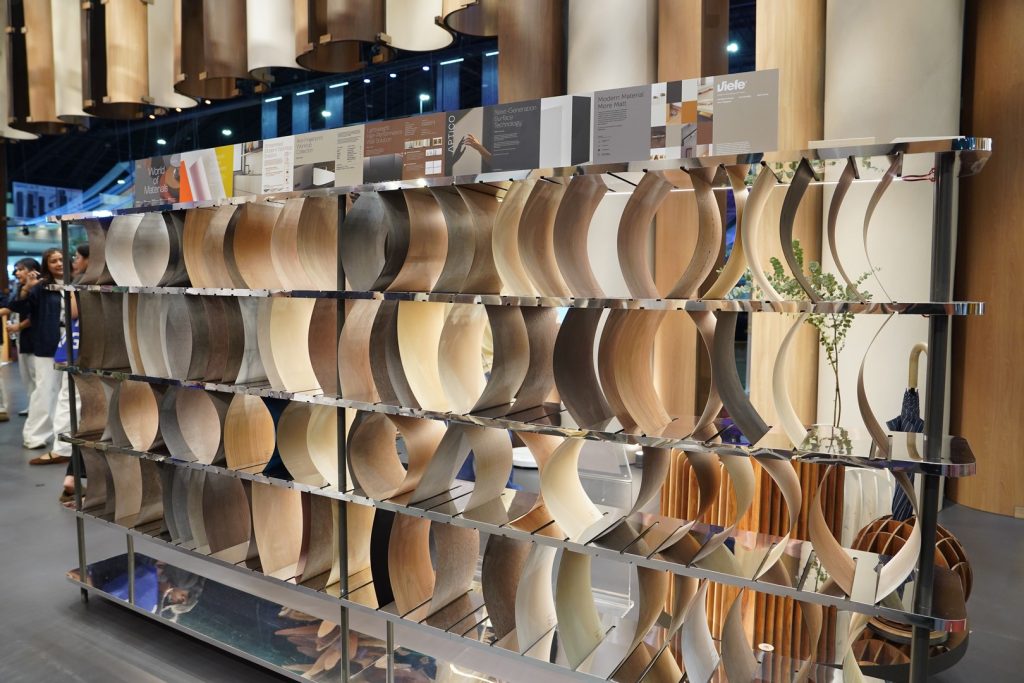
At Architect’26, EDL and Panaplast presented the concept of Total Material Solution through a diverse range of surface materials, including Oversize Laminates, bendable laminates, and artistic surfaces, giving designers the freedom to create spaces while meeting the practical requirements of different types of projects.
For EDL, Total Material Solution is not simply about offering a diverse range of materials to meet designers’ needs. It also means considering each material throughout its lifecycle—from selection and installation to planning how it can continue to create value after the exhibition ends.
Behind the exhibition space experienced by visitors was therefore more than a showcase of the capabilities of surface materials. It was also a demonstration that well-designed materials can be used responsibly.
The laminate sheets used throughout the booth were designed to be removed and reused, while the steel structure, which formed a key part of the exhibition space, could be stored, cut, modified, or transformed into structures for other applications in the future.
For EDL, the priority was therefore not simply how to dismantle the booth after the exhibition. It was about planning from the beginning where each material would go once the exhibition space had fulfilled its purpose.
When the design considers the next destination from the outset, the value of the material does not have to end when the booth is dismantled.
When Designers See New Potential in Materials
Working with Looklen Architects also opened up new perspectives for EDL as a brand that works with its own materials every day.
Apinai explains that EDL knows the properties of its products extremely well. But when those materials are viewed through a designer’s perspective, new questions emerge—questions that challenge the conventional limitations of the material.
One example was the use of laminate in curved forms and the surprisingly simple installation methods used to achieve them.
Rather than relying entirely on adhesive or complex locking systems, the designers experimented with simpler fixing methods that could still maintain the material’s form while creating interesting spatial effects.
This demonstrates how a single material can have greater potential than a brand or user may be accustomed to seeing when it is reinterpreted through the design process.
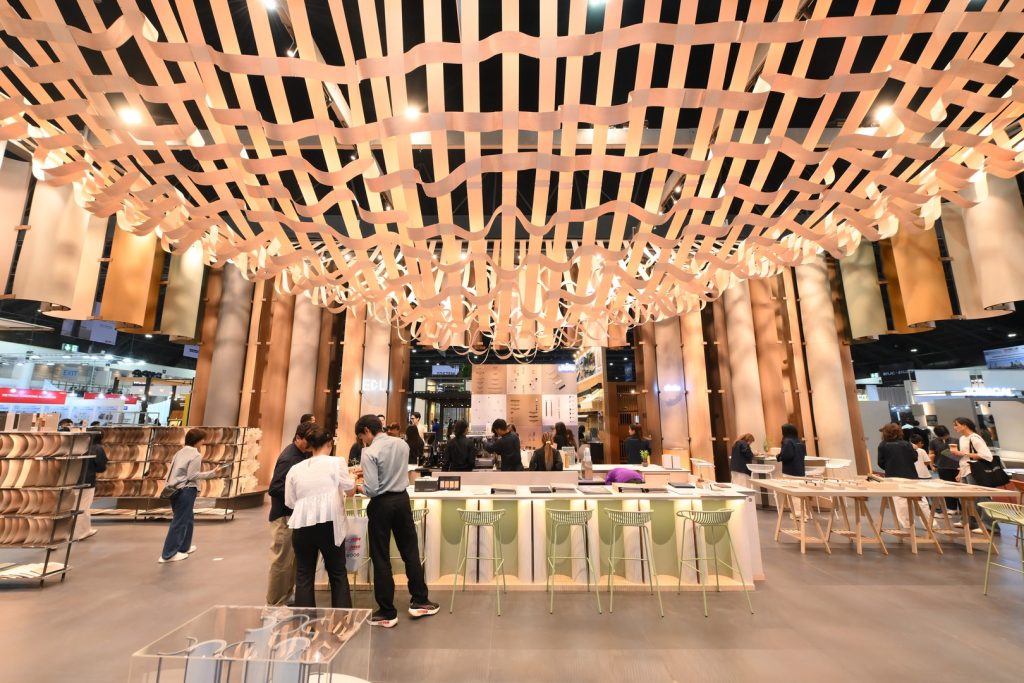
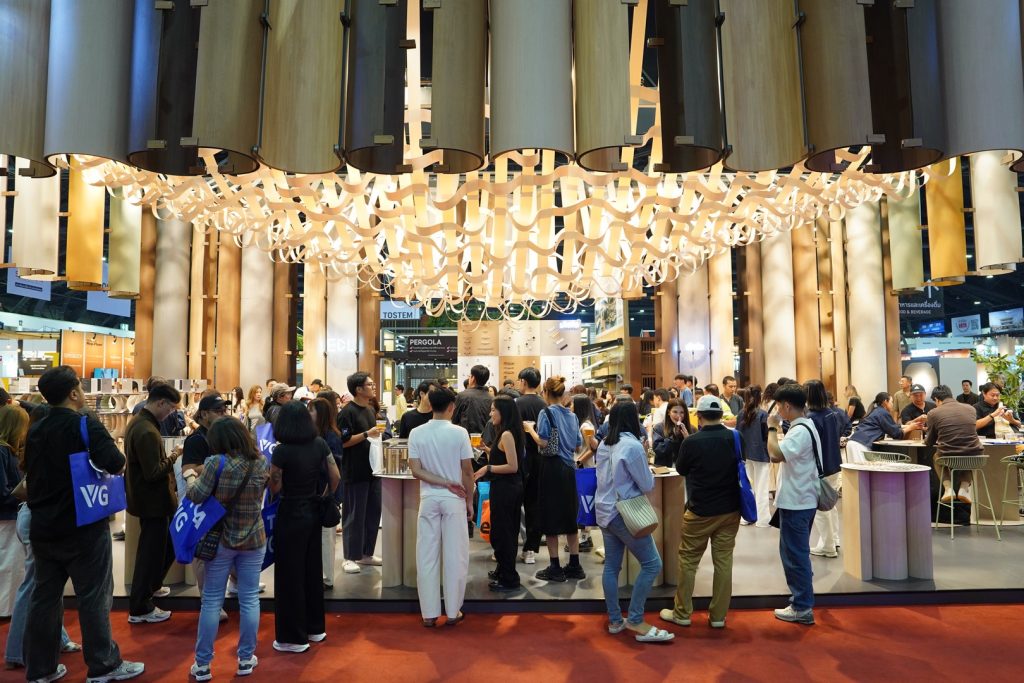
One of the elements that attracted considerable attention from visitors was a chandelier-like installation, in which material was suspended from above like a light fixture or ceiling element. It created a distinctive visual experience for the EDL booth.
Many visitors who entered the space found themselves asking: What is this material, and how can laminate create a form like this?
The result transformed the booth from simply a product showcase into a space that told a new story about materials—using design to reveal the potential of laminate in an entirely different way.
Sustainability Requires Understanding from Everyone Involved
Although the idea of a Sustainable Booth may sound straightforward, turning it into reality requires a shared understanding among multiple parties—including the brand owner, designer, and contractor.
For EDL, one of the challenges of constructing a booth of this kind was communicating a different working process to the contractor.
In conventional booth construction, installation often focuses primarily on achieving a finished and flawless surface. This time, however, everyone had to consider another requirement: the installed materials needed to be removable, recoverable, and genuinely reusable.
The process may take slightly more time because it requires additional communication and planning, but it is not overly difficult when everyone shares the same objective from the beginning.
This demonstrates that Sustainability in Exhibition Design is not simply the responsibility of the designer. It is a collaborative process involving everyone—from the brand owner and designer to the on-site construction team.
The Value That Comes Back Is Greater Than the Additional Cost
Another interesting point is that a booth designed with sustainability in mind does not necessarily have to cost more than a conventional booth.
In EDL’s case, the overall booth cost remained at a level comparable to a standard booth. What changed was the value that could be recovered and carried forward after the exhibition.
If, in the past, most of the materials used for a booth might have been lost after the event, this year many of the materials were designed to continue their journey—whether by being sold, stored, cut into samples, or adapted into new structures.
The value of a booth, therefore, should not be measured solely by its construction cost. It should also be measured by the value its materials can continue to create after the exhibition has ended.
Extending the Life of Materials Is Another Meaning of Sustainability
When people talk about Sustainable Exhibition Design, the conversation often turns to reducing waste, using recycled materials, or selecting environmentally friendly products.
From EDL’s perspective, however, sustainability may begin with something much simpler: asking from the very beginning where the materials will go after the exhibition ends.
Simply asking this question can already be an important starting point for change.
Not every brand needs to achieve 100% reuse immediately. If everyone starts with 10% or 20% and continues to improve together, the collective impact across the exhibition industry can still become significant.
Receiving the Gold Award from the ASA Green Pavilion Awards was therefore not solely an achievement for EDL. It was the result of collaboration among the brand, designers, event organizers, and everyone involved in turning sustainability into a tangible practice within an exhibition environment.
From EDL’s perspective, having a platform such as ASA100 Sustainable Goal also creates an incentive for exhibitors to think and act more boldly. Brands that are already taking action can push their efforts further, while those that have never started can begin with small steps.
Because for EDL, the beauty of a surface should not end when the exhibition closes. Just as the value of a material should not end simply because the exhibition space has fulfilled its purpose.
When a material is given the opportunity to create value once again, sustainability becomes more than a design concept. It becomes a value that is carried forward through the same piece of material—again and again.
Space reservation for Architect’27 is now open: https://architectexpo.com/th/space-reservation/