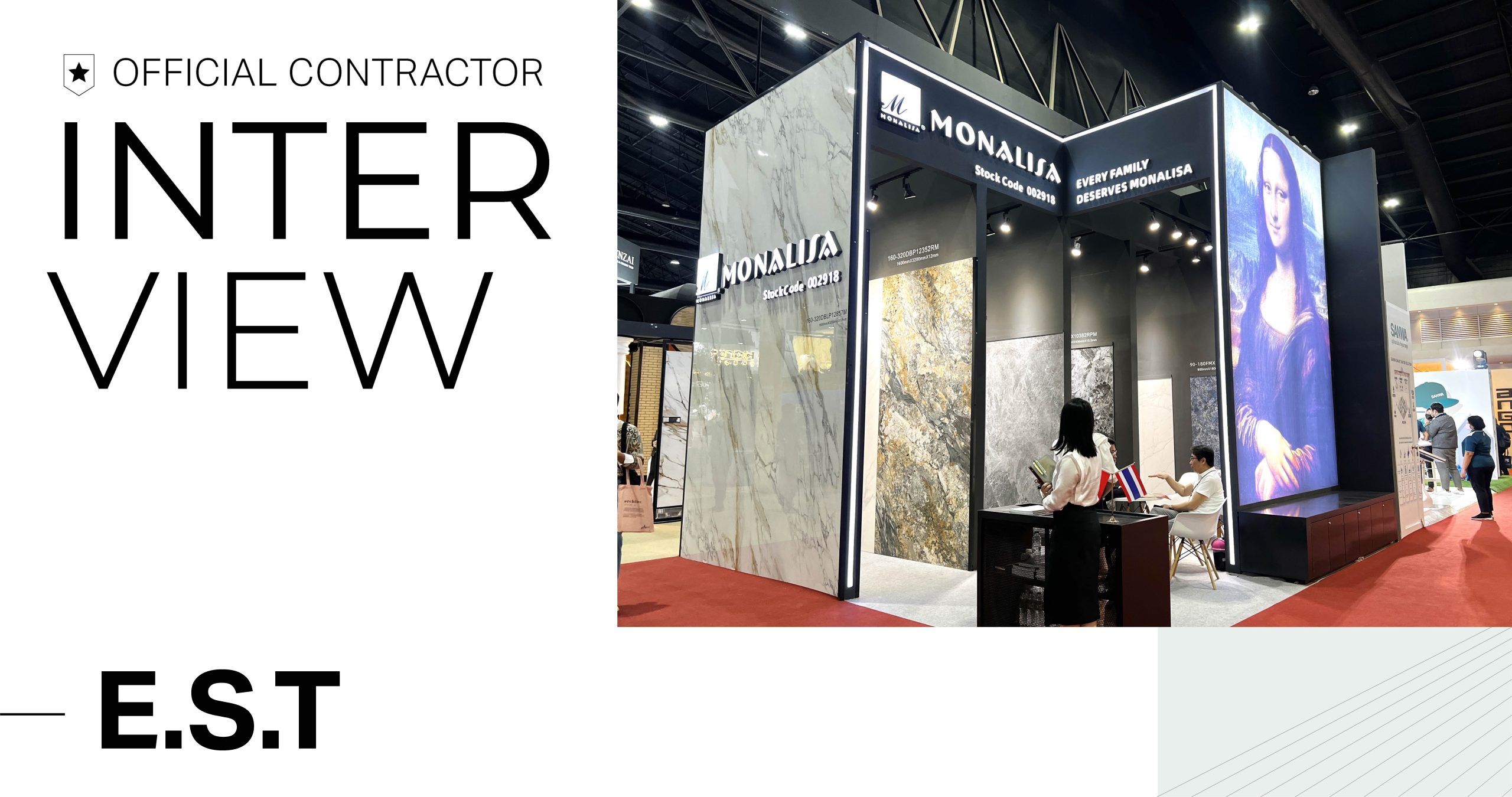
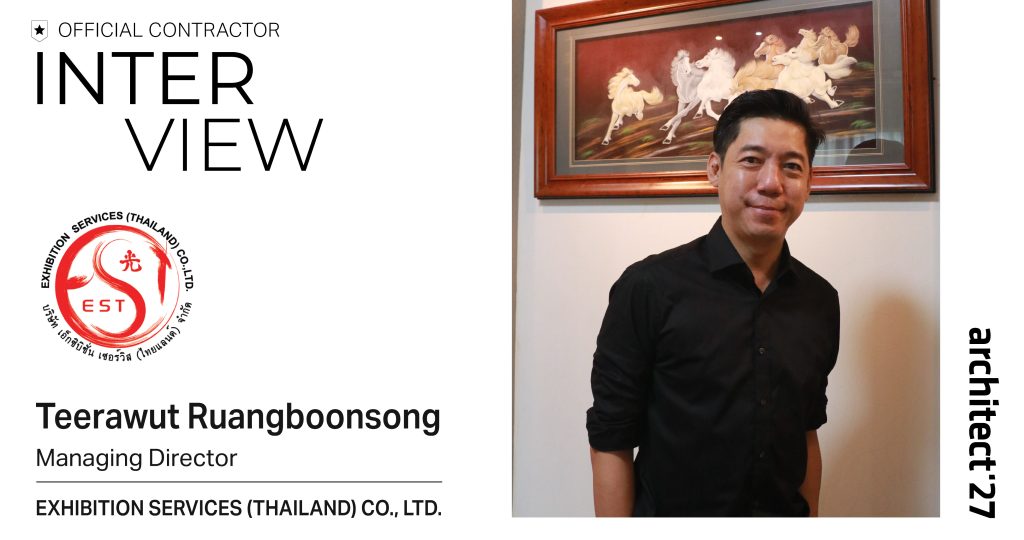
Over the course of more than 22 years, Teerawut Ruangboonsong, Managing Director of Exhibition Service (Thailand) Co., Ltd., reflects on the beginnings of E.S.T. and how the company’s experience as an Event Organizer shaped its path into the exhibition industry.
Having worked closely with suppliers, the team saw firsthand the limitations and gaps in the services available at the time. This became a turning point that led to the establishment of E.S.T.’s Exhibition Service business in 2004, allowing the company to take direct responsibility for structural work and production.
Over time, E.S.T. discovered that this was the direction that best suited the company and continued to develop its exhibition business. More than two decades later, that decision has evolved into a stable and established journey in the exhibition industry.
Understanding: The Foundation of Trust
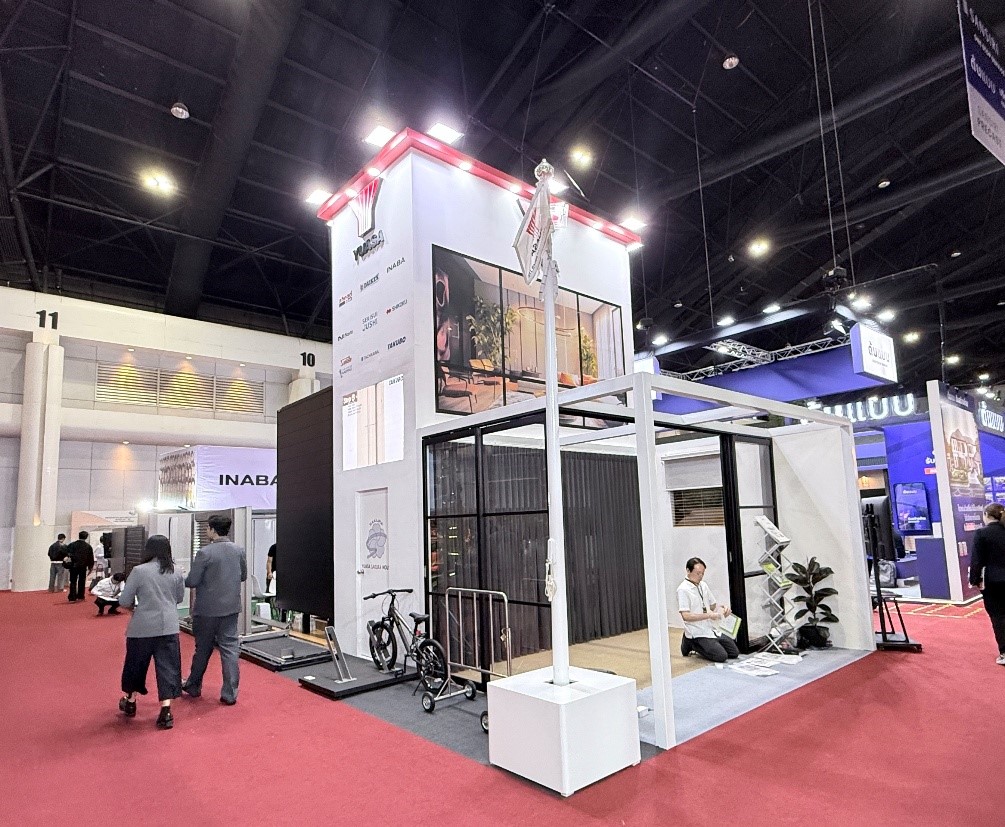
More than two decades of trust began with one thing: understanding.
Teerawut believes that every brand participates in an exhibition for its own reasons. Some come to sell. Others come to build brand awareness and create lasting recognition.
Behind each objective are different implications for booth design and budget. Once a contractor truly understands what the client is trying to achieve, trust naturally follows. This is where E.S.T. moves beyond being simply a contractor.
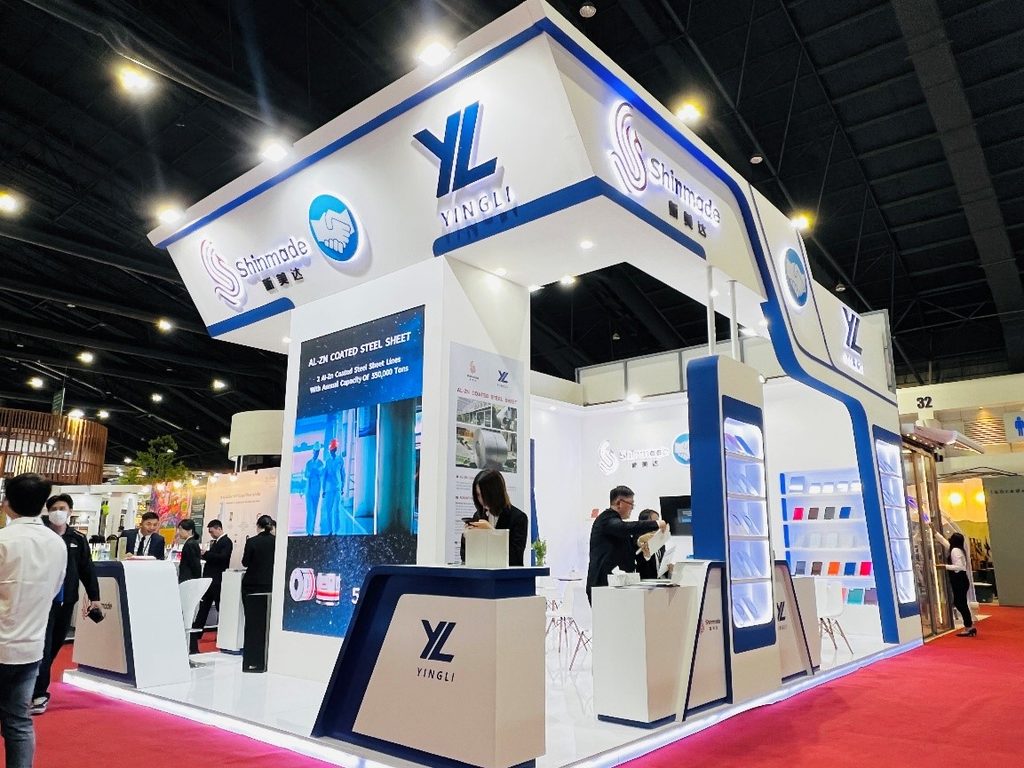
This approach allows E.S.T. and its clients to work together smoothly and with greater peace of mind. The company does not simply receive a brief and execute it; it becomes part of the process by taking care of tasks that clients should not have to spend their valuable time managing themselves.
By taking on these responsibilities, E.S.T. gives clients more time to focus on other important aspects of their exhibition presence.
This understanding—and the role of being a “support system” for clients—is one of the key reasons E.S.T. has been able to build long-lasting relationships and continue working with clients over the years.
Good Cost Management Starts with Management, Not Cutting Costs
Many people see the cost of building an exhibition booth as difficult to control. For E.S.T., however, the answer is simpler than it may seem—it lies in the capabilities the company has accumulated over many years.
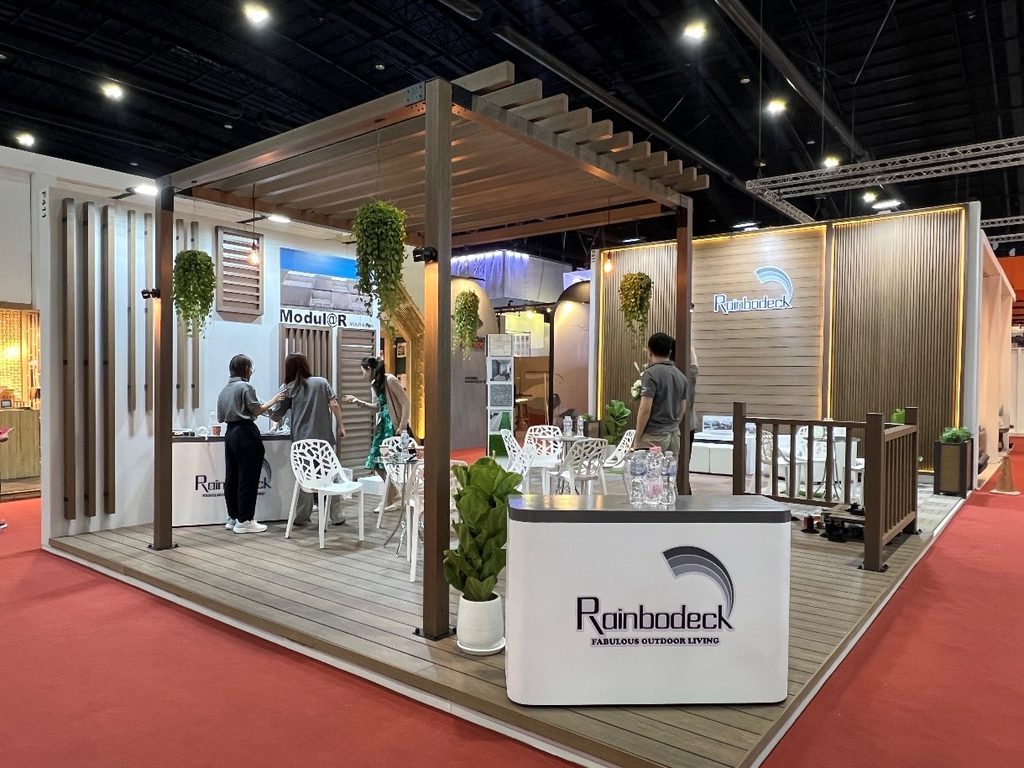
“Because we have been operating for a long time, we have a substantial amount of in-house capability,” Teerawut explains.
This includes the company’s own factory, sticker-printing machines, wood-cutting equipment, and other production resources. By keeping these capabilities under its own control, E.S.T. is able to manage a significant part of the production process internally.
“So when it comes to competing on cost, we are in a strong position,” Teerawut adds.
The company also maintains materials in its own inventory that can be reused or adapted for new projects, allowing E.S.T. to make use of existing resources rather than starting from scratch every time.
Nothing Is More Important Than Human Life
When it comes to safety, E.S.T. considers it the number-one priority.
“Because nothing is more important than human life,” Teerawut says.
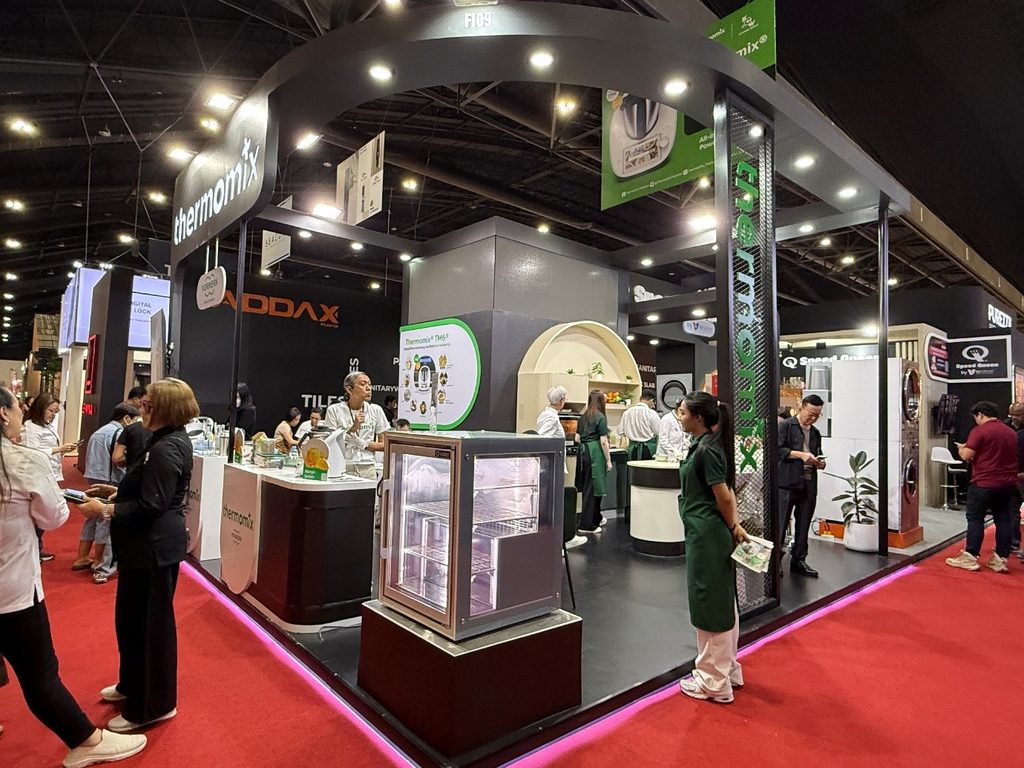
Every design project goes through an initial structural safety review. The team assesses whether the structure can support the required loads, whether beams have sufficient strength, and whether there is any potential risk of structural failure.
Even after a design has passed the initial review and reached the construction team, feedback from experienced technicians is taken seriously. If a technician identifies a potential safety concern, the team will discuss the possibility of reinforcing the structure with the client.
Although additional structural elements may affect the aesthetics of certain areas, safety must always come first.
Over its 22 years of operation, E.S.T. has maintained a strong safety record, with no booth walls collapsing throughout its history.
Time Is the Challenge. Quality Is the Answer.
Behind every beautiful and seemingly flawless booth is a series of calculations and decisions involving materials, construction methods, timelines, and on-site limitations.
Through years of hands-on experience and continuous adaptation, E.S.T. has developed a practical understanding of which materials, colors, finishes, and construction techniques can deliver the best results within a given timeframe.
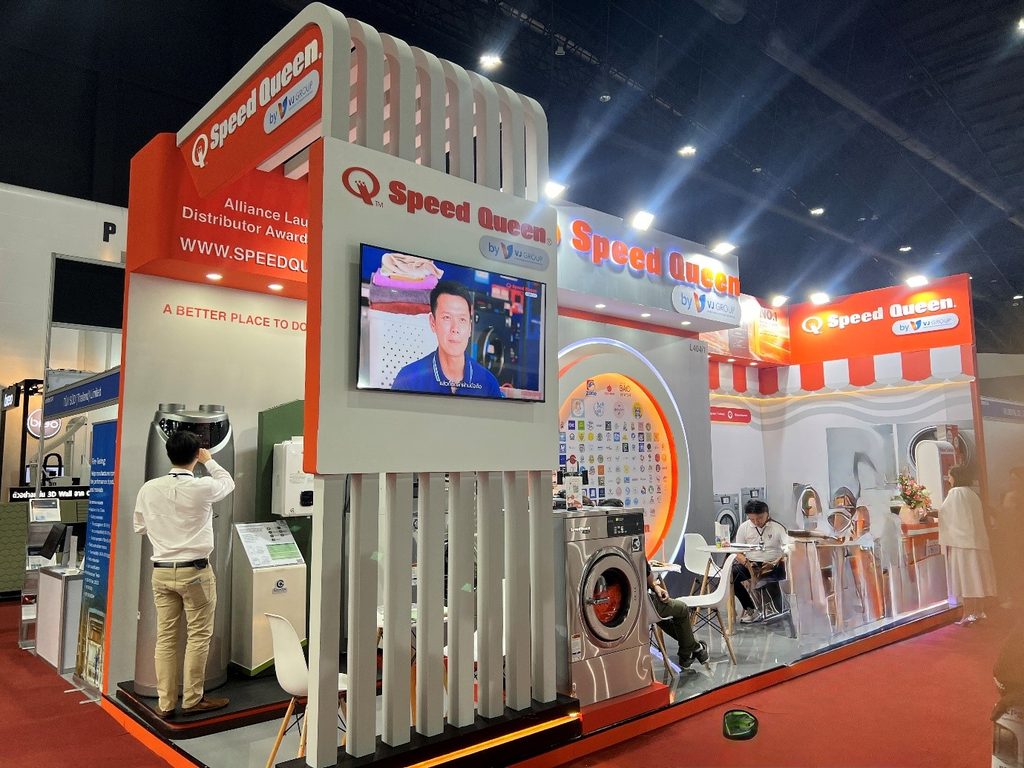
Quality cannot be separated from time, because every minute during installation can affect the final result.
Design therefore needs to go beyond what looks good on paper. The team must ask practical questions: How many days are available for installation? When can materials be brought into the venue? What restrictions does the site have?
For this reason, the booth design must be realistic in relation to both the available time and budget. It is not simply about adding every possible element because the budget allows it.
If the installation window is extremely limited but the design is unnecessarily complex, something that looks impressive in a drawing can quickly become a problem on installation day.
“Preparation before the event is the most important thing,” Teerawut emphasizes.
E.S.T. works with clients to assess and recommend the most suitable approach within the available timeframe—ensuring that the booth can look its best while still being realistically constructible and delivered on schedule.
Ready for Every Challenge
When on-site challenges are inevitable, the most important thing is not avoiding every problem, but knowing how to respond when problems occur.
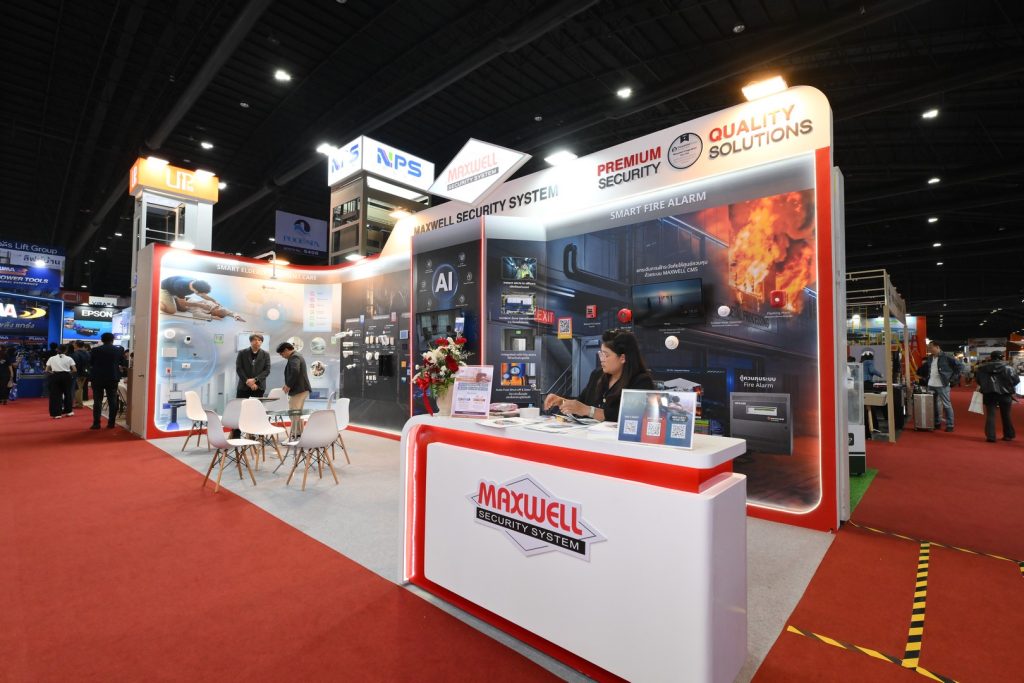
Once installation begins, the site can be full of unpredictable variables. With limited time, every problem requires a fast response.
Unexpected incidents can happen for reasons beyond anyone’s control—from a vehicle hitting a booth to a neighboring booth structure collapsing.
Knowing how to respond and make decisions quickly is therefore critical. When something cannot be controlled, the team needs to identify the best solution available at that moment: How should the problem be solved? Who needs to be involved? And where can additional support be found?
In real-world situations, not every problem can be solved alone.
When unexpected circumstances arise, what becomes especially valuable is not knowledge alone, but the connections built through years of experience in the industry.
One Stop Service, All Under One Roof
E.S.T.’s roots as an Event Organizer are what distinguish the company from many other contractors.
What E.S.T. offers is not simply a physical structure, but a comprehensive One Stop Service covering the entire process—from design and concept development through production and installation at the company’s own factory, supported by its extensive production equipment.
By keeping the process largely in-house, E.S.T. can maintain consistent quality control throughout the project.
The service also extends to lighting, visual, and sound systems, providing clients with a complete solution in one place.
And because the company’s foundation comes from the Event industry, E.S.T. has also developed connections with PR professionals and MCs, allowing the team to coordinate additional services when required.
This enables E.S.T. to respond to a wide range of client needs across the exhibition industry.
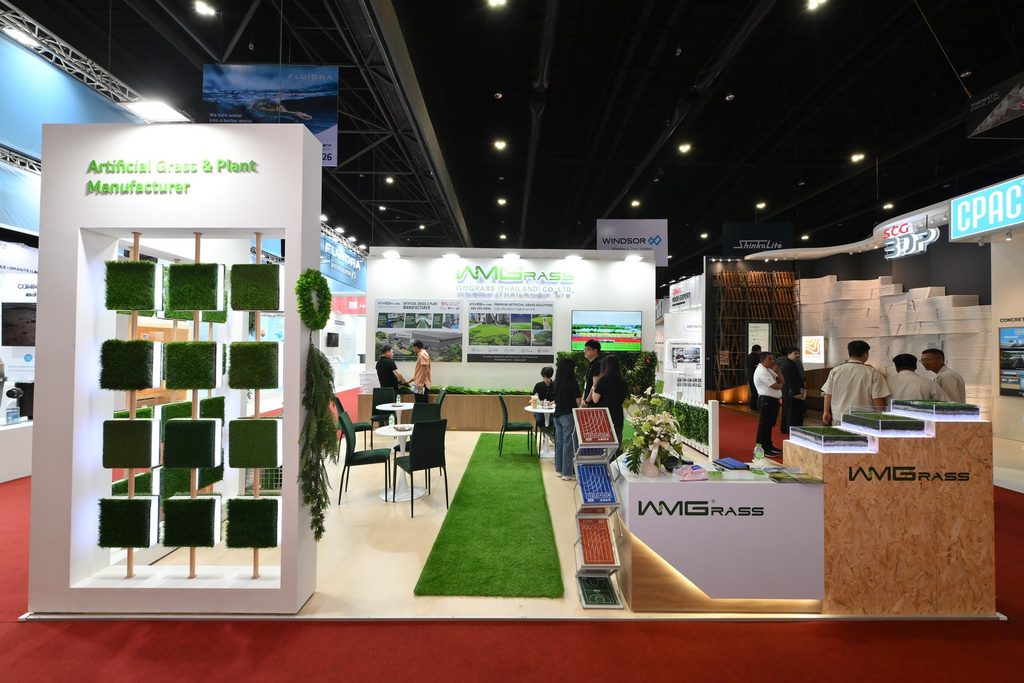
Sustainability Is Not Just About Reuse—It Is About Making Every Material Count
When discussing Sustainability in the exhibition industry, many people immediately think about reusing existing materials.
In reality, however, reuse does not always mean lower costs. Certain materials may require repairs, refurbishment, or new finishes before they can be used again.
The key is therefore not simply to “reuse what already exists,” but to plan from the beginning how materials and structures can be reused and how long they can remain useful.
True sustainability may therefore begin not with the word “Reuse,” but with “Plan.”
Good planning from the outset allows every material to be used as efficiently, safely, and for as long as possible.
Ultimately, sustainability is not simply about giving old materials another use. It is about designing them so that they can be reused effectively and with consistent quality from the very beginning.
Art & Commercial
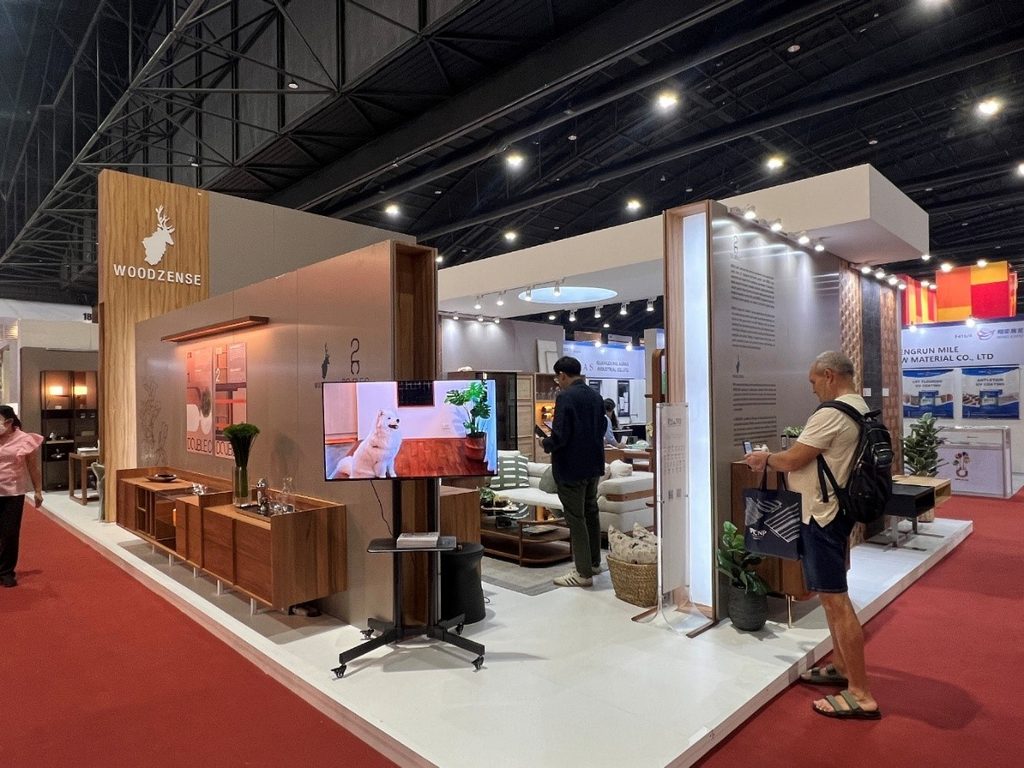
From Teerawut’s perspective, a successful booth is an equation between Art and Commercial—two elements that need to coexist in the right balance.
Aesthetics remain essential because they are often the first thing that makes people stop and look. But visual appeal alone may not be enough if the booth does not support the client’s business objectives.
This is what distinguishes exhibition booth design from traditional art. A booth needs to be beautiful enough to attract attention, while also being effective enough to strengthen brand recognition and help the client achieve its goals.
“A booth is not the entire sales pitch. It is the catalyst that makes the products more interesting,” Teerawut adds.
The Clearer the Brief, the Better the Booth
Teerawut’s advice to brands looking for an exhibition contractor is simple: before beginning the booth design, first answer the question, “Why are we participating in this exhibition?”
Whether the objective is to build brand awareness or drive sales, brands should clearly identify what they want to highlight and establish their budget from the beginning.
When the brief is clear, the booth design has a much greater chance of arriving at the right solution from the very start.