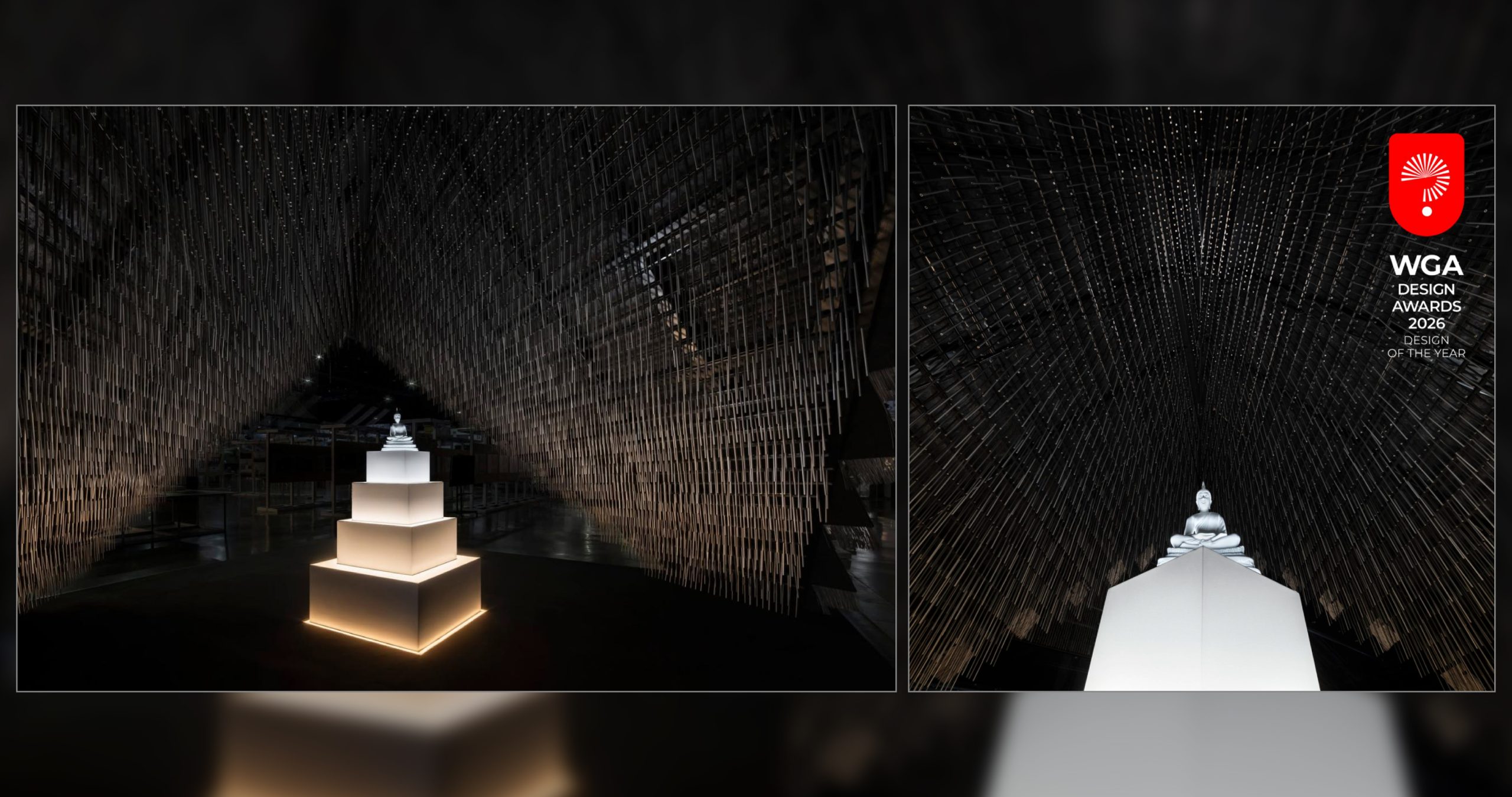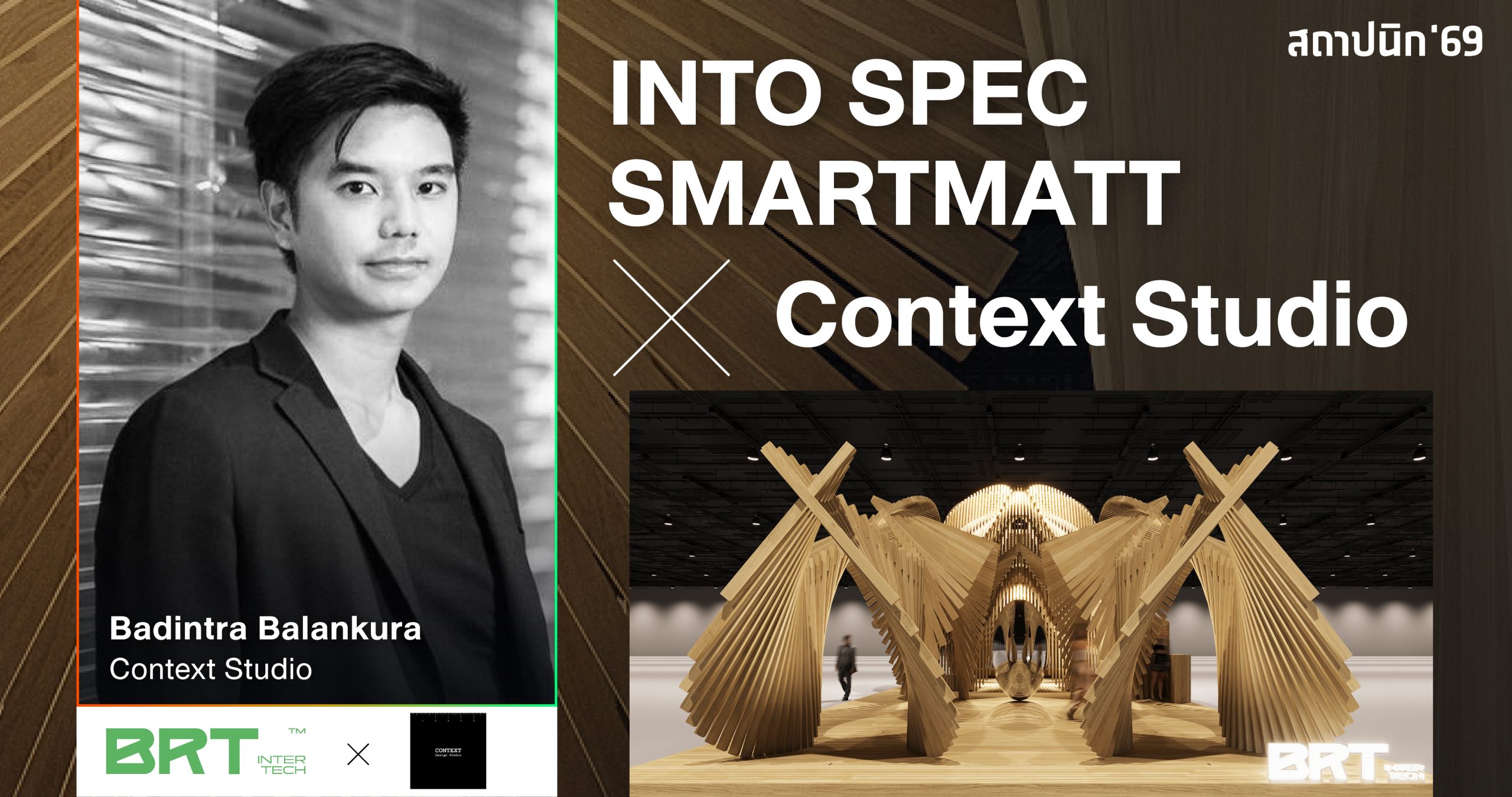
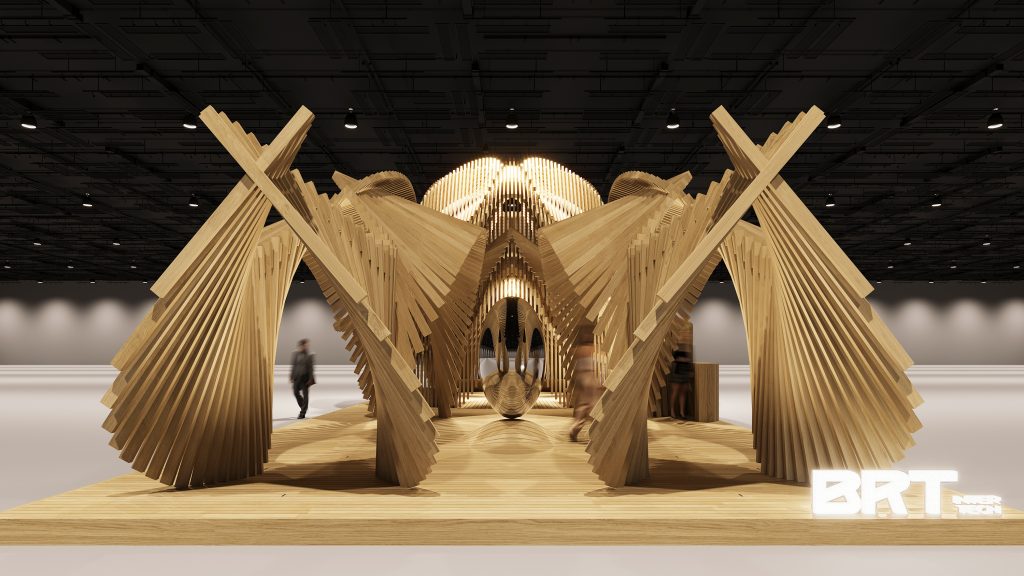
Prānasthana is a thematic pavilion that transforms into a spiritual space, guiding visitors into a state of stillness through the regulation of “breath energy” (prana). It brings together mindfulness and self-reflection in a Buddhist sense through architectural design that integrates both the design and construction processes with Artificial Intelligence (AI) as a key tool—inviting everyone to experience it firsthand.
At Architect Expo 2026, Tont – Bodin Planggoon, Founder of Context Studio, returns as one of the Thematic Pavilion designers. This time, he collaborates with INTO SPEC SMARTMATT, a material brand specializing in SPC engineered wood, using 1,625 pieces of SPC wood panels as the primary material. These are reinterpreted to transform the space into a pavilion of mindfulness—reflecting consciousness and surrounding environments through the intentional regulation of breath: inhalation and exhalation as a symbolic design language.
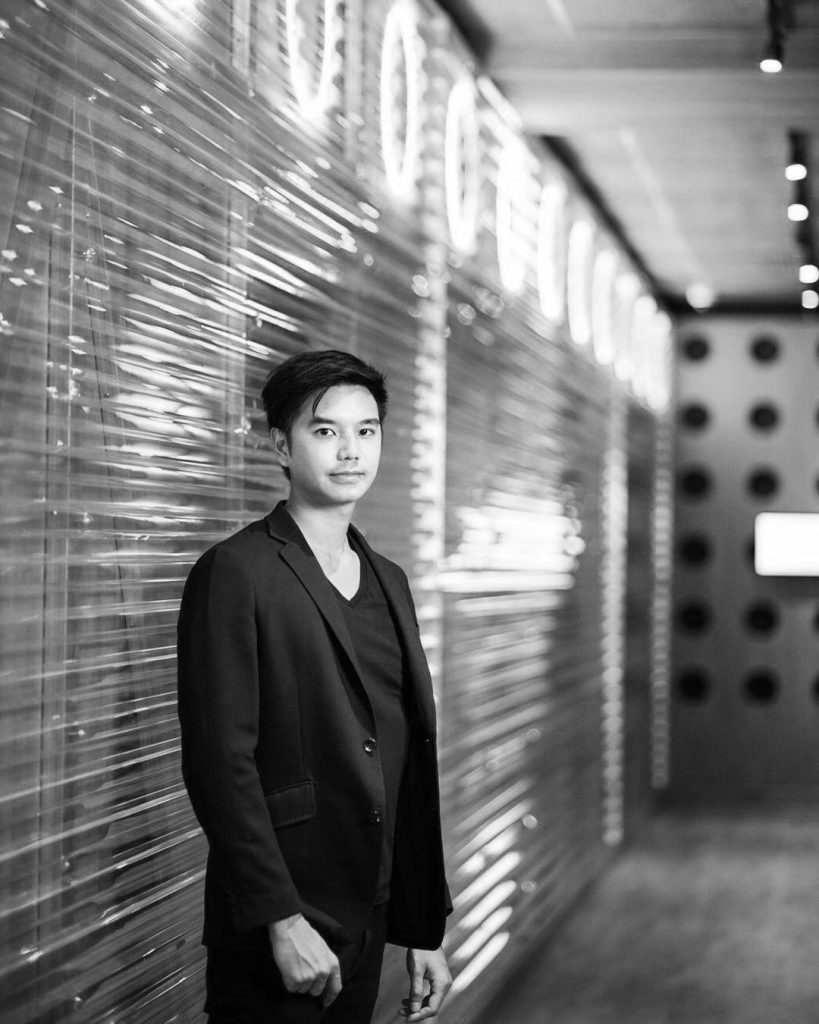
(Badintra Balankura, Founder of Context Studio)
In this interview, we invite Tont to share the inspiration behind the concept:
“Breathe in……. breathe out……. Buddho……. Buddho”
In today’s rapidly changing world—where technology evolves faster than ever—people may find it difficult to keep up, often leading to anxiety and inner instability. According to Buddhist principles, the highest state of mind is stillness: awareness without emotional disturbance. One of the core traditional practices to achieve this is mindfulness through breath awareness.
A way to navigate this changing world is to remain aware while continuously adapting to it. This is the essence Tont seeks to express through the design of Prānasthana—a space for collective mindfulness through breath regulation.
From the concept of breath awareness to an AI-driven pavilion
“First, it draws attention. Then, upon entering, it invites stillness.”
This is the intended experience of Prānasthana. From the outside, the pavilion appears fluid and graceful. Upon closer inspection, this fluidity is created by 1,625 SPC engineered wood panels from INTO SPEC SMARTMATT, arranged with precise spacing and subtle angular shifts—carefully calibrated to generate curiosity about how such an advanced spatial composition is constructed.
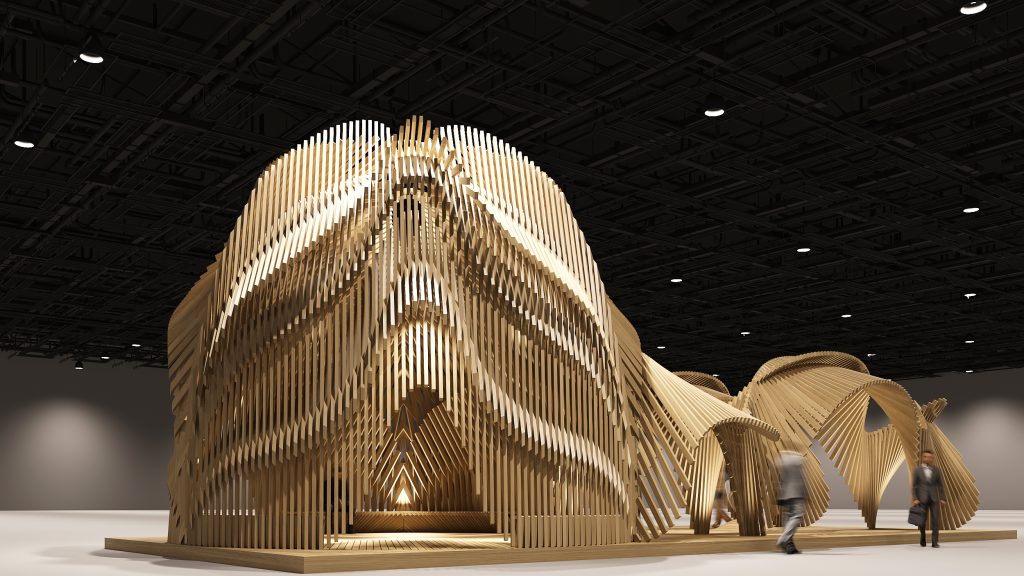
(Prana Sathan)
Today, Khun Ton is here with an explanation to clear up any doubts and set a new standard for architectural work.
“The key main concept is regulating breathing. I envisioned this space as a place for unifying consciousness. It might sound abstract and difficult to grasp, but in reality, the human mind isn’t that complicated to understand.”
A tool for decoding the mind.
“Today, the state of the human mind and emotions is no longer a mystery, but can be touched and deciphered through the use of technology.”
Typically, a person’s mental state at any given moment is linked to their breathing patterns. We can then translate this breathing pattern into a “graph” that anyone can understand.
A calm state of mind is significantly linked to breathing patterns, and I find this breathing pattern graph very interesting. It became a key element that I further developed into the form of the interior and exterior spaces in this design project.”
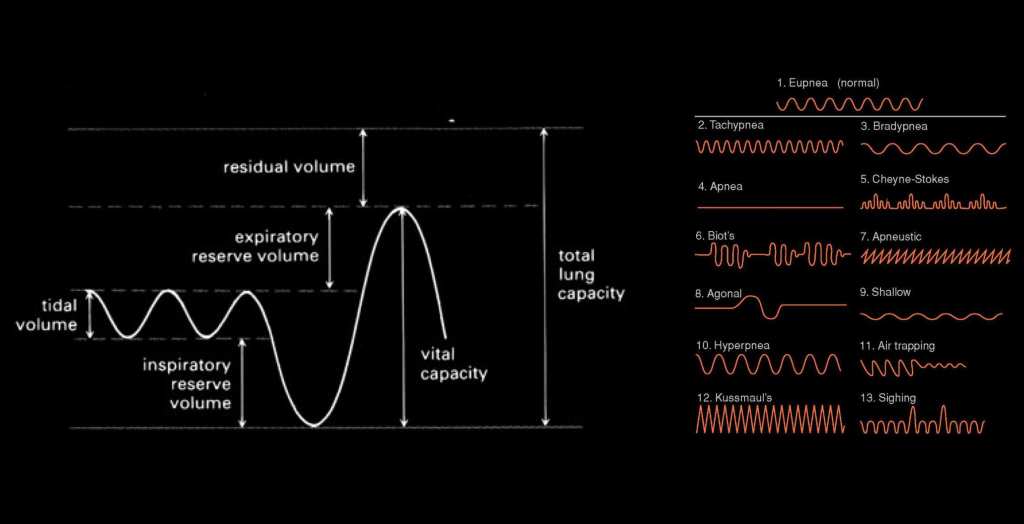
(The patterns of lines represent the state of mind at that moment.)
The graph that Khun Ton used as the main model for this pavilion is the graph of breathing when entering the state of “mindfulness”. The graph has a curved shape, rising and falling and gradually expanding, representing the inhalation and exhalation of air that gradually becomes longer until eventually the lungs can be filled to their full capacity, or what is called “Full Lung Capacity” breathing. This signifies entering a state of true awareness and mindfulness. If you look closely, you will find that the pavilion, when viewed from the side, also mirrors the graph of breathing during “mindfulness”.
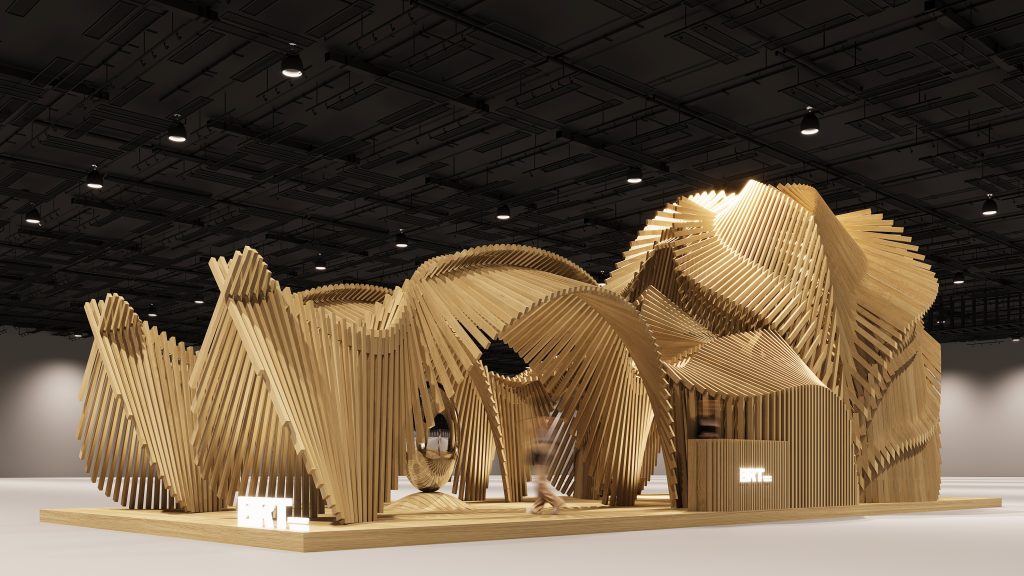
(Side view of the Pavilion)
Components of the pavilion = Components of collective consciousness.
For the “Prana Sthana” pavilion, we have divided it into three main sections based on methods of mindfulness concentration:
- The Tunnel of Consciousness
- A space for understanding one’s current state and surroundings.
- A central point for focusing concentration to the highest level of mindfulness.
The design process of this pavilion began by interpreting breathing graphs during moments of mindfulness concentration. This resulted in curved lines that, when “reflected” each other, formed main lines that became the axes of the tunnel pathway, connecting them in a long line. Ton views the reflection of these shapes within the pavilion as a metaphor for “reflecting one’s self, feelings, and perceptions” simultaneously.
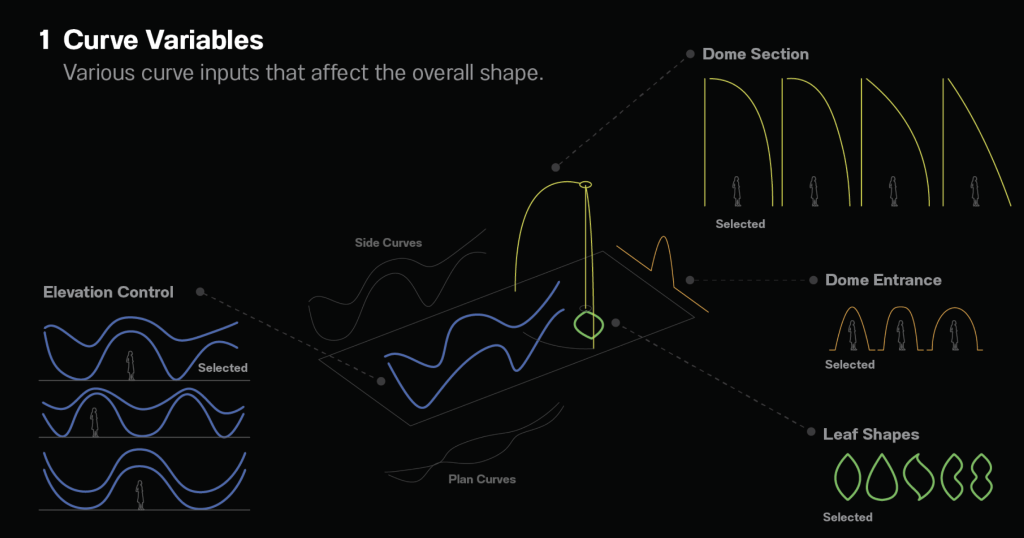
(Reflecting the graphs to create a tunnel axis)
The path of the first tunnel is reflected again, resulting in two tunnels placed side-by-side, or “Twin Tunnels.” This part is called the “Tunnel of Consciousness.”
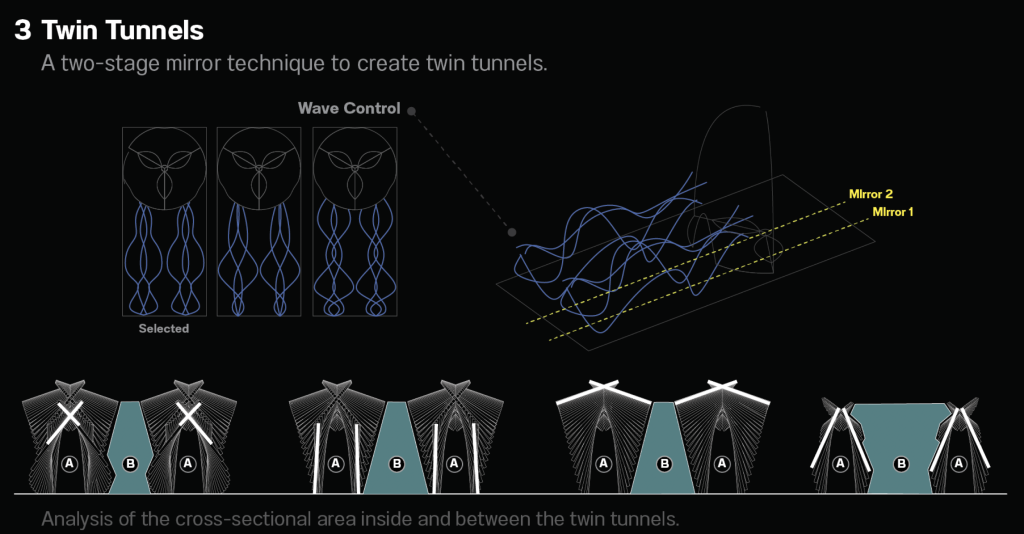
(By reflecting the first tunnel again, twin tunnels are created.)
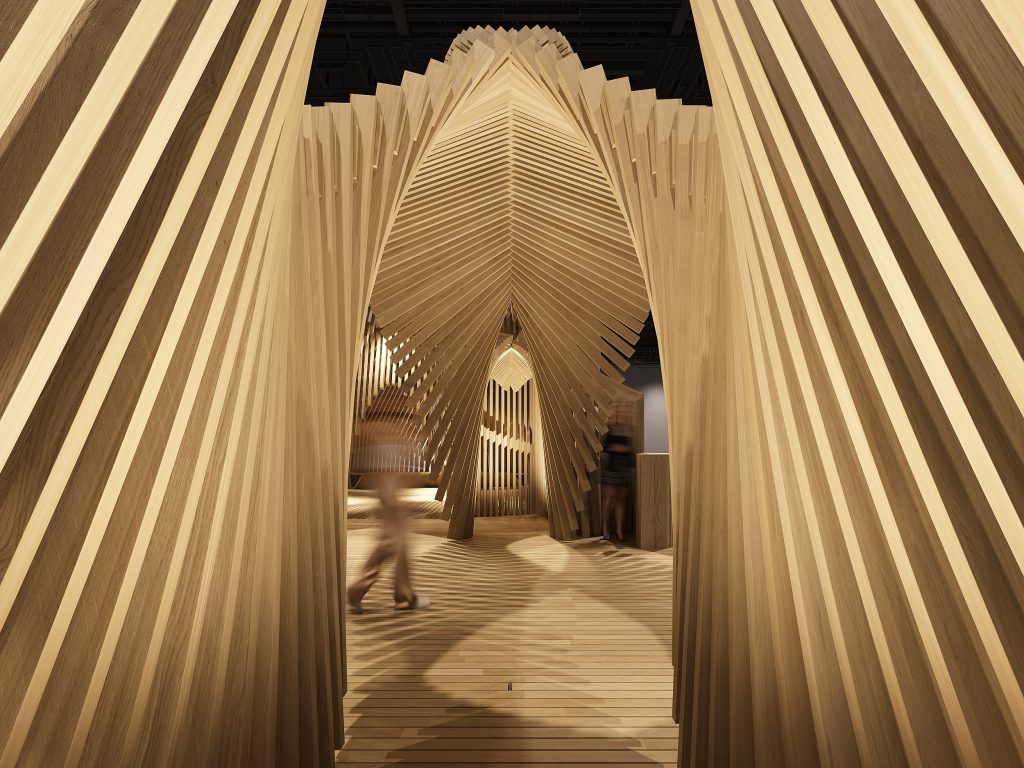
(Inside the tunnel, connecting to the dome)
The two tunnels guide viewers into the “center of concentration, the pinnacle of mindfulness,” a 6-meter-high spherical dome.
The dome is created by arranging SPC (Simple Panel Composite) wood materials using the same principle of “reflection,” resulting in a beautiful facade pattern that evokes a magical feeling, like entering a holy space.
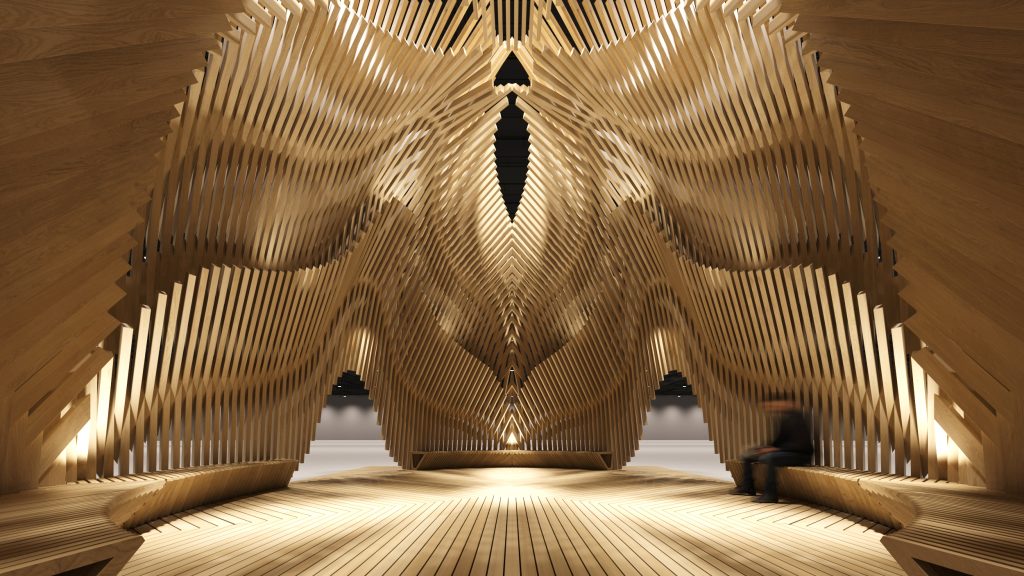
(At the heart of the dome is the area designated as the “central hub for focusing concentration to the highest level of mindfulness.”)
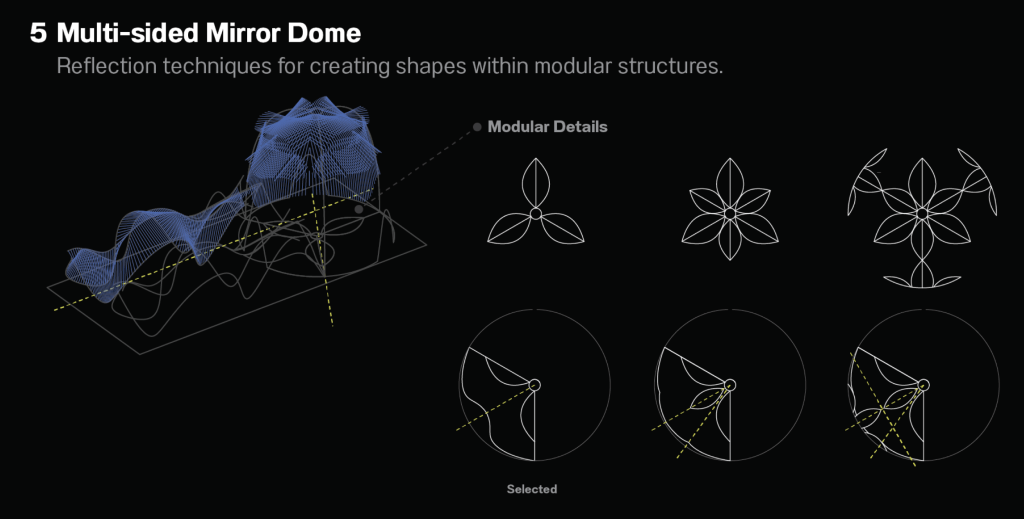
(The principle of “reflection” of shape creates the dome’s pattern.)
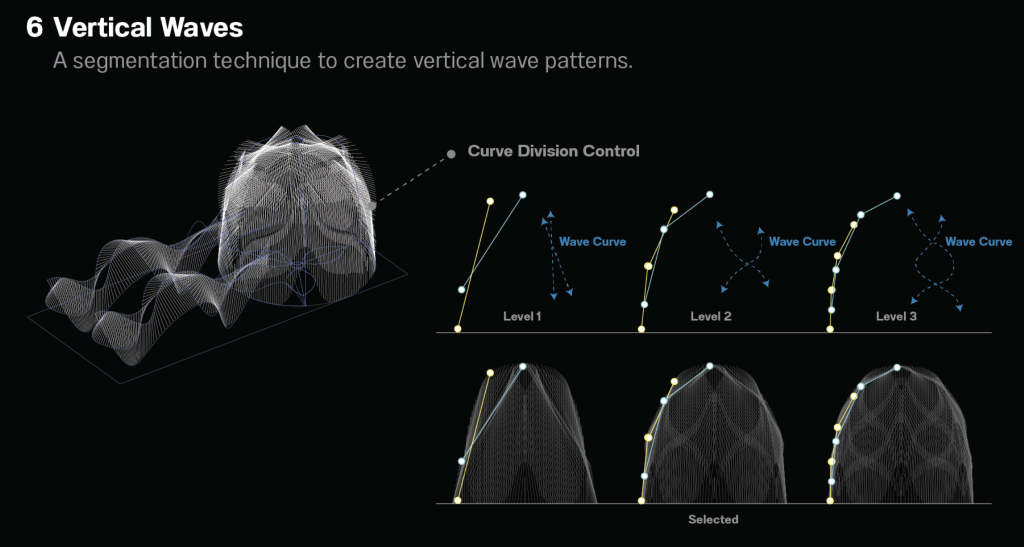
(The dome pattern is created by the arrangement of SMARTMATT brand SPC wood.)
The tunnel area gradually transitions into the dome, through architectural elements designed to seamlessly connect the two sections, much like a gradual entry into a state of mental tranquility.
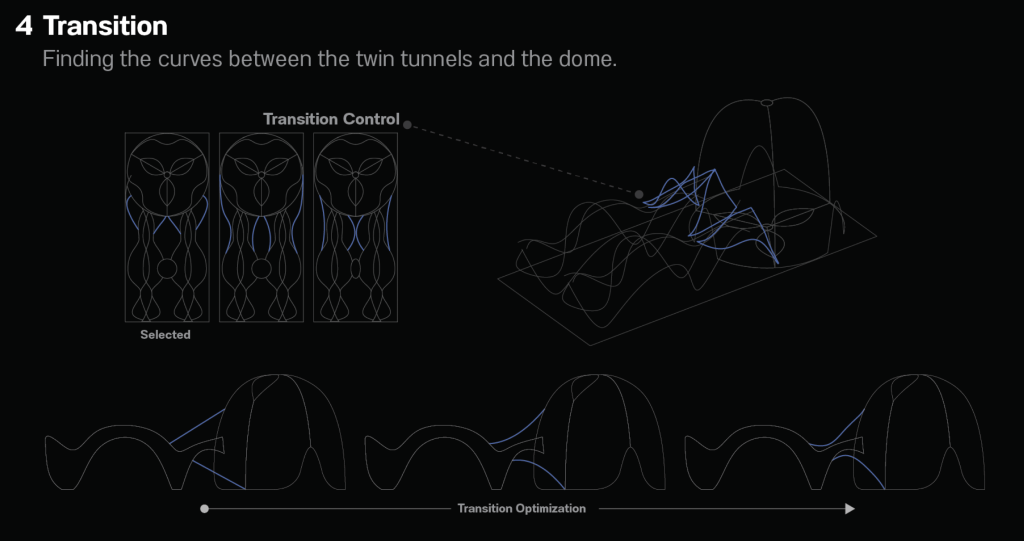
(A transition element designed to connect the two parts together.)
Looking down at the floor beneath the central dome, one can see the intricate Bodhi leaf motif, a detail widely found in Buddhist architecture. This subtly incorporates elements stemming from Buddhist practices into contemporary architecture.
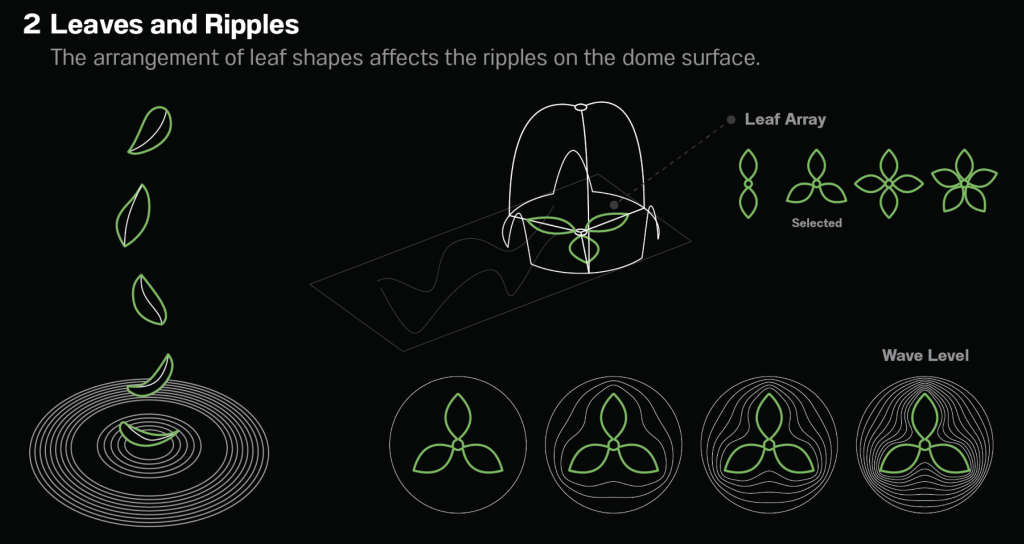
(Creating a pattern of Bodhi leaves on the central surface of the dome)
The area in the center between the two tunnels is “a space for understanding one’s current state and surroundings.” Ton explains that this space is meant for visitors to pause, explore, and appreciate the refined architecture.
Another important element found when looking inside the space between the two tunnels is the “golden egg,” strategically placed in the center.
The egg’s mirror-like surface, when viewed from within, reveals a panoramic view of oneself and the environment. It symbolizes self-reflection and the environment, a point Ton wants people to pause and contemplate.
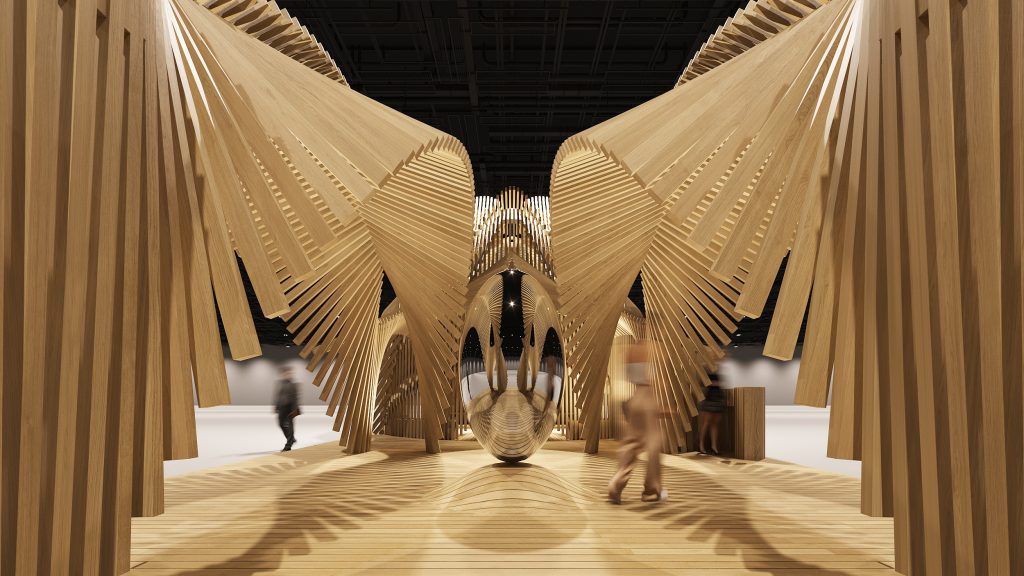
(At the heart of the two tunnels: “A space for understanding one’s current state and surrounding environment.”)
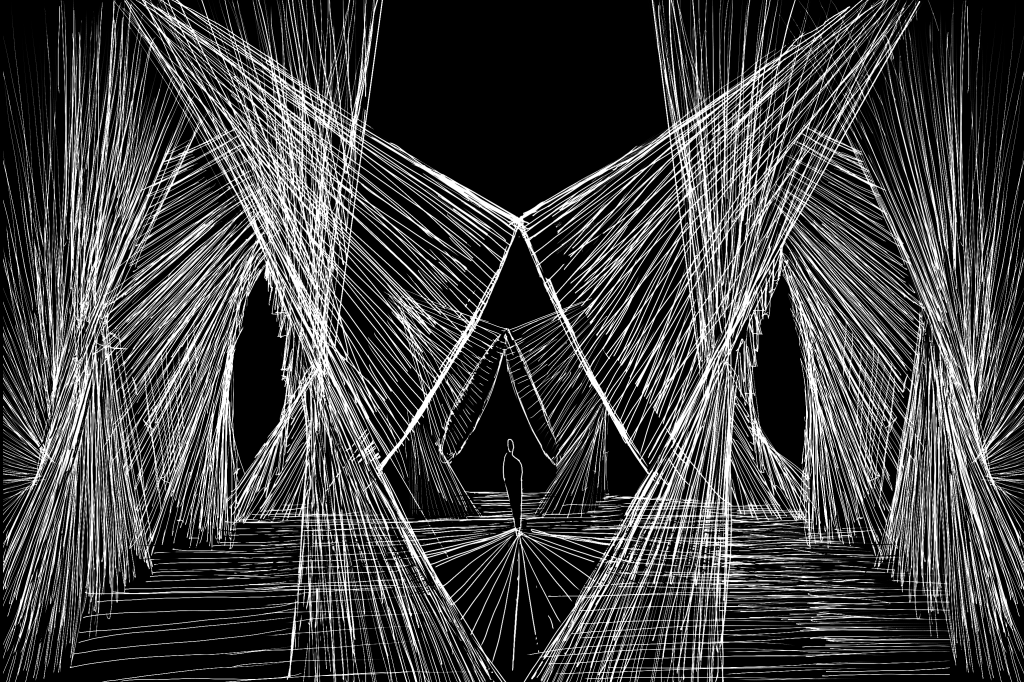
(First sketch of a “space for understanding one’s current state and surrounding environment”)
At this point, we can see that every element in Khun Ton’s design has been meticulously thought out, from the concept to the design of the space, which is imbued with meaning and subtly incorporates Buddhist practices. This includes the use of SPC wood composite materials, arranged in a sequence to create a magnificent pavilion.
But the pavilion’s appeal doesn’t end there.
The most fascinating aspect is that this pavilion is an architectural work created through 100% control of technology.
- Taking control of the Technology
In every part of the pavilion, Khun Ton uses a method of creating “code” that connects all architectural elements into a single entity. The shape of the “Prana Sthana” pavilion is actually generated by “feeding a set of data” to a program that generates the shape 100%.
The result is an architectural work whose shape can be freely adjusted and controlled, much like genetically modifying the design to suit the context. This method allows for precise construction of complex structures and also helps in planning the pavilion’s dismantling process.
Furthermore, the SPC wood composite materials used in the construction of Prana Sthana have been colored with their own DNA, which is a special feature… If we input new data into the existing codeset to create a new pavilion, the SPC wood set used for the Pranayama can be reused in the new construction.
In short, the INTO SPEC SMARTMATT Pranayama Pavilion is a space that seamlessly blends technology with the Buddhist principles of mindfulness.
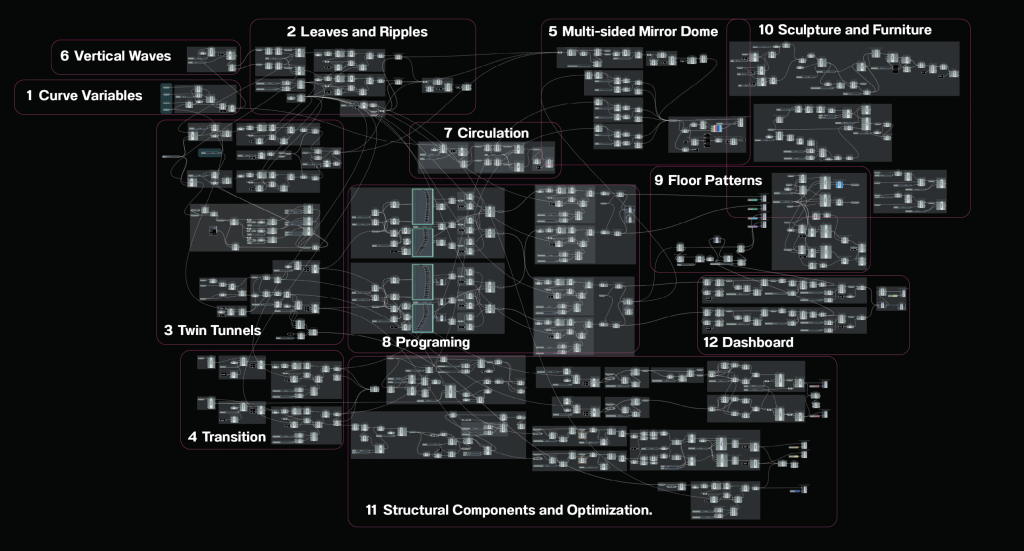
(DNA blueprint of the “Pranastan” pavilion)
Finally, I’d like to ask Mr. Ton to give a general invitation for everyone to come and visit.
“I’d like to invite everyone to come and visit the ‘Pran Sathan’ pavilion by INTO SPEC SMARTMATT. I envisioned this pavilion as a showcase of Buddhist mindfulness concepts alongside innovative construction using technology and AI. Furthermore, every part of the pavilion is constructed using INTO SPEC SMARTMATT’s SPC (Simple Panel) synthetic wood, which consists of straight panels arranged to create curved shapes.”
“I want to demonstrate the possibilities of using technology as a tool. This can be a very powerful instrument if we use it wisely and adapt to it. I invite everyone to come and experience mindfulness at this pavilion.”
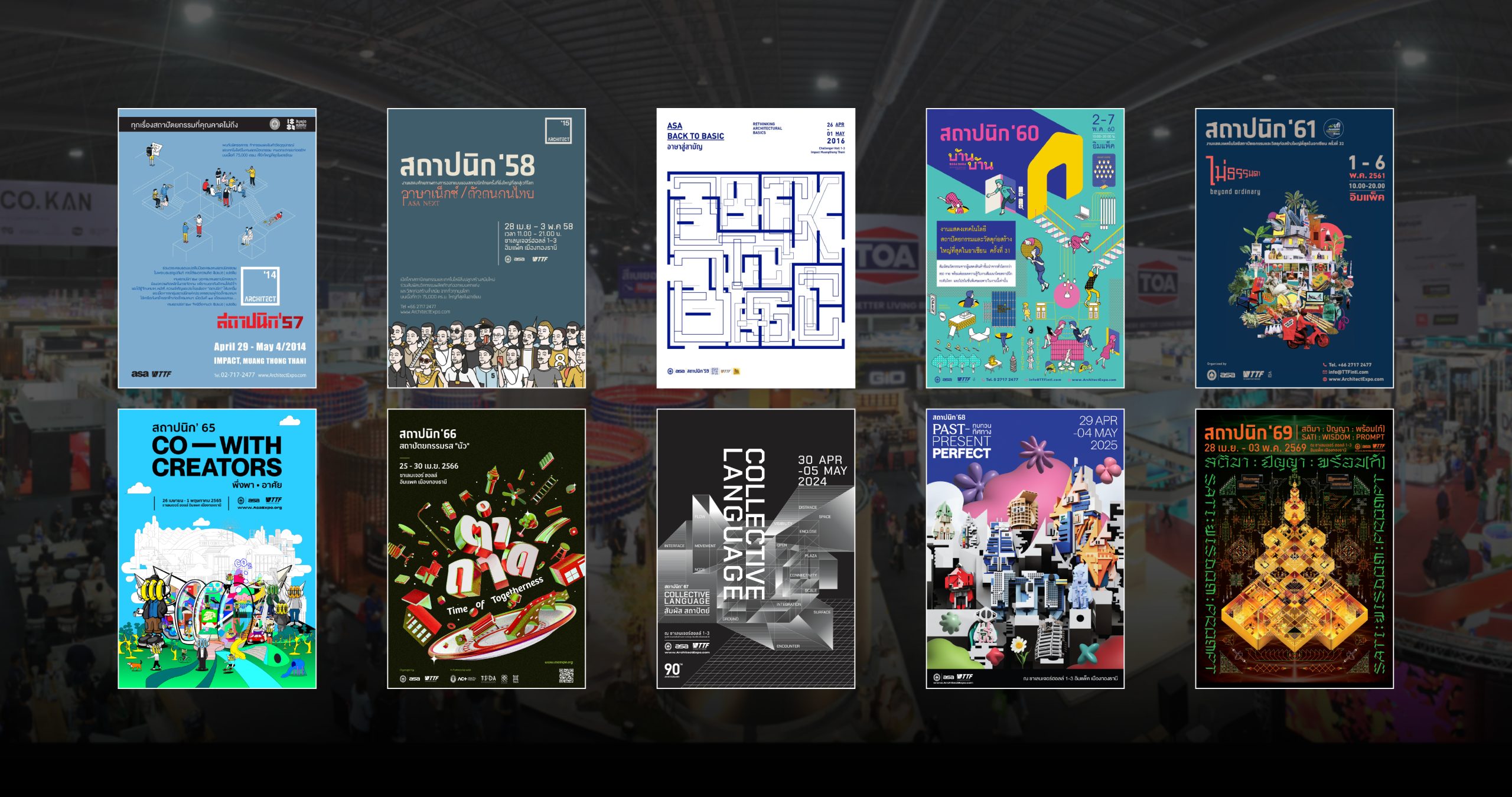
Let’s unite our minds and embrace change together at Architect’69: Mindfulness, Wisdom, and Readiness, from April 28th to May 3rd, 2026, at Challenger Hall 1-3, IMPACT Muang Thong Thani.