A book is still the same book—but if you change your perspective, the ending may no longer be the same.
In a world where designers are used to defining material specifications—size, color, quantity, or required properties—to achieve a final outcome, this approach certainly has its advantages in delivering precise results. However, at the same time, it can also cause designers to miss the charm, latent potential of materials, and unexpected ideas that emerge along the way.
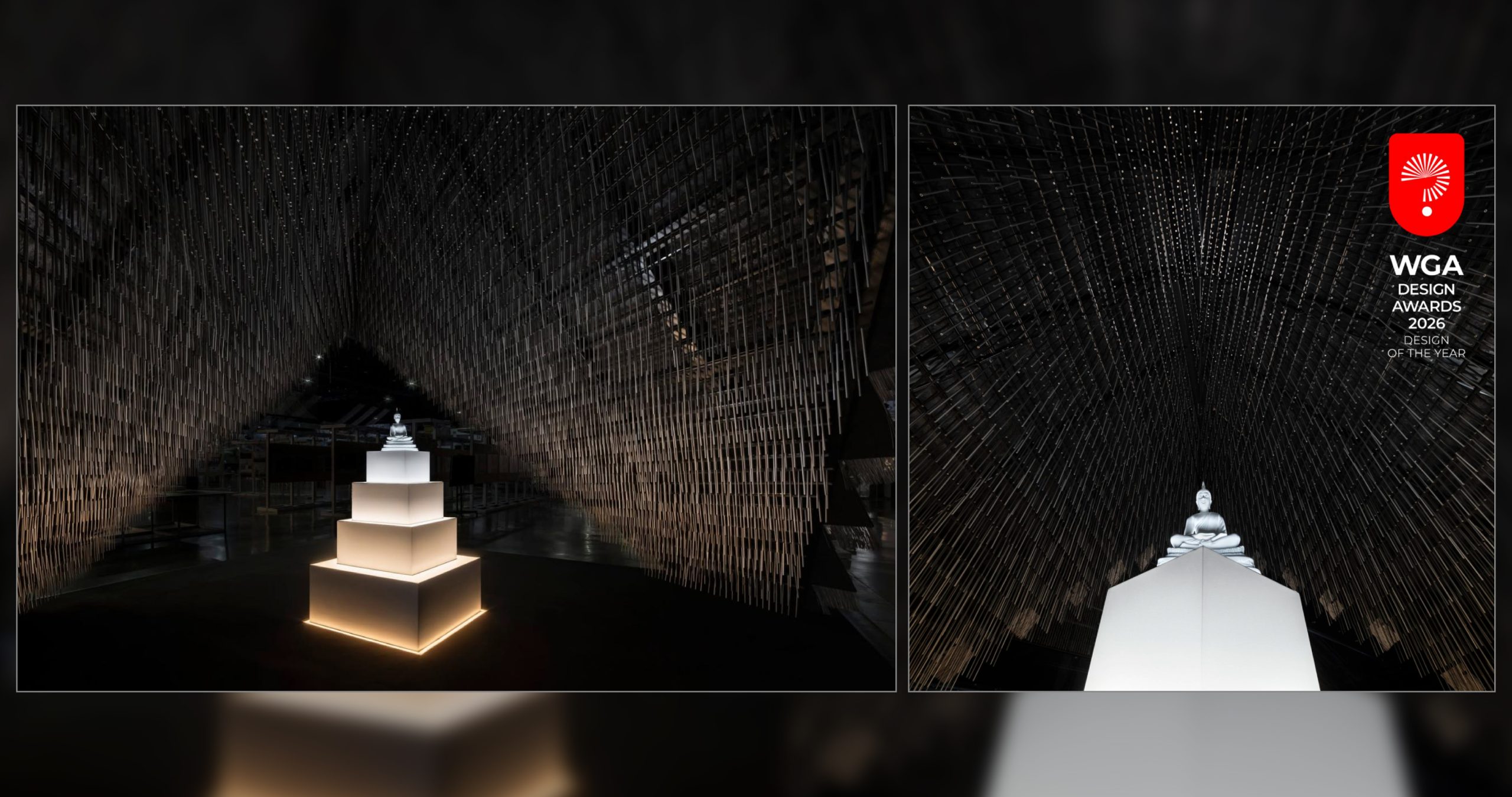
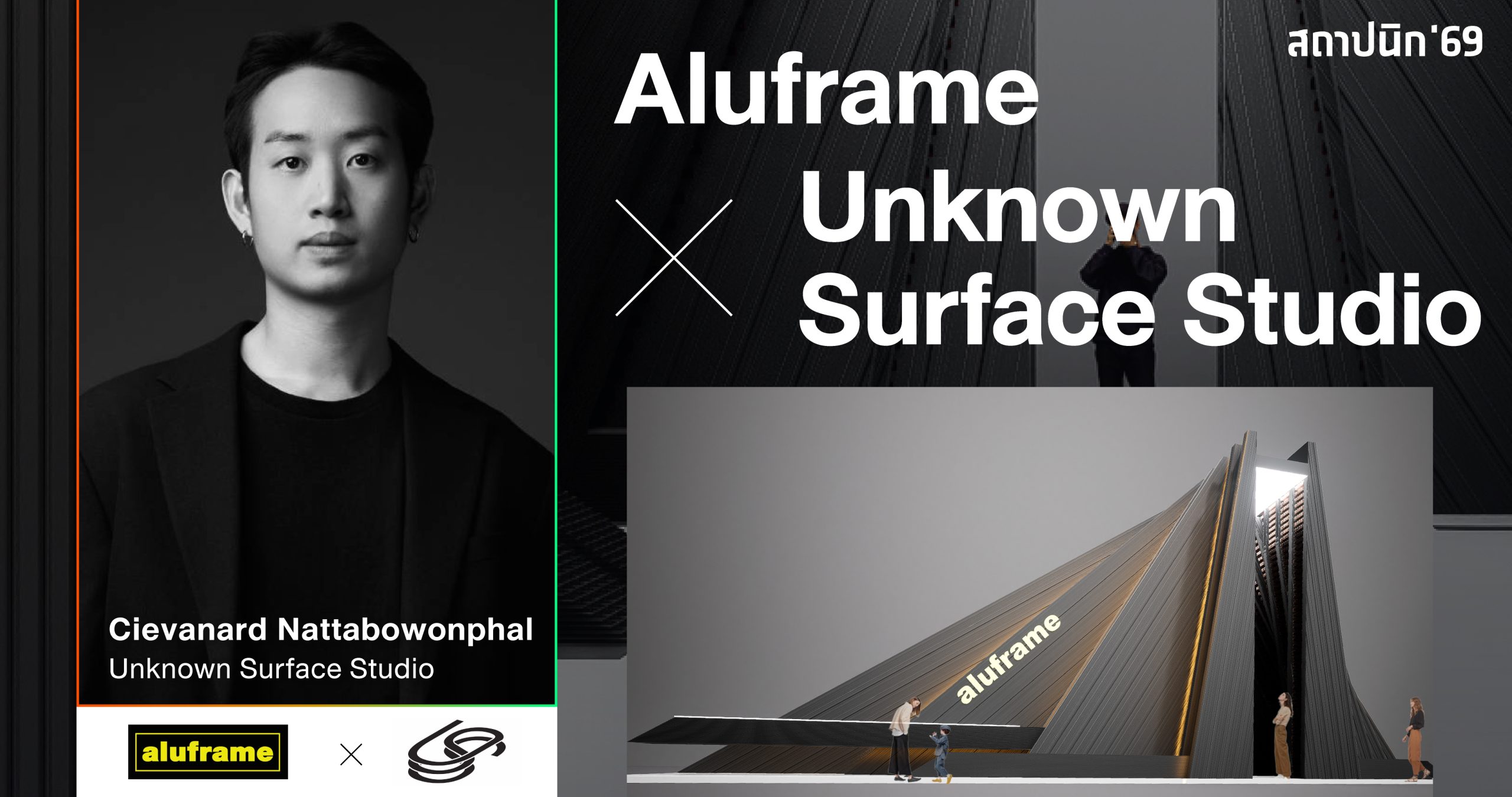
At Architect Expo 2026, the exhibition invites visitors to rediscover “aluminum” from a new perspective—no longer confined to its conventional role in doors and windows, but reimagined as a contemporary architectural space that is striking, beautiful, and sustainability-conscious. This Thematic Pavilion is a collaboration between Unknown Surface Studio, known for its iconic architectural works with a distinctive design signature, and aluframe, a leading Thai aluminum manufacturer trusted by designers and users for over 50 years.
“Normally, we never really look at aluminum cross-sections,” said Stamp – Siwanat Nattabowornphan. “We just focus on how thin or how tall it can be. But when we saw how profiles are stored in the factory—hundreds of them arranged in rows—we felt there was something really beautiful there.”

This impression became the starting point of the design concept. Let’s explore the creative thinking behind it through a conversation with Stamp – Siwanat Nattabowornphan, architect and founder of Unknown Surface Studio.
From UNSEEN to UNFOLD
The pavilion concept did not begin with a predetermined form, but rather from a fascination with the “essence of material”—details that designers often overlook.
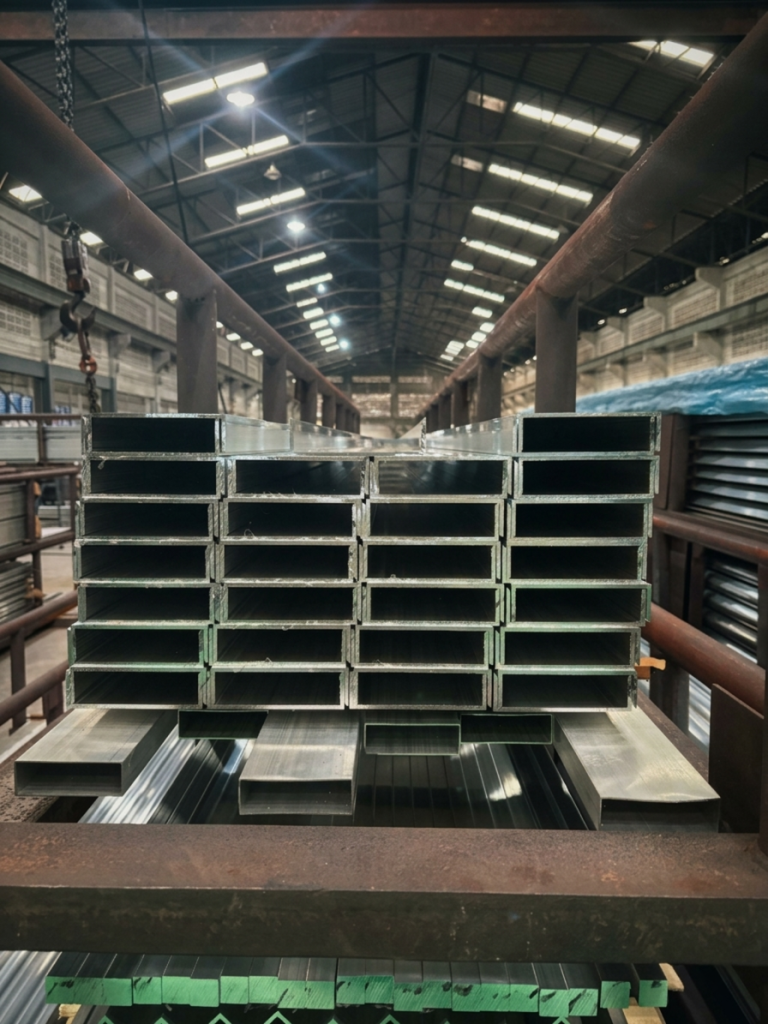
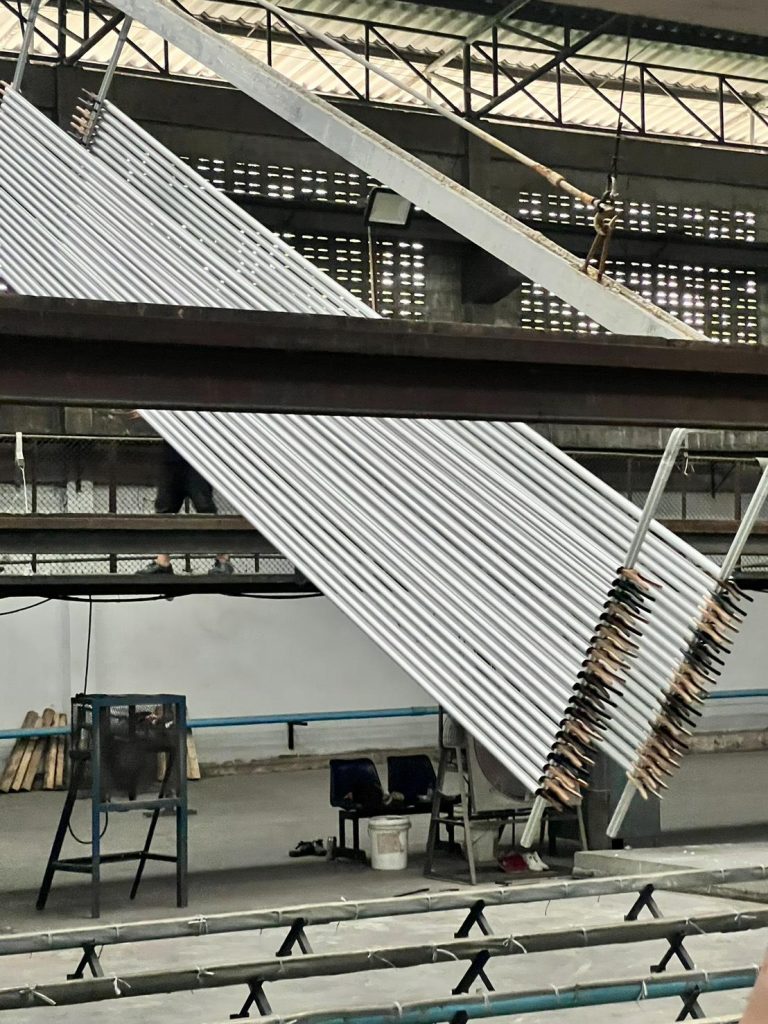
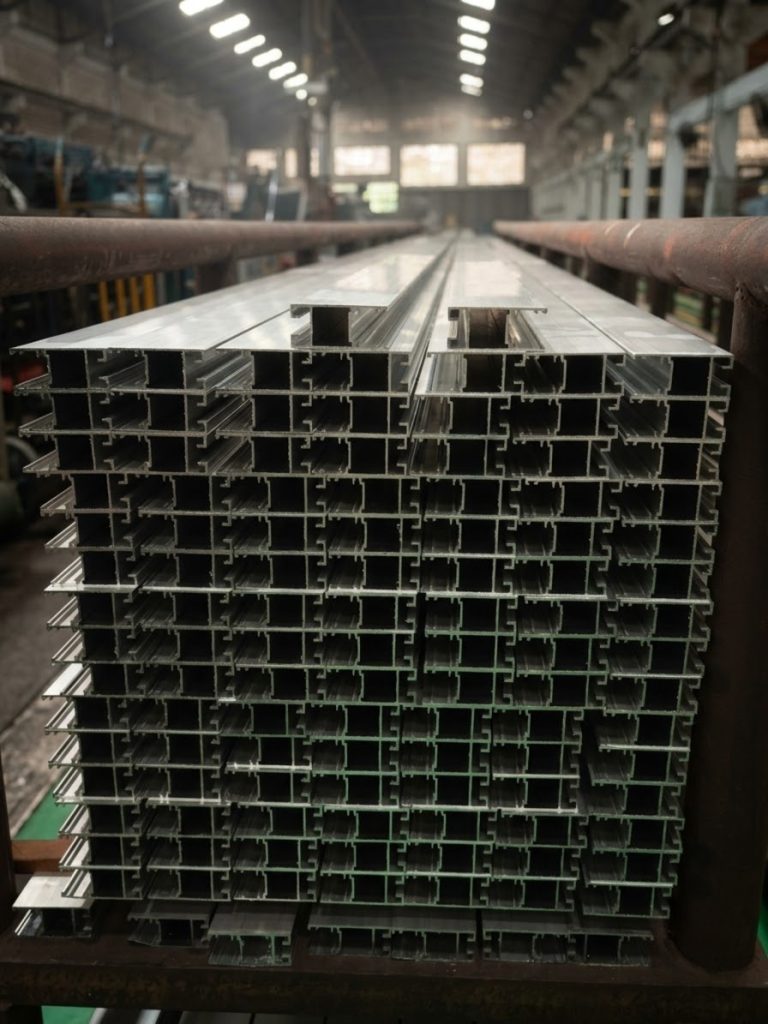
After visiting aluframe’s factory and observing its production process—from melting and coating to storage—he discovered a different dimension of beauty in aluminum profiles. The repetitive rhythm of stacked lines and the diversity of cross-sections became the inspiration for a pavilion that expresses the identity of aluminum in a direct and iconic way, while also addressing sustainability—ensuring the material’s life cycle extends beyond the exhibition period.
UNFOLD
Iconic design from Aluminum
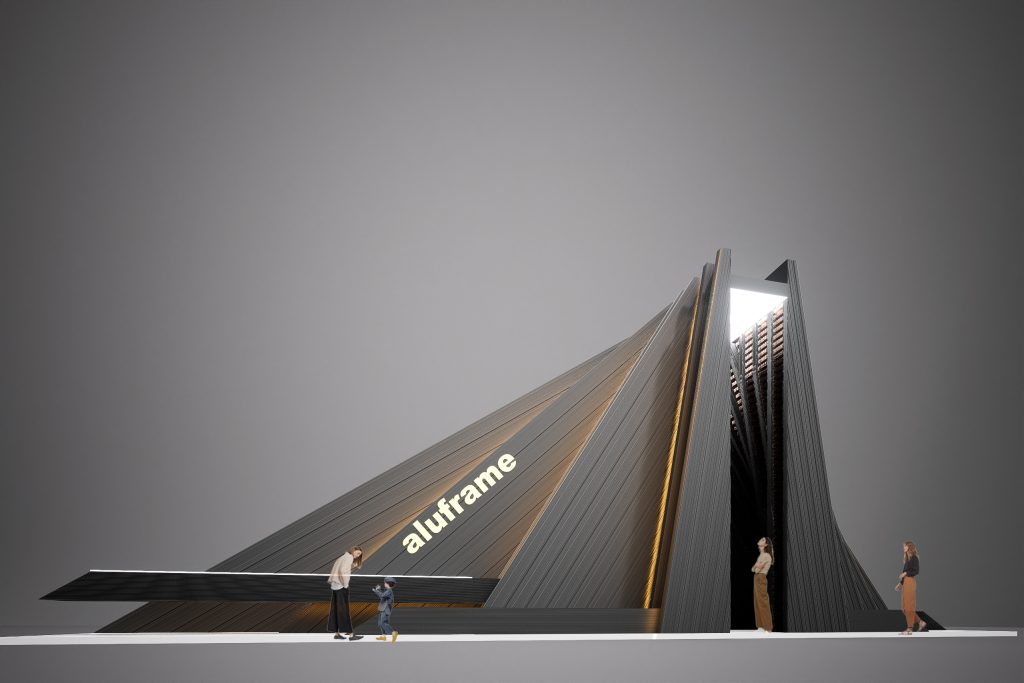
“UNFOLD” refers to the act of unfolding or revealing. The pavilion takes the form of an asymmetrical triangular structure inspired by a folding fan. However, its purpose is not only to create striking architectural geometry, but also to “unfold” a deeper understanding of aluminum—revealing its potential, beauty, and systematic logic of use.
“UNFOLD comes from the character of the pavilion,” he explained. “It’s composed of a blunt triangle with layered elements that unfold unevenly like a fan. Conceptually, we want to gradually unfold the beauty of aluminum so that people can see more than what they’ve known before.”
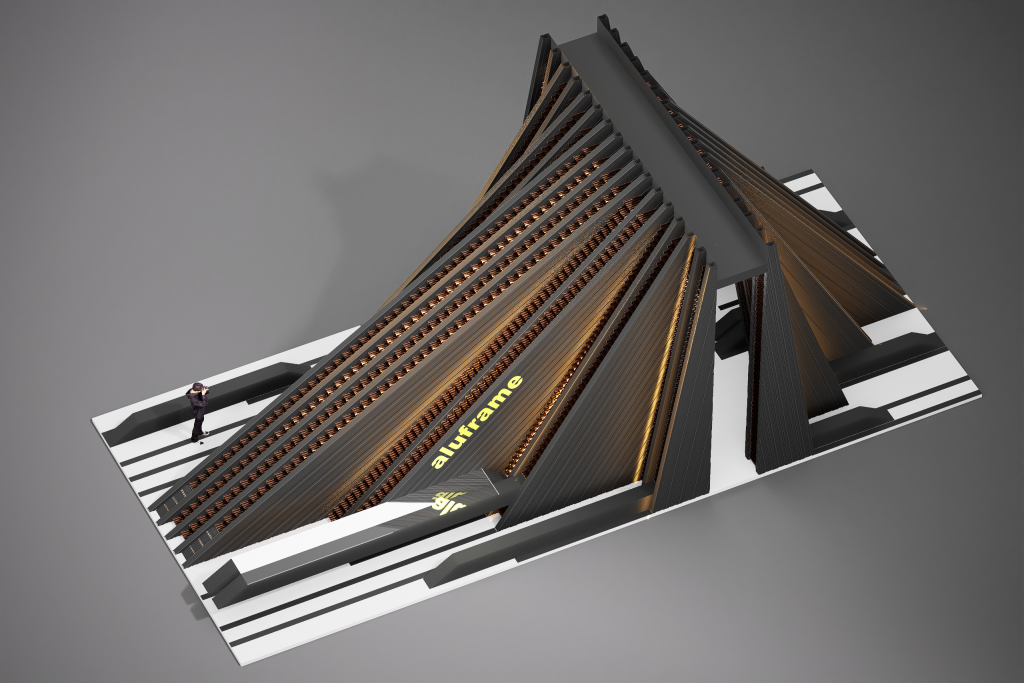
- Between the layered fin structures, gaps are intentionally designed to replicate the storage system used in the factory. The exposed cross-sections not only demonstrate engineering precision but also function as a light-filtering façade, enhancing the spatial atmosphere.
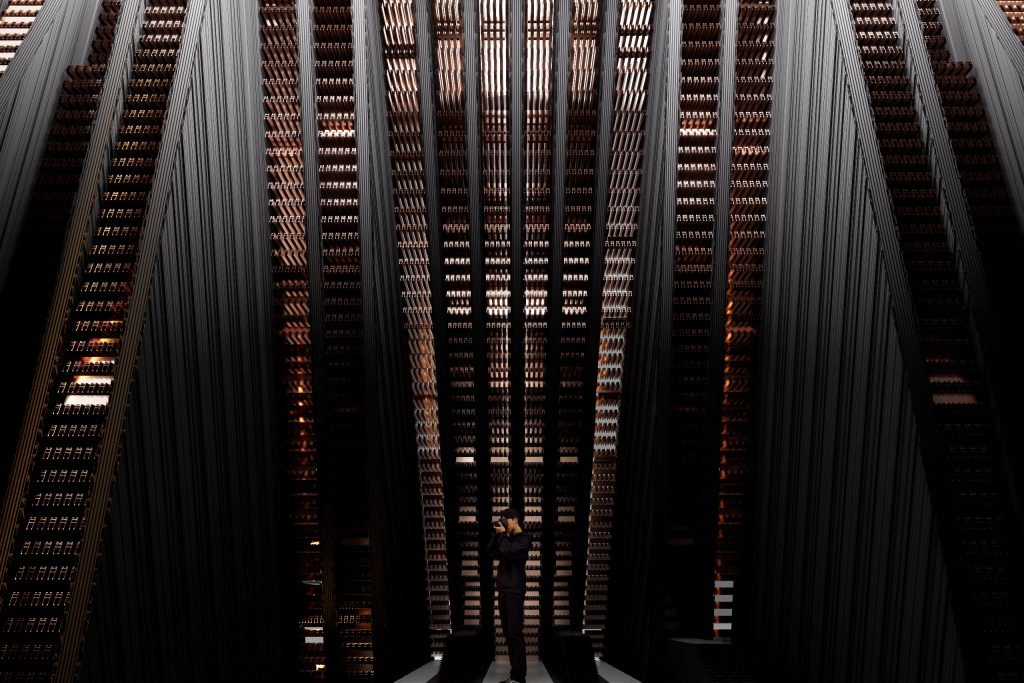
- Material Storage System
The gaps between the layered fin-like panels are interspersed with shelving units that replicate the actual aluminum storage system inside the factory. The display of varied cross-sections, stacked vertically, not only demonstrates an advanced level of engineering efficiency designed to meet functional requirements, but also becomes an integral part of the architectural skin, performing as a natural light filter.
- Extending the Material Life Cycle / Circular Materials
Although aluminum is classified as a recyclable material that can be remelted and reused, Unknown Surface Studio deliberately chose to work with scrap materials and obsolete profiles that were already designated for remelting, instead of using new materials. This approach aims to slow down the material’s existing life cycle, allowing it to reveal its value, embedded knowledge, and aesthetic qualities once again—so that its beauty can re-emerge before entering the recycling process.
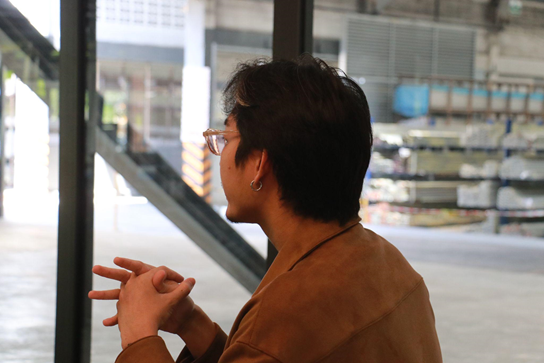
“As we walked around, we saw a lot of outdated materials waiting to be melted down for recycling. We felt it was a shame. We wanted to delay the process, let them fulfill their purpose one more time, showcase their beauty before they enter the recycling phase.”
Even the pavilion’s main structure, the truss frame, is designed in a modular fashion so that it can be disassembled and reused as shelving for aluminum storage in the factory. This architectural piece therefore doesn’t end with the exhibition, but continues to play a role without leaving any waste behind.
The pavilion’s highlights are divided into three main zones, each offering a different perspective on the material:
- The Interior Zone: Upon entering, visitors experience a spatial transition from a narrow, confined entrance, gradually expanding into a larger space that opens in rhythm with aluminum fins that relate to the external slope. The 7-meter-high ceiling, proportional to the visitors and the width of the space, creates a sense of grandeur and power, reminiscent of the interior of a church or cathedral.
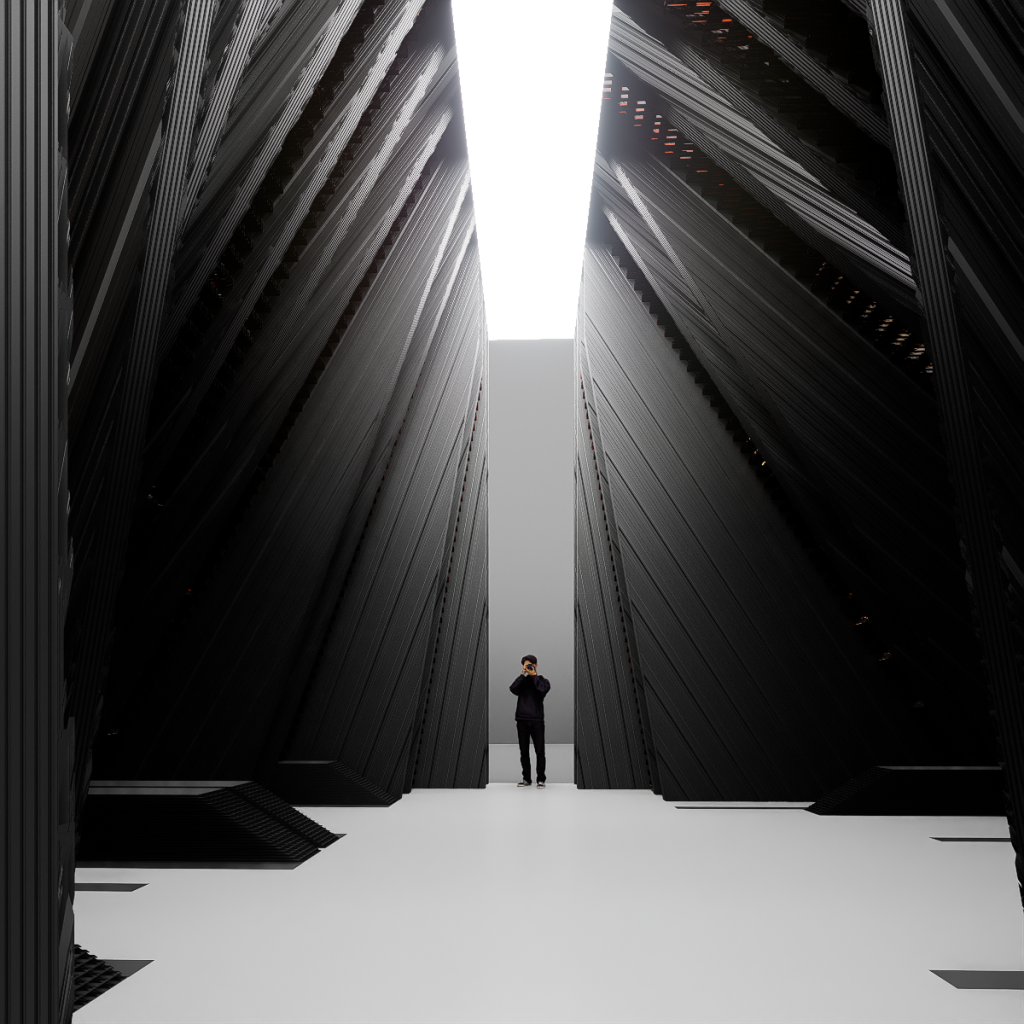
Long canvas lights (barrisols) are installed in the ceiling as the main light source, providing soft, graduated light that illuminates the aluminum surface and cross-sections from top to bottom. This reveals patterns, depth, and effects that highlight the metallic surface, making it appear more dimensional and appealing.
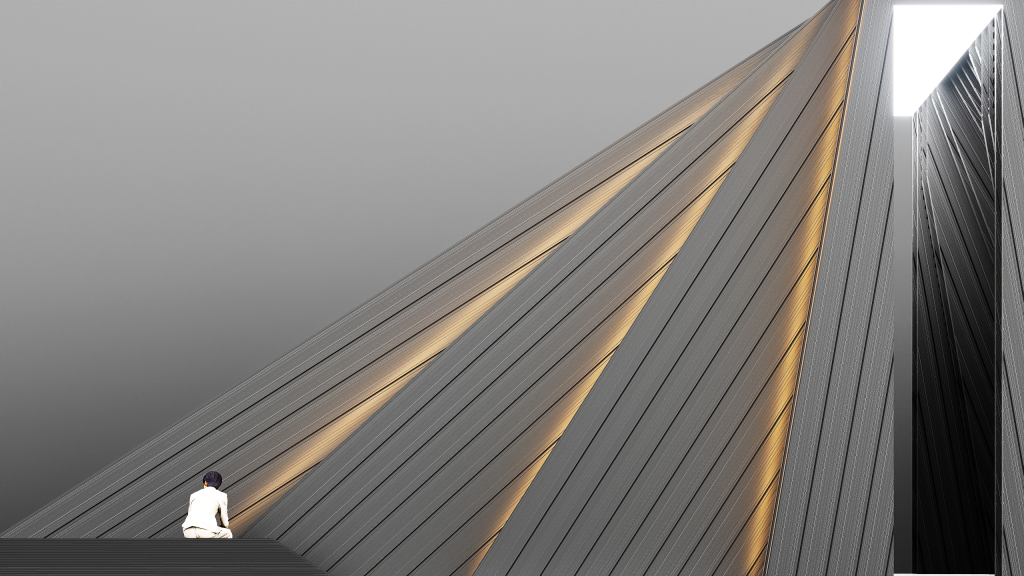
- The exterior zone features aluminum profiles arranged in a pattern that tapers in and expands at angles, creating a sense of lifelike “movement” across the surface. The graphic lines connecting the exterior to the interior (when viewed from above) not only tell a narrative but also serve a functional purpose. Thick lines function as furniture, a bar, and benches for both inside and outside users, while thin lines are intricate patterns created by embedding actual aluminum profile rails into the pavilion floor.
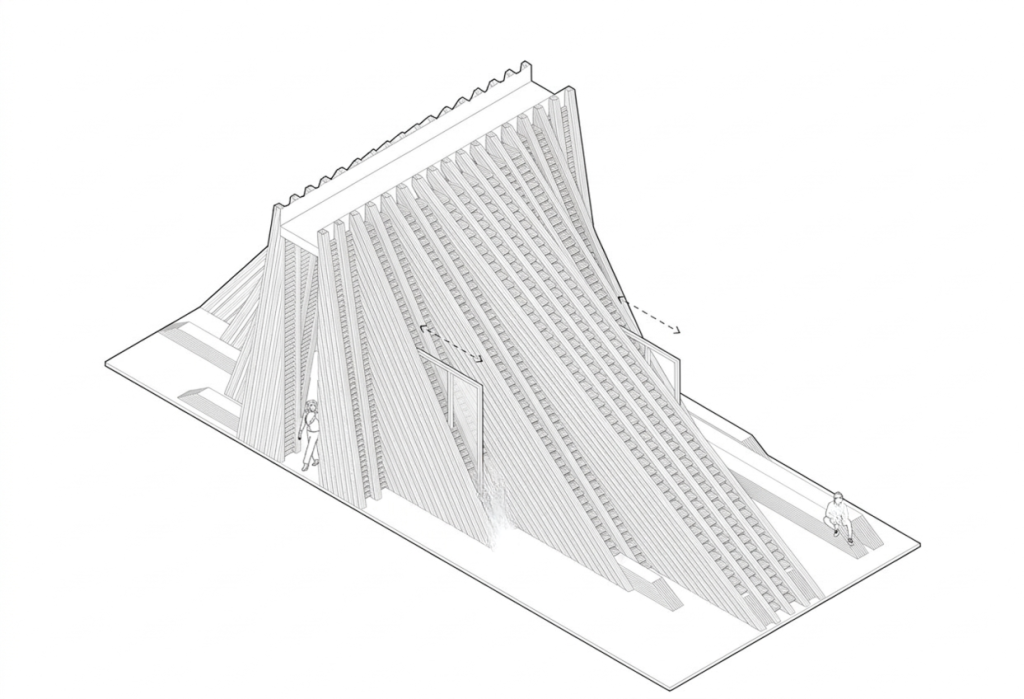
- The product interaction zone is not just an art piece; it’s also a space where you can actually interact with the product. This is achieved through a design that incorporates aluframe’s new sliding door system as part of the artwork. Pulling and pushing it open creates dynamism in both the exterior and interior spaces.
aluframe
UNFRAMED CREATIVITY
Another factor that propelled this pavilion to iconic status and provided people with the opportunity to fully experience the fun of the space stemmed from aluframe’s expertise in supporting the design in every aspect. This included technical advice on installation, selection of appropriate materials, and an open vision that granted true design freedom.
All of this is not unique to the Thematic Pavilion project, in which the brand is a co-owner, but reflects aluframe’s hallmark of working alongside designers for over 50 years.
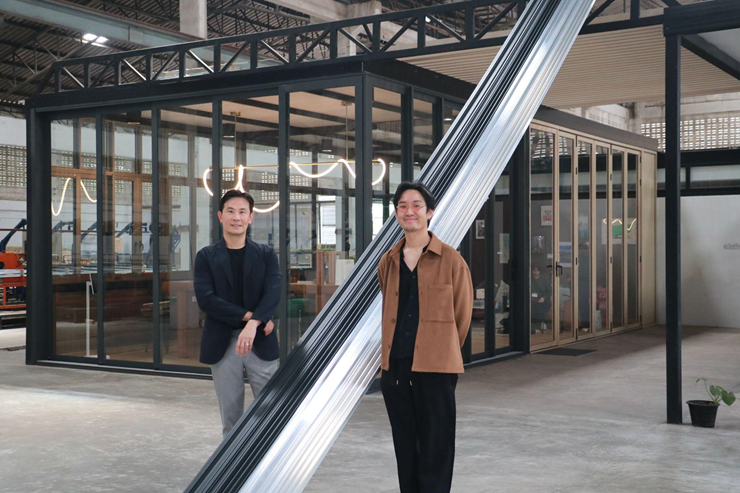
Mr. Stamp-Sivanaat Natbavoraphal, Architect and Founder of Unknown Surface Studio (right)
“I think what sets them apart is that aluframe is a factory with 50 years of experience. The materials are of high quality, and the advantage of being a factory that manufactures its own products is that it gives designers and homeowners flexibility to customize according to their needs. If you want a specific distance, height, curvature, or color, they can customize and produce it,” Stamp said about the unique experience of working with aluframe.
AI: Unveiling a Third Party in the Workflow
Beyond design concepts, another topic discussed this year was the role of AI in the architects’ workflow, aligning with the theme of Architects’ Exhibition ’69, ‘Mindfulness-Wisdom-Readiness’.
Stamp’s interesting perspective, however, wasn’t about concerns over being replaced by AI, but rather the new challenges posed when AI becomes the “third party” in the workflow.
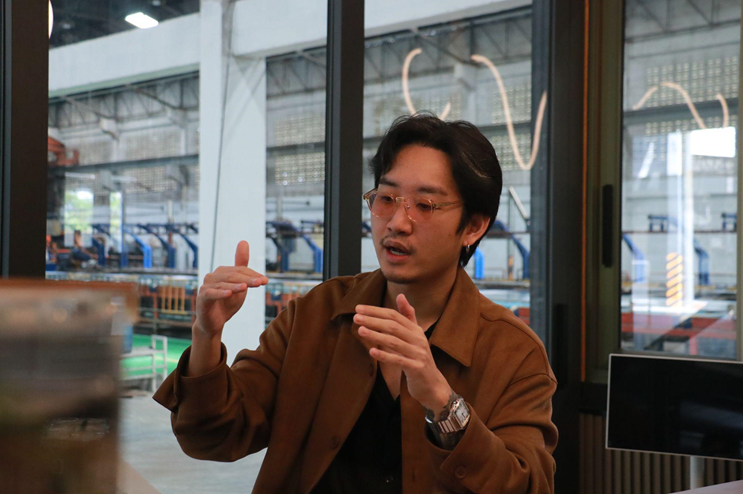
“A new challenge I recently encountered at the end of last year isn’t about replacement, but rather that AI is increasing the difficulty of our work as a third party interfering between us and the client. Nowadays, when I submit work, clients often ask the AI, or ChatGPT, first. The comments I receive are no longer the client’s genuine needs, but rather an endless flow of feedback from the AI’s suggestions that never provide a correct or ‘OK’ answer. I feel that at this point, we need to add another skill: strong customer persuasion skills. Otherwise, we’ll just keep going in circles.”
Having unfolded every aspect of the design paradigm and technology perspective, the final thing you shouldn’t miss is experiencing it all firsthand at Architect’69: Stimma Panya Prom(t), on display from April 28th to May 3rd, 2026 at Challenger Hall 1-3, IMPACT Muang Thong Thani.
“We’d like to invite all designers and those interested in design to visit the aluframe x Unknown Surface Studio pavilion. Our entire design team and aluframe put a lot of effort into this, especially with the support from aluframe which gave us complete freedom to express ourselves. We want everyone to see our dedication and the beauty of the materials we’ve conveyed through this space for themselves.”