In the collective imagination, aluminium has long been associated with door and window frames — a basic structural component serving the building’s functional needs, but rarely discussed in serious architectural terms.
For aluframe, the brand under Thai Aluwork Co., Ltd. — a company with over 50 years of aluminium profile manufacturing expertise — that same material holds far greater potential, waiting to be reinterpreted.
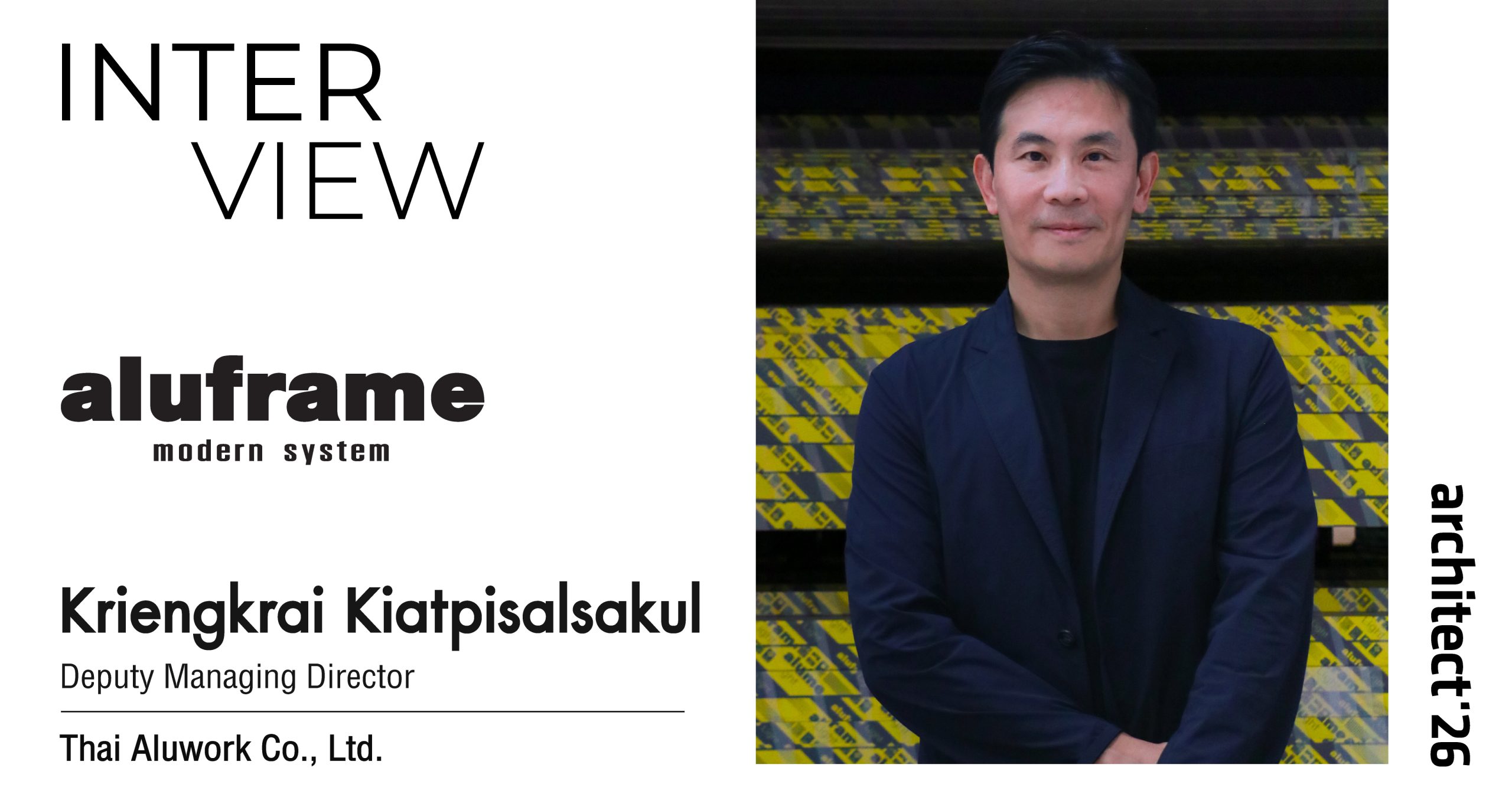
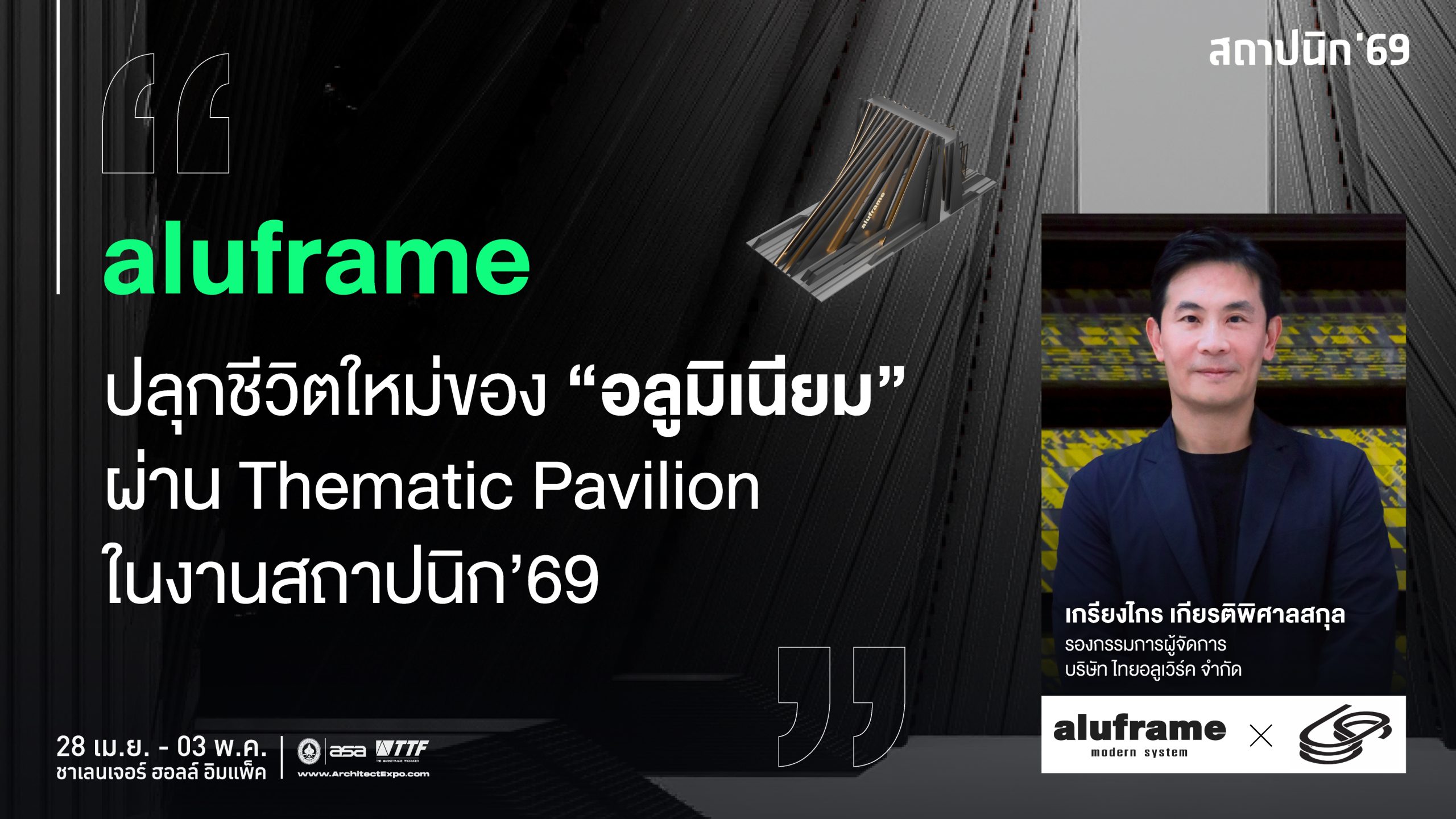
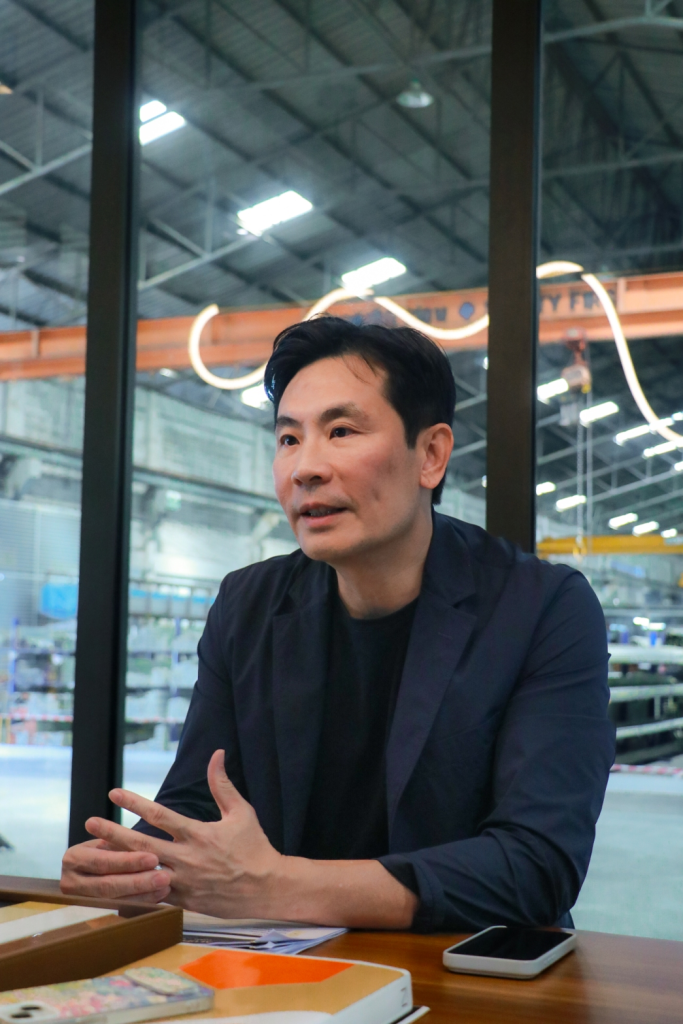
Mr. Kriengkrai Kiatpisalsakul, Deputy Managing Director of Thai Aluwork Co., Ltd., reveals that this year’s presentation at Architect’26 has been transformed into a Thematic Pavilion format — using architecture as a genuine communication tool for the brand, and seizing the opportunity to “awaken” aluminium’s new role: from a material of limited perceived function, into a full architectural element capable of telling its own story.
From Manufacturing Expertise to a System That Understands Real Living
Thai Aluwork’s core strength lies in aluminium profile extrusion expertise accumulated over five decades, since its founding in 1977 as a manufacturer of aluminium profiles for building and industrial applications.
This deep experience spans glass frames, doors, windows, and custom aluminium components — enabling the brand to develop both standard systems and Made-to-Order solutions that respond to a wide range of design requirements.
But for aluframe, the goal is not simply to manufacture — it is to design systems that genuinely understand everyday use.
As a manufacturer controlling the entire upstream process, the brand can manage quality at every stage — from raw material selection and profile extrusion to finishing and surface coating across a wide range of colors and treatments, including wood-grain aluminium that fuses the strength of metal with the warmth of natural material.
Every frame is therefore developed not from a material-only perspective, but from a clear-eyed view of the user’s real problems: wind, rain, noise, insects, and the constantly changing climate conditions specific to Thailand.
This includes the contemporary challenge of PM 2.5 — which means a home today is no longer merely a place to live, but a space that must actively protect and provide genuine comfort and peace of mind for its occupants.
These concerns crystallized into aluframe’s “5 Kor” concept — five protective qualities in Thai:
- Kor 1 — Dust protection
- Kor 2 — Sound insulation
- Kor 3 — Insect and gecko protection
- Kor 4 — Water resistance
- Kor 5 — Vibration resistance
These are not merely product features — they reflect the brand’s philosophy of viewing materials as a “system that takes care of living” across every dimension.
Flexible Enough to Design With. Feasible Enough to Build.
One of aluframe’s core commitments is reducing the “limitations” of design — not only in terms of materials, but in terms of a manufacturing system that can genuinely accommodate a designer’s vision.
As a direct manufacturer, the brand can develop new profiles, adjust dimensions, bend curves, and create project-specific details — ensuring that ideas born in a drawing do not need to be compromised when they meet construction reality.
This thinking is distilled into a working framework called the 3F Framework, reflecting aluframe’s role as a partner at every stage of the design process:
Flexible — Freeing the design, supporting diverse forms, systems, and surface treatments.
Feasible — Making what is designed actually buildable — in terms of structure, detail, and on-site installation.
Feasible — Making what is designed actually buildable — in terms of structure, detail, and on-site installation.
Future Forward — Thinking long-term across durability, performance, and material sustainability.
Within the Future Forward dimension, aluframe places strong emphasis on sustainability alongside material performance — selecting high-quality production components, from coating processes to color systems engineered to withstand all weather conditions over the long term.
Together, the 3Fs are not merely a conceptual framework — they are a working method that connects “ideas” with “reality”, while accounting for long-term service life and impact.
All of this leads to the 4th F in aluframe’s philosophy: Fulfillment — the ultimate satisfaction of the user, not just on the day the project is completed, but as a lasting peace of mind that comes from choosing materials and systems that are genuinely trustworthy.
This philosophy is expressed in the brand’s guiding message: “Designed by You. Delivered by Us.” — reflecting aluframe’s role not merely as a manufacturer, but as the partner that brings a designer’s concept to life in every detail.
Details Developed from Real Users’ Real Questions
Product development at aluframe does not begin from assumptions in a design room — it begins from “questions asked on site”, gathered from real users over years of exhibiting at the Architect expo.
From simple questions like “do you have this?” to the specific constraints of individual homes and projects — these exchanges surface genuine pain points around safety, maintenance, and varying environmental conditions.
Concrete examples of developments born from these conversations include: safety screens designed to integrate visually with the frame rather than appearing as something “added on later”; screens for pet owners built to withstand heavier-than-usual use; PM 2.5 filtration screens that address today’s environmental challenges; and insect and gecko screens — a small detail, but one with a direct impact on quality of life.
None of these details were developed in isolation. Each is considered as part of the overall frame system from the outset, so that every element works together seamlessly — both functionally and aesthetically.
In this sense, aluframe does not view its products as mere “building components”, but as solutions that are continuously refined through real user experience, growing more precisely targeted with every iteration.
When an “Aluminium Frame” Becomes Full Architecture
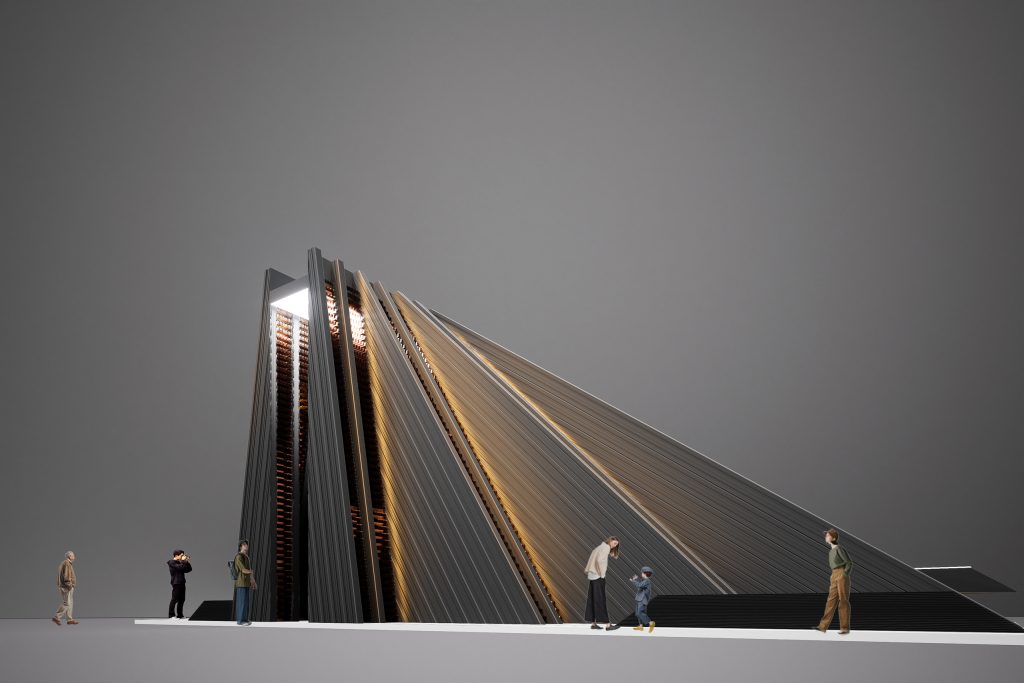
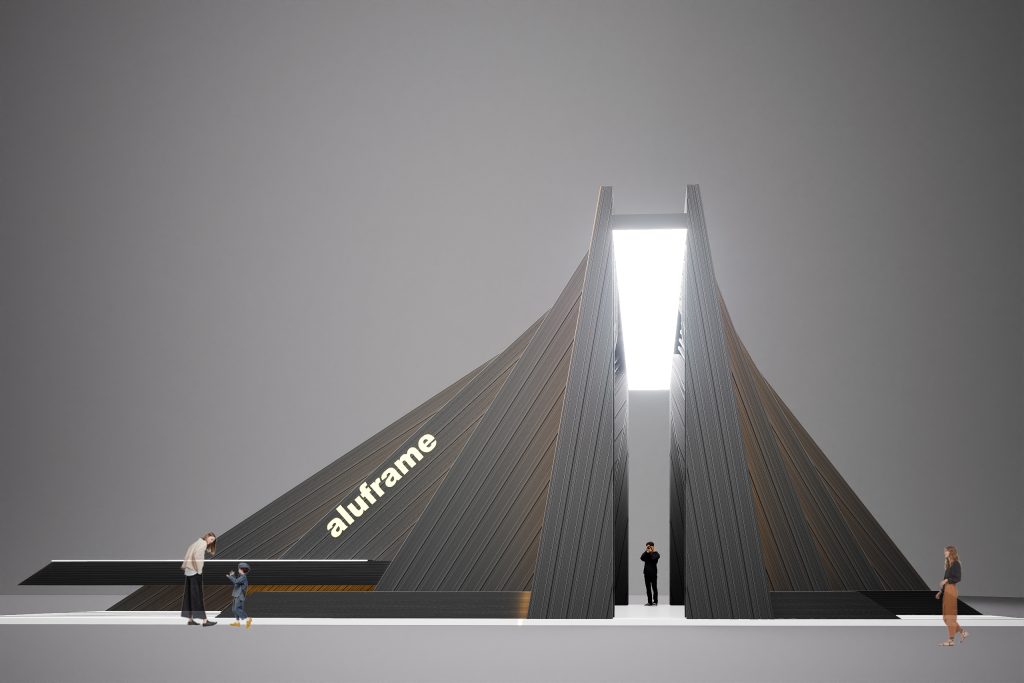
After participating in the Architect expo as a conventional booth exhibitor for over three years, this year marks aluframe’s first step into the Thematic Pavilion — and rather than displaying products in the traditional sense, the brand chose deliberately not to show products in the old way.
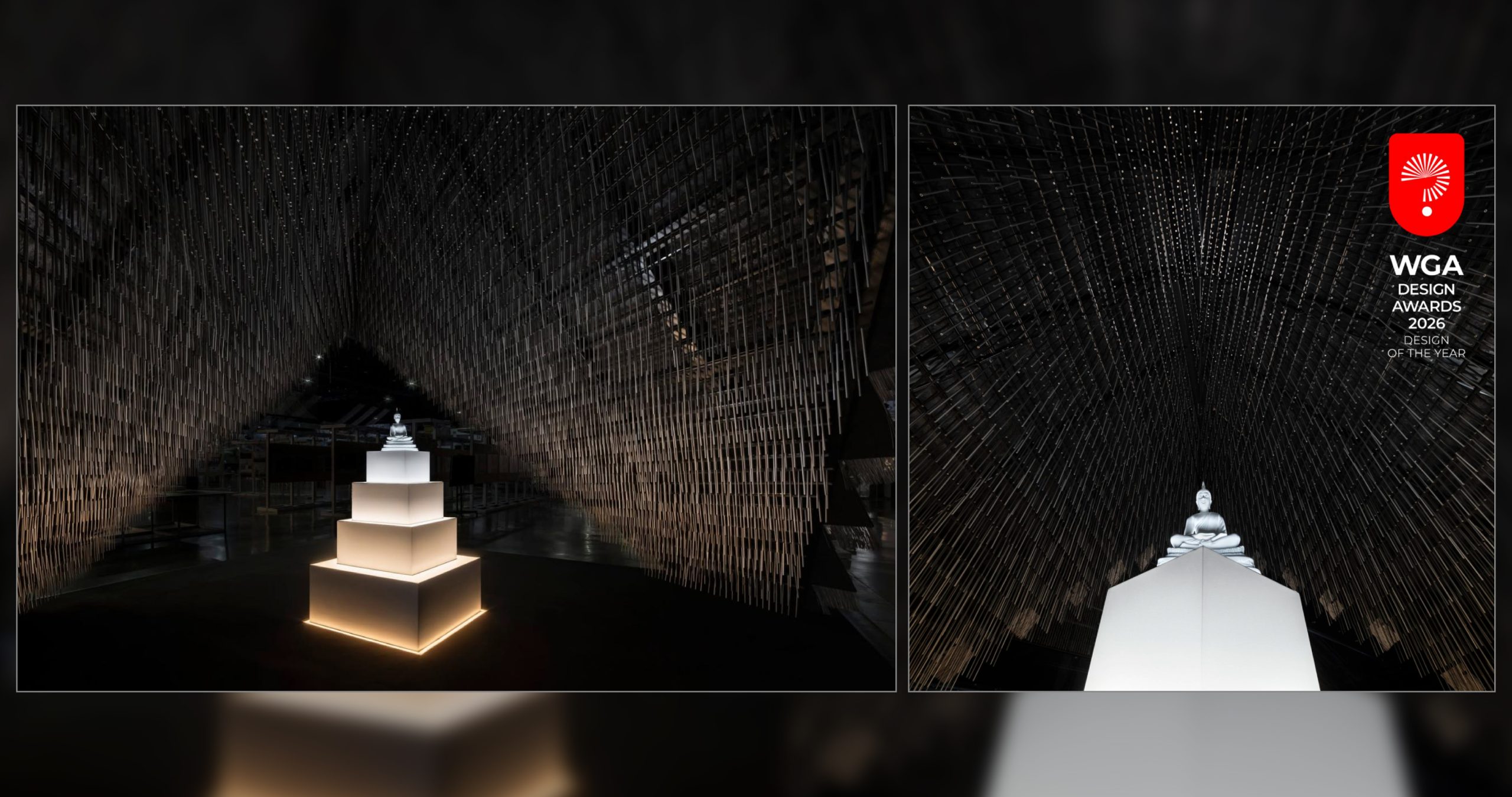
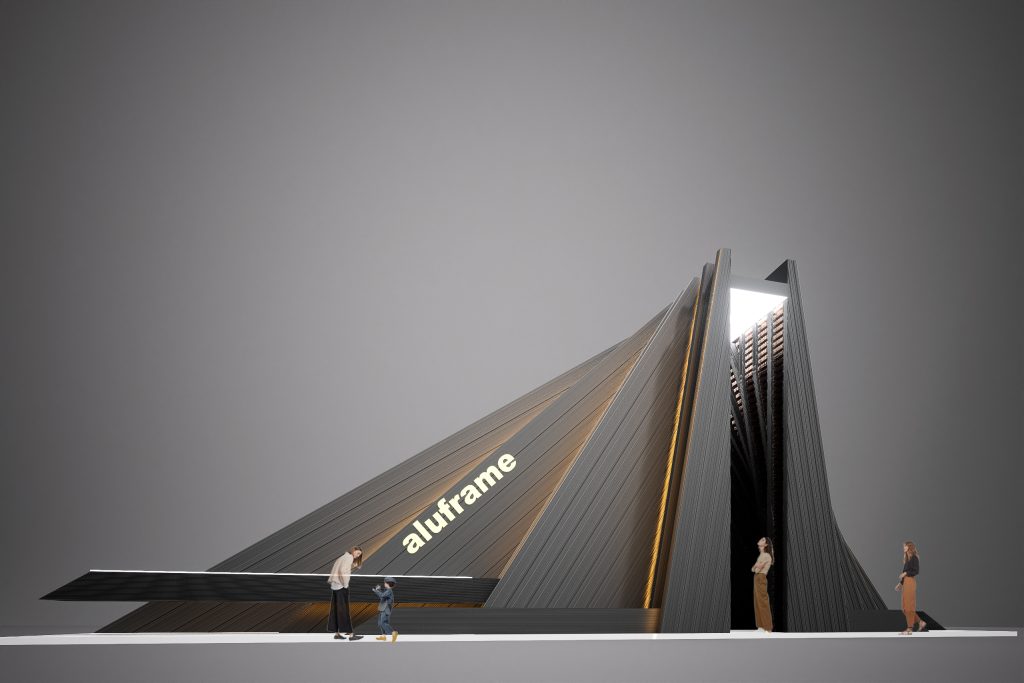
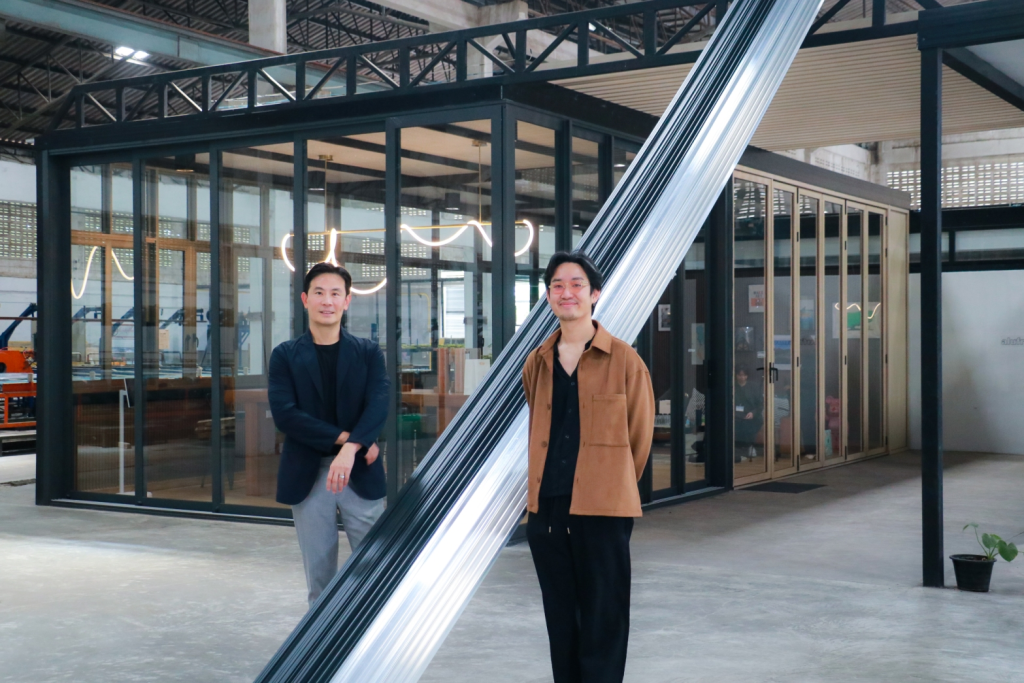
Instead, the Thematic Pavilion becomes an architectural experiment, developed in collaboration with Khun Stamp — Siwanat Natthaboraworphan, architect and founder of Unknown Surface Studio, who began by conducting an on-site survey of materials directly within the factory.
During this process, the designer selected specific aluminium profiles — particularly pieces that had served their original purpose or were no longer in active use — and reinterpreted them in a new architectural context. These materials were reassembled into a large-scale structure with a rhythmic linearity of profiles, creating a space through which visitors can walk, experiencing the light, shadow, and dimension of the material at close range.
The pavilion therefore ceases to be merely a display space — it becomes something closer to a landmark within the event, reflecting the potential of aluminium in dimensions that transcend the frame.
At the same time, the collaborative process opened new perspectives for the brand itself — revealing that familiar materials can be seen in entirely different ways: as structure, as building skin, or as an architectural language that communicates directly with people.
What emerged is therefore not simply a Thematic Pavilion design — it is the act of “giving life back” to familiar material, through a new perspective born from genuine collaboration between manufacturer and designer.
Come and See a Familiar Material Through New Eyes
For aluframe, the success of this Thematic Pavilion is not measured by form or novelty alone.
It is measured by the moment a visitor stops and wonders — “What is this structure? And how can a material I have seen so many times be reinterpreted this far?”
And in the moment that question arises on its own, without explanation — that is when the material has reclaimed its role. Not as an overlooked component, but as part of an architecture that carries meaning and creates genuine experience.
Find aluframe at Booth TP08 — Architect’26—the 38th THE ASEAN’S LARGEST BUILDING TECHNOLOGY EXPOSITION taking place from April 28 – May 3, 2026, from 10:00 AM – 8:00 PM at IMPACT Challenger Hall 1–3, Muang Thong Thani.